


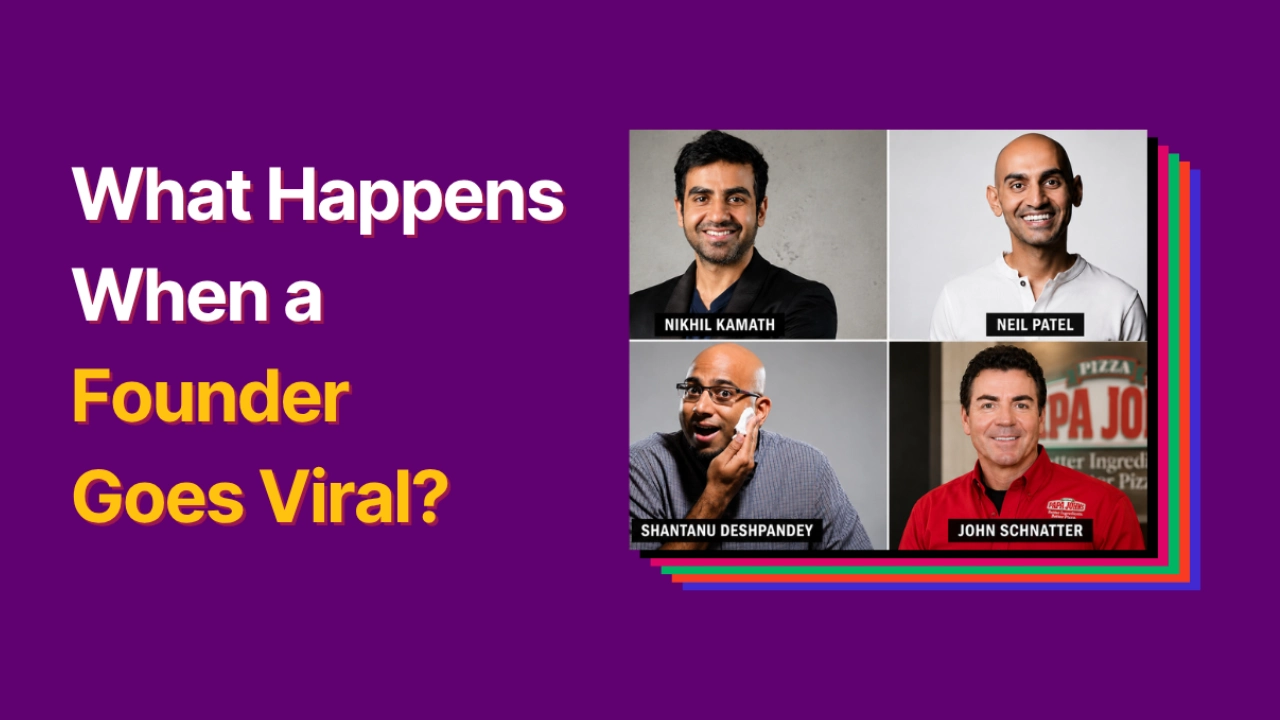
Something shifted over the last decade. Founders became bigger than their brands.
Zerodha crossed Rs 9,000 crore in revenue without a single TV ad. Bombay Shaving Company hit Rs 200 crore in revenue while its founder became a LinkedIn celebrity. Neil Patel turned his personal blog into a platform with 10 million monthly visitors.
None of this happened through traditional marketing spend. It happened because these founders invested in personal branding, making themselves visible, credible, and part of conversations their customers were already having.
But here’s what nobody talks about: what actually happens to your brand when you become the media channel? What gets stronger? What changes? And what becomes vulnerable?
The answer matters more than most founders realise.
Table of Contents
What Founder Visibility Actually Changes
When a founder builds visibility with a real strategy, several things happen at once. This is what founder-led marketing actually looks like when it works. Traditional marketing can’t replicate them.
1. You Get Earned Media at Scale
A founder with real credibility gets press coverage, podcast invites, and media interest that would normally cost a fortune. This isn’t soft value. It’s actual share of voice in markets where attention is scarce.
2. Trust in You Transfers to Your Product
If someone has listened to your podcast for hours or followed your thinking for years, that trust extends to your company. A product on a shelf competes on price. A product built by someone they follow carries emotional weight that pure marketing can’t create.
3. Customers Cost Less to Acquire
A consistent personal branding strategy creates demand. When people choose your product because they already trust you, the cost of getting them goes down. That’s why Zerodha spends almost nothing on ads and still leads the market.
4. The Caveat That Changes Everything
All of this only works when your public persona matches what your brand actually delivers. The moment they don’t align, everything reverses. A trusted founder becomes a megaphone for criticism, not a shield. The same visibility that lowers customer costs also amplifies every problem.
Nikhil Kamath and Zerodha
Zerodha was built on a radical idea in 2010: zero-brokerage trading. No TV ads. No billboards. Just a better product and founders who actually knew their stuff.
Today, Zerodha is India’s largest retail brokerage. FY24 revenue hit Rs 9,372 crore. Profit margins over 55%. All were built without conventional advertising.
The Podcast’s Actual Impact
In March 2024, Nikhil Kamath started a podcast named WTF Is? Long conversations and genuine thinking with guests like Tanmay Bhatt, Elon Musk, Bill Gates, Ankur Warikoo, and more.
By December 2025, he’d had Indian PM Narendra Modi, Microsoft’s founder Bill Gates, and Tesla’s founder Elon Musk on the show.
The episode with Elon Musk is a good example of what the podcast is actually about. It’s not an interview designed to go viral. It’s a long-form conversation about technology, markets, and the future; the kind of content that builds credibility over time, not just clicks for a day.
Kamath sits in the top 1% of influencers in India’s startup space. But his content isn’t sales pitches.
It’s an analysis.
Sometimes contrarian takes.
Always ideas, not products.
Why Authority Works When Ads Don’t
When Nikhil talks about market structure or investment philosophy, he’s not selling Zerodha. He’s showing how the company thinks. That works as a trust signal in a way no ad ever could.
Zerodha is fully founder-owned and bootstrapped, with no external investors. This isn’t a marketing choice. It’s consistent with how the company operates entirely.
The lesson: Authority becomes a growth channel when it’s genuine and consistent. You can’t fake it. It takes years. There are no shortcuts.
Shantanu Deshpande and Bombay Shaving Company
Shantanu Deshpande founded Bombay Shaving Company to fix what he saw as a gap in men’s grooming in India. By FY24, the company hit Rs 200 crore in revenue and raised over $69 million. Deshpande became one of the most visible founders on Indian LinkedIn.
He wrote about entrepreneurship, company culture, and the real costs of building a brand. Personal. Specific. It generated serious engagement.
The LinkedIn Post That Changed Everything
In 2022, he posted career advice: work 18-hour days in your early years.
He meant it as motivation. The internet read it as an endorsement of toxic work culture.
The backlash was immediate and national. Critics called it “glorifying modern slavery.” His parents got hostile messages from strangers. He apologised, acknowledged the tone was wrong, and eventually stepped back from LinkedIn.
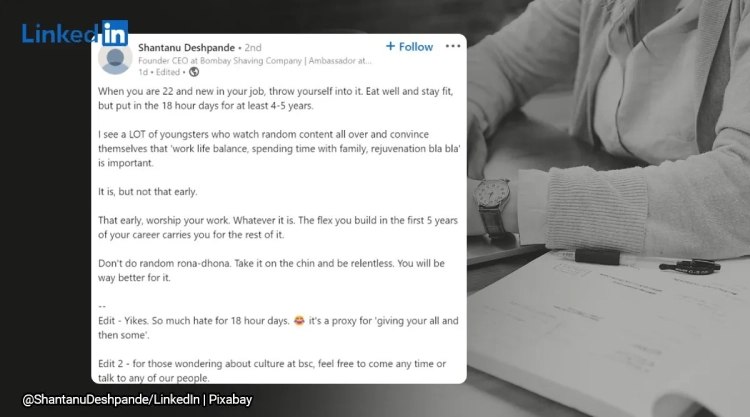
He later noted something striking: The controversy generated about ₹20 crore in media value for Bombay Shaving Company in 96 hours.
That observation captures the founder visibility paradox perfectly.
What the Numbers Really Show
The controversy didn’t cause the company to collapse. Revenue kept growing. But it revealed something critical about how this actually works.
A personal opinion, posted casually, triggered a national conversation about work culture. The company had no formal position to push back on. The founder’s words became the company’s position because he was the company’s most visible voice.
The same visibility that generated ₹20 crore of coverage also created reputational complexity that had to be managed afterwards.
The lesson: Visibility amplifies trust and scrutiny simultaneously. Every public statement gets attached to your company, whether you want it to or not. The more visible you are, the more everything you say matters.
Neil Patel and Ubersuggest
Neil Patel’s story is the clearest example of a founder’s personal brand becoming the main engine for a product.
He didn’t start with Ubersuggest. He built his reputation years before.
- Co-founded Crazy Egg in 2005.
- Kissmetrics in 2008.
- Published detailed SEO guides.
- Wrote for Forbes and Entrepreneur.
- Built one of the most linked-to blogs in digital marketing.
- Forbes named him a top 10 online marketer.
- President Obama named him a top 100 entrepreneur under 30.
These aren’t soft credentials. They’re what happens when you do genuinely good work, consistently, for years.
What He Did Differently With Ubersuggest
In 2017, Patel bought Ubersuggest for $120,000. It was basic. He rebuilt it into a real SEO platform: keyword research, site audits, competitor analysis.
But here’s what matters: he didn’t position it against Ahrefs or SEMrush on features. He positioned it for founders and small businesses who needed professional tools without enterprise prices.
The distribution? It was entirely built on his existing reputation. People already trusted him in SEO. They naturally wanted to use the tool he built.
The Scale
NeilPatel.com now gets over 10 million visitors monthly from 180 countries. The Ubersuggest Chrome extension has around 300,000 daily active users.
The connection is direct and documented. Users who learned from his content had lower switching costs when choosing Ubersuggest because the founder was someone they already trusted.
What This Model Actually Reveals
Patel didn’t build the tool first and then try to become famous. He built the reputation first, over many years across many platforms, and then acquired a product his audience was already positioned to adopt.
That order matters. Trust built through genuine education is durable. It compounds. Each piece of content extends reach, builds authority, and creates new entry points. By the time Ubersuggest launched, distribution already existed.
The lesson: Consistent expertise compounds over time. Publishing one viral post is categorically different from publishing solid educational content for five years. The second approach builds institutional knowledge that becomes your most durable competitive advantage.
John Schnatter and Papa John’s
What happens when a founder becomes the problem?
Papa John’s offers the clearest lesson in what happens when all brand equity lives in one person, and that person’s conduct becomes indefensible.
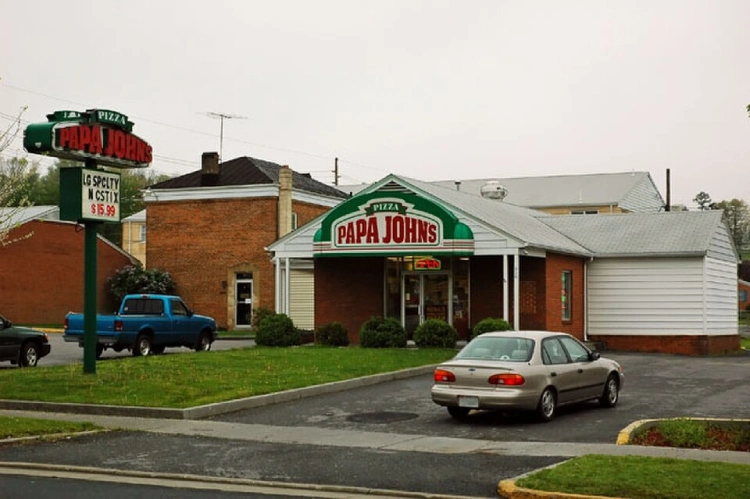
John Schnatter built Papa John’s from a broom closet in 1984 into the third-largest pizza chain in the US. Over 5,000 locations. He was in all the advertising. He talked about standards. He was the brand.
For decades, it worked.
Two Events That Broke Everything
November 2017: Schnatter publicly blamed the NFL’s handling of player protests for declining sales. White nationalist groups endorsed him and named Papa John’s their preferred pizza. That association was almost impossible to undo.
January 2018: He stepped down as CEO.
July 2018: Forbes reported he’d used a racial slur on a marketing call. He resigned as chairman days later.
The Financial Damage Was Massive
Same-store sales fell 16% the week the news broke. Annual comparable sales dropped 7.3%. Total estimated damage: $51 million.
Recovery took $250 million from an activist investor, plus $80 million in new marketing. They brought Shaquille O’Neal on as a brand ambassador and board member. They removed Schnatter’s face from everywhere: stores, merchandise, uniforms, ads, globally.
It took years and serious capital to fix.
What Actually Happened
Papa John’s did recover. But the lesson isn’t about Schnatter’s conduct being unpredictable.
The lesson is that the company had built zero institutional brand equity that could absorb this kind of shock. Fourteen straight years of growth had been built on the assumption that the founder would always perform consistently. When that assumption broke, the brand had nothing to stand on independently.
The lesson: Founder visibility becomes dangerous when it’s the only place brand equity lives. Trust in a single person isn’t brand equity. It’s personal equity that the company borrowed without planning to return it.
Founder Branding Is Strategy, Not Just Content
Most founders think about personal branding as output: LinkedIn posts, podcasts, interviews, speaking slots.
These are the visible results of personal marketing. They’re not the strategy.
Real strategy answers different questions:
- What specific brand attributes does your visibility reinforce, and can your business actually deliver on them?
- Where’s the boundary between your personal views and your company’s institutional positions?
- How does your company’s marketing build equity that doesn’t require your face?
- What happens to brand trust if your reputation takes serious damage?
- What governance exists around your public communications to ensure they align with legal, regulatory, and reputational commitments?
- These aren’t content questions. They’re brand architecture, reputation management, and business strategy questions.
Neil Patel built distribution for years before he needed it. Nikhil Kamath built intellectual authority before his platform needed world leaders as guests. Both understood that the foundation had to come first.
The founders who create lasting value from visibility are the ones who did the analytical work. They determined what they should stand for, what the company needs them to communicate, and what safeguards exist against the many ways personal prominence can shift from asset to liability.
Also Read: Brand strategy 101 for Start-up Founders
Bringing It All Together
Zerodha, Bombay Shaving Company, Ubersuggest, and Papa John’s point to the same pattern:
Founder visibility creates real commercial advantage when it’s structurally aligned with what your brand stands for and managed as part of a coherent strategy, not as a replacement for one.
The 2026 Edelman Trust Barometer points to a world becoming more selective about who and what it trusts. Globally, 7 in 10 people say they are unwilling or hesitant to trust those with different values, viewpoints, or backgrounds.
At the same time, trusted voices continue to shape perception and decision-making, particularly when institutional trust is under pressure. In that environment, founder visibility becomes more than a marketing tactic. It becomes a trust-building mechanism. The trust a founder earns through consistent expertise and credibility can create commercial value for a brand. The trust they lose can become a liability that is expensive to rebuild.
The founders who navigate this best treat their public brand like a CFO treats financial risk: something to build deliberately, manage consistently, and stress-test against scenarios nobody wants to imagine, but everyone should plan for.
A founder who posts content is doing marketing. A founder who understands what their visibility means for the business, what it protects, what it risks, and how it connects to long-term equity: that founder has a strategy.
The distance between those two determines whether visibility becomes a durable asset or an undisclosed liability.
From Flora Fountain
We work with founders, asking the right questions.
Not “how often should I post?” or “should I be on LinkedIn?” Those are execution questions. There are hundreds of agencies that answer those.
We work with founders who want to understand what their visibility actually does. What makes it possible? What it puts at risk. How to build a personal branding strategy that creates lasting equity instead of borrowed attention.
Our work starts with the structural question: what should this founder stand for? What does the company need them to communicate? What does the brand need to look like independent of the founder’s face?
We build from that analysis outward into content, positioning, and strategy.
The challenge in 2026 is not visibility. It’s trust. Most founders can publish content. Very few can build a reputation that people return to consistently. As trust becomes more selective and harder to earn, founder branding is increasingly becoming a strategic business asset rather than a communications exercise.
As a branding agency in Ahmedabad that works with founders across India, we’ve seen firsthand how personal visibility, when built with intention, becomes a brand’s most durable growth channel.
If you’re building a brand in India and want to understand what your visibility could mean (strategically and structurally), we’re ready to talk. Get in touch with our team today.
Frequently Asked Questions
Vasim Samadji is a partner at Flora Fountain, where he leads the Business and Marketing Strategy divisions. In a world where everyone is used to sugarcoating, his directness is often considered rude. But that shouldn't be a problem if you like the no-nonsense approach. Because he is a seasoned professional...