



You’re planning a weekend getaway. You’ve narrowed it down to two hotels in Ahmedabad: similar prices, similar locations, and similar amenities. But one has 4.8 stars with 1,200 reviews. The other has 3.2 stars with 89 reviews. Which one do you book?
Most of us book the first one without hesitation. We don’t care about the marketing claims or fancy website design. We care about what real people experience. This simple decision, multiplied across millions of travellers, has transformed how hospitality businesses compete, survive and thrive.
Online reviews have become the most powerful force in hospitality marketing. They influence booking decisions more than paid advertising, shape brand reputation faster than any PR campaign and determine whether a hotel thrives or closes. Yet many hospitality businesses treat reviews as an afterthought, missing the transformative potential that a digital marketing agency for Hospitality can help unlock.
Table of Contents:
- The Review Revolution: How Travellers Make Decisions Now
- The Trust Factor: Why Reviews Trump Everything Else
- The Algorithm Effect: How Reviews Drive Visibility
- The Economics of Reviews: Impact on Revenue and Bookings
- Negative Reviews: Turning Criticism Into Opportunity
- Building a Review Culture: Creating Systems That Generate Positive Feedback
- What Digital Marketing Agencies Must Understand About Reviews
- Conclusion
- Frequently Asked Questions
The Review Revolution: How Travellers Make Decisions Now
Travel booking has fundamentally changed. A decade ago, people relied on guidebooks, travel agents and word-of-mouth recommendations. Today, 93% of travellers consult online reviews before booking accommodation. This isn’t optional; this is how the market operates.
The shift happened because reviews solve a critical problem: information asymmetry. You can’t experience a hotel before booking. Marketing claims are inherently biased. But reviews from hundreds of real guests who’ve actually slept in the beds, eaten at the restaurants and experienced the service provide unfiltered truth.
Platforms like Google, TripAdvisor, Booking.com and OYO have become the new gatekeepers of hospitality. A hotel with consistent 4+ star ratings across these platforms becomes discovered organically. A hotel with 2.5 stars struggles regardless of how beautiful the property is.
The stakes are higher because reviews compound. Early positive reviews attract more guests. More guests create more reviews. Positive reviews improve search rankings. Better rankings generate more bookings. This virtuous cycle creates momentum that becomes nearly impossible for competitors to match.
The Trust Factor: Why Reviews Trump Everything Else
Let’s be honest: nobody trusts hotel marketing. When a hotel claims “luxury amenities,” “exceptional service”, and “unforgettable experience,” we assume exaggeration. These are paid claims designed to sell.
Reviews feel different because they’re written by people like us. A guest paid their own money, stayed at the hotel and formed genuine opinions. When they write a positive review, we believe them. When they write a negative review, we trust that feedback more than any marketing message.
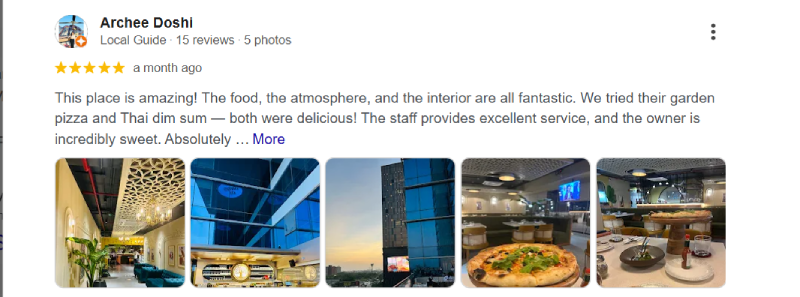
This trust gap is enormous. Studies show that 76% of travellers trust online reviews as much as personal recommendations and would also not mind paying a higher amount. Some trust reviews even more because they come from diverse perspectives. Different travellers experience hotels differently based on expectations, travel style and preferences.
A single negative review highlighting cold water in showers undermines ten marketing claims about “luxurious bathrooms.” A positive review mentioning the manager’s kindness when solving a problem creates an emotional connection that no advertising can achieve. Reviews are authentic storytelling that marketing cannot replicate.
If a Hospitality brand in works closely with a top SEO company to manage customer feedback on digital platforms, they automatically gain an advantage. Reviews aren’t just marketing; they’re credibility signals that search engines reward.
The Algorithm Effect: How Reviews Drive Visibility
Here’s what most hospitality owners don’t understand: Google’s algorithm heavily weights reviews when ranking local search results. The number of reviews, their recency, their ratings and how consistently positive they are all factor into ranking calculations.
A new hotel with no reviews ranks below an established hotel with mediocre reviews in the same location. An old hotel with declining review ratings gradually disappears from local search results. Google interprets review signals as genuine quality indicators. The more positive reviews, the more trustworthy Google considers the business.
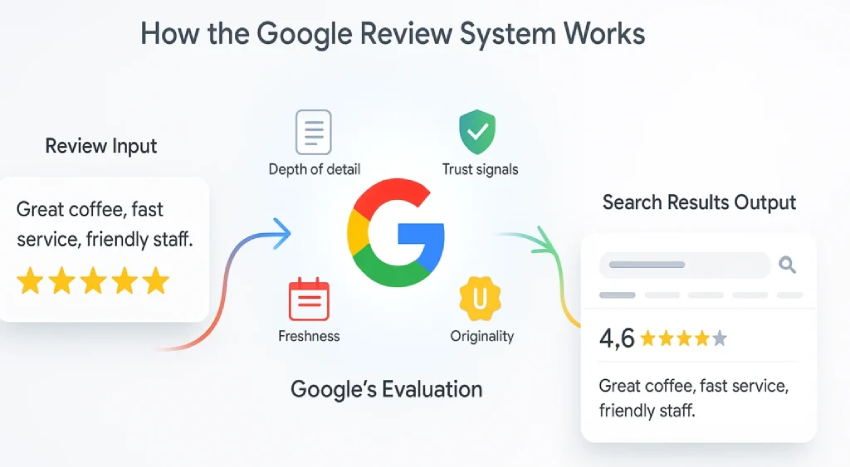
Image credits: Wiser Review
This creates a visibility multiplier effect. Hotels with strong reviews appear first in Google search results for “hotels in Ahmedabad” or “luxury accommodation near station.” First position drives traffic. Traffic generates bookings. Bookings create new guests who leave reviews. New reviews improve rankings further.
The competing hotel down the street has a beautiful website and runs Google Ads. But if your Google ratings are superior, you win the local search battle. Travellers searching organically find you first. Your paid advertising effectively becomes free because Google’s algorithm rewards review quality.
This algorithmic advantage is why review management has become a core SEO strategy. Without strong reviews, even exceptional SEO efforts struggle to convert position improvements into actual bookings.
The Economics of Reviews: Impact on Revenue and Bookings
The relationship between reviews and revenue is direct and measurable. Hotels improving their rating from 3.5 stars to 4.2 stars see booking increases of 20-40%.
The impact accelerates with volume. Consider this, a hotel with 300 reviews at 4.4 stars outperforms a competitor with 50 reviews at 4.5 stars because sheer review volume signals consistency and credibility. Potential guests think: “300 people can’t all be wrong. This hotel is genuinely good.”
Price sensitivity changes with review strength, too. Hotels with 4.5+ star ratings can charge premiums over similar properties with 3.5 star ratings. Guests are willing to pay more because positive reviews reduce booking risk. They’ve seen what to expect from hundreds of previous guests.
During demand fluctuations, reviews become negotiation currency. When hotels have availability but demand is soft, strong reviews maintain pricing power. When demand is high but hotels need to stand out, strong reviews help capture market share from competitors at similar price points.
For hospitality brand owners, this means review improvement is directly revenue improvement. A digital marketing agency helping a 50-room hotel improve ratings by half a star could generate an additional ₹50-100 lakh annually. The ROI on review management becomes impossible to ignore once you see these numbers.
Negative Reviews: Turning Criticism Into Opportunity
Most hospitality owners fear negative reviews. They see one-star ratings and panic. But negative reviews aren’t disasters; they’re opportunities to demonstrate service recovery and genuine commitment to improvement.
Here’s what actually impacts reputation: not that negative reviews exist, but how you respond to them. A guest who had a poor experience but received a sincere apology and genuine resolution often becomes a loyal advocate who changes their review or leaves positive ones in the future.
Google actually rewards engagement on negative reviews. When you respond professionally, acknowledge problems and offer solutions, the algorithm recognises this as customer service commitment. Ironically, actively managed negative reviews sometimes improve rankings more than ignoring positive ones.
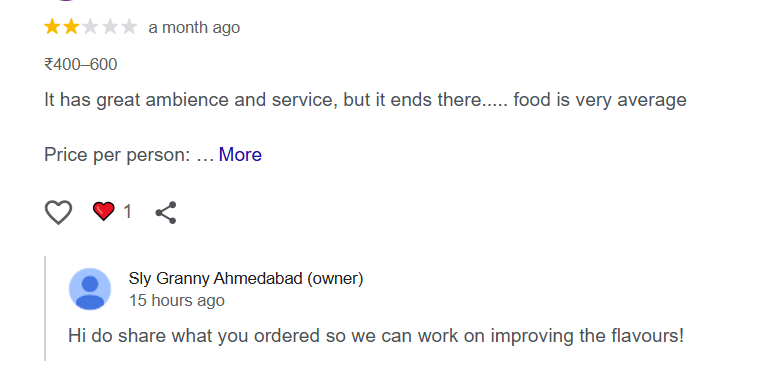
The paradox: hotels with no negative reviews often seem suspicious. All positive reviews with zero criticism feel fake. Hotels with 85% five-star reviews and 15% four or three-star reviews seem authentic and trustworthy. Potential guests think, “Real property, real feedback, real results.”
This reframes the review management strategy. Rather than eliminating negative reviews (impossible), the goal becomes having more positive reviews and responding excellently to negative ones. Volume, consistency and engagement matter more than perfection.
Building a Review Culture: Creating Systems That Generate Positive Feedback
The hospitality businesses winning on reviews aren’t hoping for positive feedback; they’re systematically generating it. They’ve built operational systems that create review-worthy moments and processes that encourage sharing.
The best approach starts with exceeding expectations. When a guest experiences genuine hospitality, exceptional service or unexpected kindness, they want to share. The hotel that trains staff to create these moments generates reviews naturally because guests feel motivated to reciprocate positive energy.

Requesting reviews at the right moment amplifies this. A guest who just had breakfast at your restaurant or checked into a beautiful room is emotionally engaged. Asking them to share their experience then captures enthusiasm. Asking weeks later when the emotional connection fades generates fewer responses.
Smart hospitality businesses create friction-free review processes. QR codes in guest rooms linking directly to review platforms work better than asking guests to search for the hotel. SMS reminders with direct review links convert better than generic emails. Making review submission easy dramatically increases response rates.
Some properties create minor incentives coupon for breakfast, entry to a raffle or loyalty points for leaving reviews. The incentive must be small enough to feel genuine and large enough to motivate action. The goal is removing friction, not bribing dishonesty.
What Digital Marketing Agencies Must Understand About Reviews
For agencies helping hospitality clients, review management isn’t optional’s foundational. A digital marketing agency in Ahmedabad working with hotels will audit the current review profile, identify gaps across platforms and develop systematic improvement strategies.
This means analysing which platforms matter most (Google and TripAdvisor drive most bookings; other platforms follow), monitoring competitor review strategies and identifying service gaps revealed through negative feedback. Data from reviews often shows operational problems better than internal analysis.
Smart agencies help clients develop reputation management technology tools that track review activity, automate response workflows and flag issues requiring attention. They also help optimise Google Business Profiles, which now serve as primary search results for local hospitality queries.
Most importantly, agencies should help hotels understand that reviews aren’t marketing expenses; they’re core business infrastructure. Investment in review generation systems and reputation management yields a measurable revenue impact that justifies ongoing attention and resources.
Conclusion
Online reviews have fundamentally reshaped hospitality competition. They determine visibility in search results, influence 93% of booking decisions and directly impact revenue. Hotels no longer compete primarily on property quality or pricethey compete on reputation as reflected through guest reviews. In Ahmedabad’s competitive hospitality landscape, strong review profiles separate thriving businesses from struggling ones. An SEO company in Ahmedabad helping hotels manage this reputation channel provides a strategic advantage that translates to bookings and revenue. For hospitality owners, review management isn’t a nice-to-have tactic. It’s the core of modern hotel marketing. Building systems that generate positive reviews, managing platforms strategically and responding excellently to all feedback has become an essential competitive practice. The businesses thriving today understand that real guest voices, authentic, unfiltered and visible, shape reality for future guests far more than any marketing claim ever could.
Frequently Asked Questions

The founder and partner of Flora Fountain, Shefali leads the Content and Technology divisions. A one-time engineer who started her career writing front-end code, she took a detour sometime during her 9 years in New York, studied journalism and started writing prose, poetry and sometimes jokes. She now has 15...