


For years, Indian makeup brands followed a predictable script.
Soft colours. Polite language. Fairness-coded confidence. Ads that spoke to women but rarely with them. The tone was gentle, careful and approval-seeking, as if confidence needed permission.
Then came SUGAR Cosmetics.
SUGAR didn’t enter the market quietly. It didn’t try to sound pleasing or polished. Instead, it showed up loud, opinionated and unapologetic. The brand spoke like real women speak… sharp, direct and self-aware. There were no promises of perfection, no rewriting of insecurities into selling points.
What SUGAR truly changed was not packaging or pricing.
They changed the language.
By flipping how products were named, how campaigns were written and how women were addressed, SUGAR created a communication model that felt less like advertising or branding and more like identity. This shift is why SUGAR didn’t just gain customers… it built believers.
As a branding agency in this blog, we are breaking down how SUGAR rewrote the rules of communication for Indian beauty brands and why their women-first voice became their strongest growth engine.
Table of Contents:
- The SUGAR Disruption: When Beauty Spoke Back
- Bold by Design: A Brand Voice That Refused to Please
- Women-First, Not Male-Approved: Rewriting the Gaze
- Digital-First Storytelling: Social Media, Influencers and Community
- Product Naming, Packaging and Personality
- D2C to Retail: Scaling the Attitude Offline
- Why SUGAR Works: Loyalty, Identity and Brand Economics
- Conclusion
- FAQs
The SUGAR Disruption: When Beauty Spoke Back
View this post on Instagram
SUGAR didn’t enter the Indian beauty market trying to fit in. It entered with a clear decision to sound different.
While most brands softened their messaging, SUGAR Cosmetics sharpened it. The tone was confident, direct and opinionated. Product names were bold. Campaign lines felt conversational, sometimes cheeky, and always sure of themselves. The brand spoke like a woman who already knew who she was.
This shift was deliberate. SUGAR did not position makeup as a solution to insecurity. It treated confidence as a given. The communication assumed that women were already decisive and expressive, and makeup was simply a tool to match that energy.
From a branding agency’s lens, this was a clear break from category norms. SUGAR did not try to appeal to everyone. It chose clarity over comfort. By doing so, it became instantly recognisable in a crowded market where most brands sounded interchangeable.
The disruption also showed up in what SUGAR chose to ignore. There was no obsession with fairness, no promise of transformation, and no need for validation. Instead, the language focused on choice, control and individuality. This made the brand feel less like an advertiser and more like a personality.
For any digital marketing agency analysing this shift, the lesson is simple. SUGAR did not rely on louder media spends. It relied on a sharper voice. The brand proved that when communication reflects how your audience already thinks and speaks, attention follows naturally.
This was not a campaign-led change. It was a mindset shift that shaped everything that came after.
Bold by Design: A Brand Voice That Refused to Please
SUGAR’s communication works because it is intentional, not accidental.
Every line of copy sounds sure of itself. There is no over-explaining, no softening and no need to sound polite. The brand does not chase approval. It speaks with certainty, even when that means being blunt. This clarity is what makes the voice memorable.
Unlike traditional beauty communication, SUGAR does not position itself as a guide teaching women how to look better. It speaks as an equal. The tone assumes confidence instead of manufacturing it. This removes the gap between brand and consumer and makes the message feel natural rather than scripted.
From a branding agency perspective, this is where most brands hesitate. Being bold means being specific, and being specific means some people will opt out. SUGAR accepted that trade-off early. Instead of trying to appeal to everyone, it focused on sounding authentic to the women it wanted to speak to.
This refusal to dilute the message is what gives the brand consistency. Across ads, captions and product descriptions, the voice remains sharp and familiar. No matter the format, the tone never shifts to please.
That consistency is what turns communication into identity, not just marketing.
Women-First, Not Male-Approved: Rewriting the Gaze
View this post on Instagram
SUGAR’s communication stands out because it changes who the message is written for.
- The brand does not seek validation. Confidence is shown as self-owned, not granted by others.
- There is no focus on fairness, perfection or transformation. Makeup is positioned as choice, not correction.
- Campaigns speak directly to women, without filtering language to sound acceptable or pleasing.
- The tone reflects control and independence rather than softness or approval.
From a branding agency point of view, this shift is critical. SUGAR removed the external gaze from beauty communication and placed women at the centre of the conversation.
For a digital marketing agency, this clarity makes messaging stronger. When the audience is clearly defined, communication becomes sharper, faster and more effective.
By rewriting who beauty talks to, SUGAR rewrote how beauty talks.
Digital-First Storytelling: Social Media, Influencers and Community
SUGAR was built for screens first, shelves later. Its communication reflects how digital-native audiences consume content.
- Social media is treated as a conversation space, not a billboard. Posts sound like people, not campaigns.
- Influencers are chosen for relatability, not perfection. Real skin, real opinions, real tone.
Content leans into humour, honesty and quick reactions rather than polished brand speak. - The brand behaves like a creator, responding to trends instead of waiting to plan around them.
From a digital marketing agency perspective, this approach reduces distance. The audience does not feel marketed to. They feel included.
SUGAR’s digital presence works because it mirrors how its audience already talks online. That alignment turns content into community, not just reach.
Product Naming, Packaging and Personality
SUGAR’s attitude is not limited to its campaigns. It shows up in the products themselves.
- Product names are bold and direct, never delicate or descriptive for the sake of it.
- Black packaging signals confidence and strength, not softness.
- Visual identity stays consistent across launches, making products instantly recognisable.
- The product language matches the brand voice, with no disconnect between what is said and what is sold.
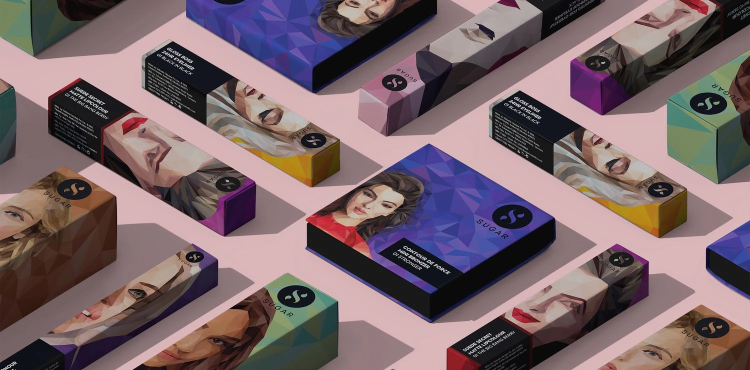
This is where communication becomes tangible. The personality is not layered on later. It is built into the product experience.
When naming, design and tone move together, the brand stops feeling like marketing and starts feeling intentional.
D2C to Retail: Scaling the Attitude Offline
As SUGAR expanded beyond digital, the challenge was clear. Growth should not dilute the voice.
- The D2C website kept communication sharp and opinion-led, not transactional.
- Offline stores carried the same tone through visuals, displays and staff interaction.
- Retail expansion focused on visibility without compromising brand personality.
- The messaging stayed consistent across touchpoints, online and offline.
From a marketing agency perspective, this is where many digital-first brands lose character. SUGAR managed scale without softening its stance.
The result was growth that felt controlled, not scattered. The brand remained recognisable even as it moved into physical spaces.
Why SUGAR Works: Loyalty, Identity and Brand Economics
Discounts or constant launches do not drive SUGAR’s growth. It is driven by identity.
- Customers don’t just buy products. They buy into a point of view.
- The brand creates emotional ownership, which increases repeat purchases naturally.
- Clear positioning reduces the need for heavy persuasion or price-led selling.
- Strong identity lowers long-term acquisition costs because the brand is remembered.
SUGAR is proof that sharp positioning scales better than loud advertising. When messaging is clear, marketing works harder with less effort.
This is why SUGAR sustains attention without constantly chasing it.
Conclusion
SUGAR’s success does not come from a single idea or a viral moment. It comes from consistency.
The brand chose a clear voice early and refused to dilute it as it grew. Every decision, from copy to packaging to platforms, followed the same belief. Women do not need to be spoken to carefully. They need to be spoken to honestly.
For any branding agency, SUGAR is a reminder that strong brands are built on point of view, not polish. And if you think you want a decoded strategy for your brand then email us at hello@florafountain.com
SUGAR didn’t change how makeup looks.
It changed how beauty brands speak.
FAQs

The founder and partner of Flora Fountain, Shefali leads the Content and Technology divisions. A one-time engineer who started her career writing front-end code, she took a detour sometime during her 9 years in New York, studied journalism and started writing prose, poetry and sometimes jokes. She now has 15...