



Ahmedabad did not earn the title of the Manchester of India by accident.
The city’s first cotton mill was founded on 30 May 1861 by Ranchhodlal Chhotalal, at a time when local entrepreneurs financed the venture themselves, making it one of the earliest examples of Indian industrial capital. By the early 20th century, the city had over 51 mills, solidifying its position as the second-largest textile producer in the country.
That legacy did not disappear when the old mill era ended. It transformed. The companies that operate out of Ahmedabad today are not trading on nostalgia. They are running globally competitive manufacturing operations and pioneering sustainable fabric technology
As a premier digital marketing agency in Ahmedabad that has worked with industry giants before, we feel that these stories are a gold mine in understanding brand building in the textile industry.
Table of Contents
- Arvind Limited
- Jindal Worldwide Ltd.
- Chiripal Group
- Aarvee Denims and Exports Ltd.
- Balkrishna Textile Pvt. Ltd.
- Kankariya Textile Industries Pvt. Ltd.
- CTM Homestyle
- Soma Textiles and Industries Ltd.
- What These Brands Have in Common
- How Flora Fountain Helps Textile and Manufacturing Brands Grow Digitally
- Conclusion
- FAQs
1. Arvind Limited
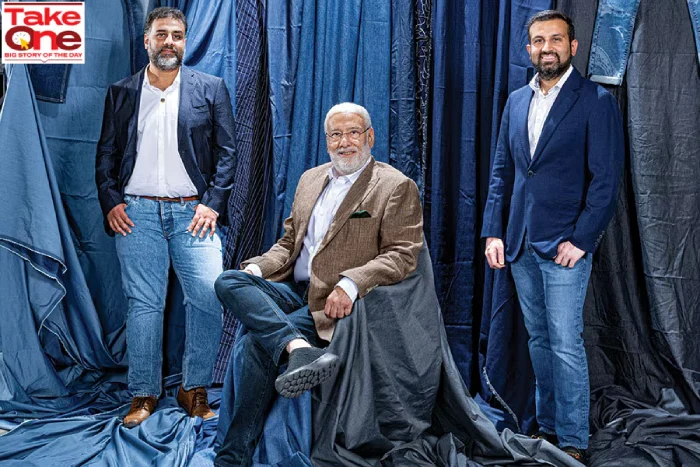
Arvind Limited is the most significant textile company to have come out of Ahmedabad and one of the most important in India’s industrial history.
Founded in 1931 by Kasturbhai Lalbhai, the company spent its first five decades as a respected but broadly conventional textile manufacturer. The decision that changed everything came in the 1980s when Arvind made a calculated bet on denim at a scale India had never seen before.
The investment worked.
Arvind became one of the three largest denim manufacturers in the world and used that positioning to bring international fashion brands including Arrow, Lee and Wrangler into the Indian market through licensed partnerships.
Today Arvind Limited operates across denim, advanced materials, retail and real estate with annual revenues exceeding Rs 8,500 crore. The majority of the credit for Ahmedabad’s reputation as India’s denim capital goes to Arvind Mills.
Known for: Global denim manufacturing, international brand licensing, advanced materials and sustainable fabric innovation
2. Jindal Worldwide Ltd.
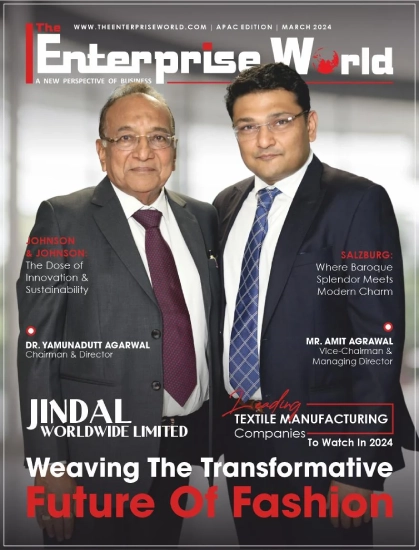
Jindal Worldwide is one of Ahmedabad’s most prominent publicly listed textile companies and a significant player in India’s denim and specialised fabric sector. With annual revenues exceeding Rs 2,000 crore, the company operates across denim manufacturing, specialised fabric production and spinning yarn operations at a scale that places it firmly in the first tier of Gujarat’s textile industry.
What distinguishes Jindal in a market crowded with denim manufacturers is the depth of its vertical integration.
The company controls significant portions of its supply chain from yarn spinning through to finished fabric, which gives it both cost discipline and quality consistency that purely assembly-focused operations cannot match.
Jindal Worldwide’s listed status on Indian exchanges also reflects a level of governance and financial transparency that positions it well for partnerships with global brands increasingly scrutinising their supply chains for accountability and sustainability credentials.
Known for: Denim manufacturing, specialised fabric production, spinning yarn operations and vertical supply chain integration
3. Chiripal Group
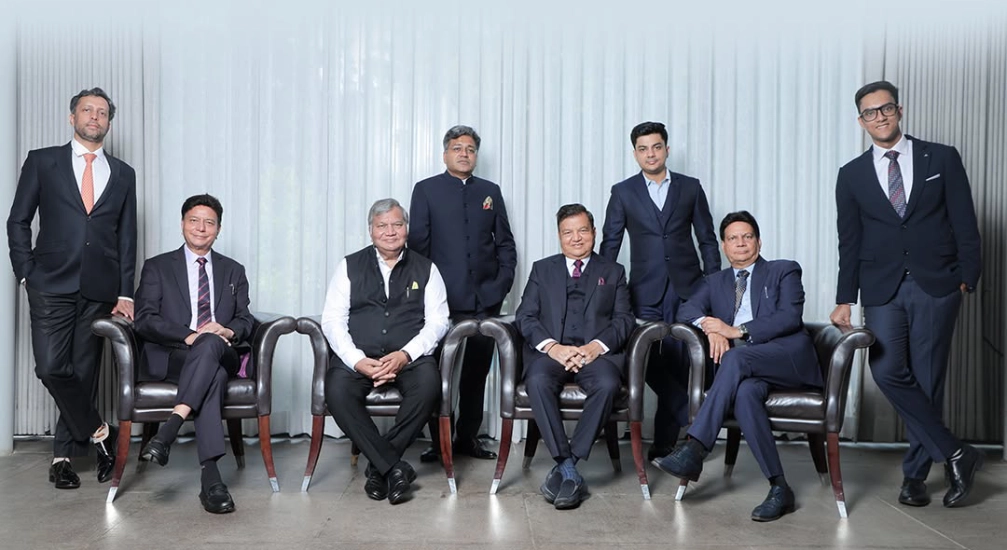
The Chiripal Group is one of Ahmedabad’s largest industrial conglomerates with a textile portfolio that spans mass fabric weaving, processing and two publicly listed entities in Nandan Denim and Vishal Fabrics. Combined textile revenues across the group exceed Rs 1,500 crore, making it one of the more substantial textile operations based in the city.
Nandan Denim, the group’s flagship textile brand, is one of India’s largest denim fabric manufacturers with a production capacity that serves both domestic apparel companies and international export markets.
Vishal Fabrics handles fabric processing and finishing, giving the group end-to-end capability from grey fabric through to finished, processed output ready for garment manufacture.
What makes the Chiripal Group particularly interesting in the context of Ahmedabad’s textile landscape is the breadth of its industrial ambitions.
Known for: Mass denim fabric manufacturing, fabric processing and finishing, and integrated group operations across Nandan Denim and Vishal Fabrics
4. Aarvee Denims and Exports Ltd.

Aarvee Denims is a mid-to-large publicly listed textile manufacturer based in Ahmedabad with a specific focus on cotton yarn and denim fabric production. The company operates with an annual capacity of 34,000 tonnes of cotton yarn alongside its denim fabric manufacturing lines, giving it meaningful scale in both upstream and downstream textile production.
The exports focus in the company’s name reflects a genuine commercial orientation toward international markets. Aarvee has built its reputation on consistent quality standards and the ability to meet the technical specifications that international apparel buyers require, particularly in the mid-to-premium denim segment.
In the context of Ahmedabad’s textile industry, Aarvee represents the mid-market manufacturing tier that is essential to the city’s overall competitiveness.
Aarvee serve a large and commercially important segment of the market that requires reliable, quality-consistent denim and yarn supply without the minimum order requirements that the largest manufacturers impose.
Known for: Cotton yarn manufacturing at 34,000 tonne annual capacity, denim fabric production and international textile exports
5. Balkrishna Textile Pvt. Ltd.
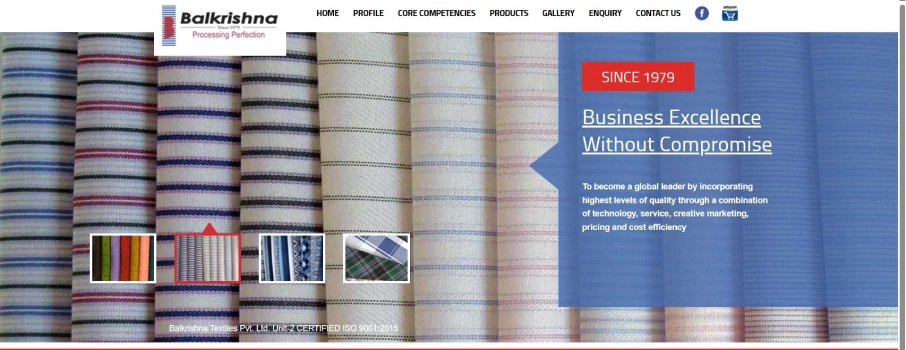
Balkrishna Textile is a mid-scale private manufacturer with a distinctly international commercial profile. The company’s operations span fabric processing, rotary screen printing and home textiles, with a specific emphasis on export markets that has made it one of Ahmedabad’s more globally oriented manufacturers in its tier.
The rotary screen printing capability is worth noting in particular. Precision fabric printing at scale is a technically demanding process and Balkrishna’s investment in that capability reflects a deliberate move up the value chain from commodity fabric production toward finished, design-led textile products that command better margins in international markets.
The home textiles focus also positions the company in a segment that has seen consistent export growth from India, driven by demand from the US, European and Gulf markets for Indian-manufactured bed linen, curtaining and upholstery fabrics.
Known for: Global fabric exports, rotary screen printing and international home textiles manufacturing
6. Kankariya Textile Industries Pvt. Ltd.
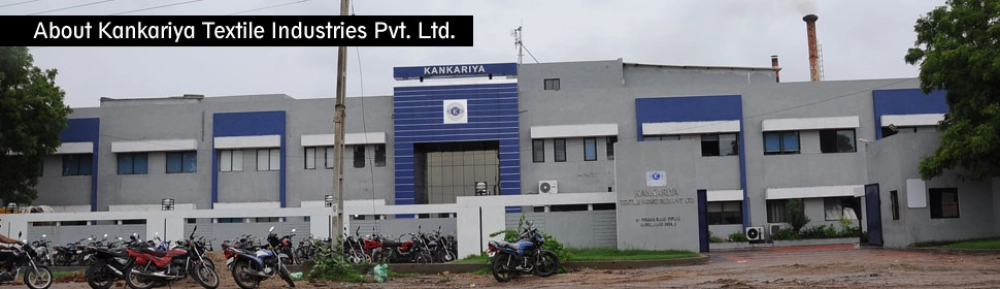
Kankariya Textile Industries occupies a distinctive niche in Ahmedabad’s manufacturing landscape: specialised ethnic and decorative fabric production with a strong emphasis on craft-intensive processes. The company’s output spans ethnic sarongs, lungies, batik prints and digital fabric printing, covering both traditional handcraft-adjacent techniques and contemporary digital printing technology.
That combination is commercially astute. The global market for authentic Indian ethnic textiles continues to grow, driven by diaspora demand, cultural fashion trends in Western markets and the premiumisation of traditional crafts in domestic retail.
For a private-tier manufacturer, the brand’s specialisation in ethnic and decorative fabrics also provides natural insulation from the commodity denim and basic fabric markets where price competition is most intense. Differentiation through craft and design is a more sustainable competitive position for a manufacturer at this scale.
Known for: Ethnic sarongs, batik prints, lungies and digital fabric printing for domestic and export markets
7. CTM Homestyle
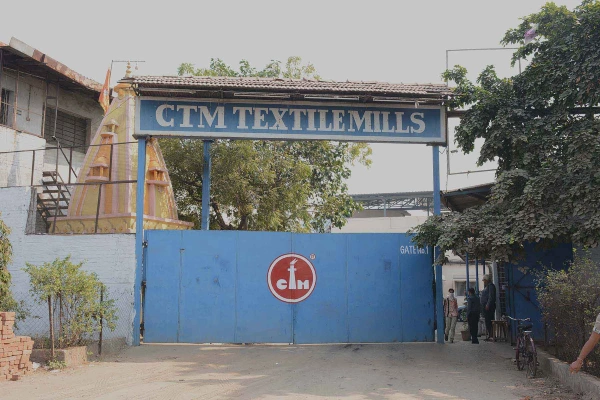
CTM Homestyle is the consumer and export-facing brand of the CTM Group, one of Ahmedabad’s established mid-scale textile operations with a product range that spans home furnishings, export textiles and technical and agricultural textile applications. The breadth of that range is somewhat unusual for a private-tier manufacturer and reflects a deliberate strategy of operating across multiple end-use categories rather than concentrating in a single segment.
The home furnishings division is the most brand-forward part of the business, with CTM Homestyle representing the group’s most visible commercial identity in the domestic market. Home textiles is a category where brand and design increasingly matter to end consumers, and CTM’s positioning in this space gives the group a retail-facing identity alongside its more industrial operations.
The technical and agricultural textile segment deserves attention for what it signals about the group’s forward-looking commercial thinking.
Known for: Home furnishings, export textiles and technical and agricultural textile manufacturing
8. Soma Textiles and Industries Ltd.
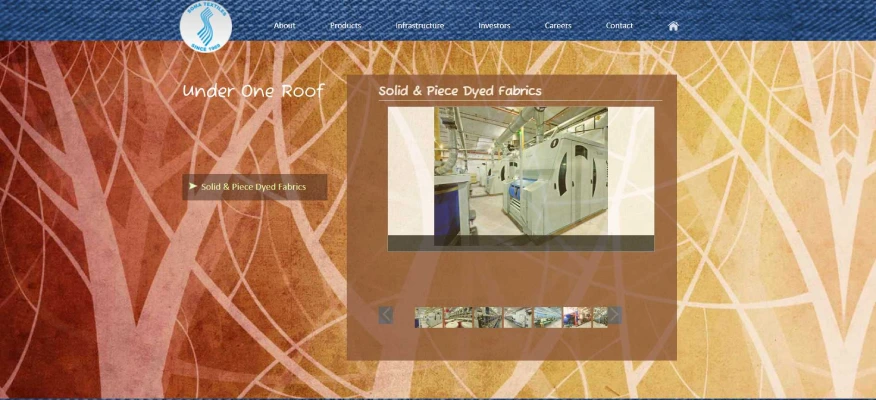
Soma Textiles is a listed small-cap manufacturer with a focused identity in the denim segment and a specific reputation for authentic, vintage-character denim fabrics. In an industry where most manufacturers compete on price and production volume, Soma’s orientation toward vintage denim aesthetics and character fabrics represents a genuine product differentiation strategy.
Vintage denim is a commercially meaningful niche. The premium denim market globally has grown consistently on the back of consumer appetite for fabrics that age distinctively, carry visual character and differentiate finished garments in the crowded mid-to-premium apparel market. Soma’s focus on producing these fabrics positions it as a supplier to the segment of the apparel industry that competes on product quality rather than price.
For a small-cap listed company, maintaining a focused product identity is both a competitive necessity and a genuine strength. Soma is not trying to compete with Arvind on volume.
Known for: Vintage character denim fabrics and specialised denim production for premium apparel manufacturers
What These Brands Have in Common
Looking across all these companies, a few things stand out.
Specialisation beats generalisation at every tier.
The companies on this list that have built the most durable positions are the ones that made a clear choice about what they would be best at. Arvind chose denim and committed to it at global scale. Kankariya chose ethnic and decorative printing. Soma chose vintage character denim. T.S. Textiles chose premium domestic suiting. In a commoditised industry, the specialist always has a more defensible position than the generalist.
Vertical integration is a consistent competitive advantage.
The larger manufacturers on this list, particularly Arvind, Jindal and the Chiripal Group, have built significant portions of their supply chains internally. That integration gives them cost and quality control that purely assembly-focused operations cannot match.
The export orientation of Ahmedabad’s textile industry is structurally important.
Several companies on this list derive significant revenue from international markets. That export orientation has forced Ahmedabad’s manufacturers to meet international quality standards, work with global buyers and develop the operational discipline that comes from serving customers with zero tolerance for inconsistency.
How Flora Fountain Helps Textile and Manufacturing Brands Grow Digitally
The textile industry in Ahmedabad has always been built on product quality and trade relationships. What has changed in 2026 is where those relationships start.
International buyers research suppliers online before they make contact. Domestic retail partners check Instagram and LinkedIn before they walk into a showroom. Young apparel entrepreneurs discover fabric manufacturers through search and social media before they call a distributor. If your brand is invisible online, you are invisible to an entire generation of buyers who will never know to look for you through traditional trade channels.
As a leading branding agency in Ahmedabad that works with manufacturing and B2B brands, Flora Fountain builds the kind of digital presence that textile companies need: a website that communicates your capabilities and quality standards clearly, SEO that puts you in front of buyers searching for your specific category, LinkedIn and content marketing that positions your company as an authority in your fabric niche and social media marketing that gives your brand a visual identity worth remembering.
If your textile business is growing but your digital presence has not kept pace, we should have a conversation.
Conclusion
Ahmedabad’s textile industry is not a relic. It is a living, evolving ecosystem of manufacturers that collectively represent one of the most technically capable and commercially diverse fabric production bases in Asia.
The companies on this list span a remarkable range of scales, ownership structures, product categories, and market orientations. What they share is a connection to a city that has been weaving its identity into fabric since 1861 and shows no sign of stopping.
The title of Manchester of India was bestowed upon Ahmedabad by prominent Indian industrialists Ambalal Sarabhai and Kasturbhai Lalbhai. More than a century later, the companies carrying that legacy forward are doing it not through nostalgia but through investment, specialisation and a commitment to quality that continues to find buyers around the world.
Frequently Asked Questions

Vasim Samadji is a partner at Flora Fountain, where he leads the Business and Marketing Strategy divisions. In a world where everyone is used to sugarcoating, his directness is often considered rude. But that shouldn't be a problem if you like the no-nonsense approach. Because he is a seasoned professional...