


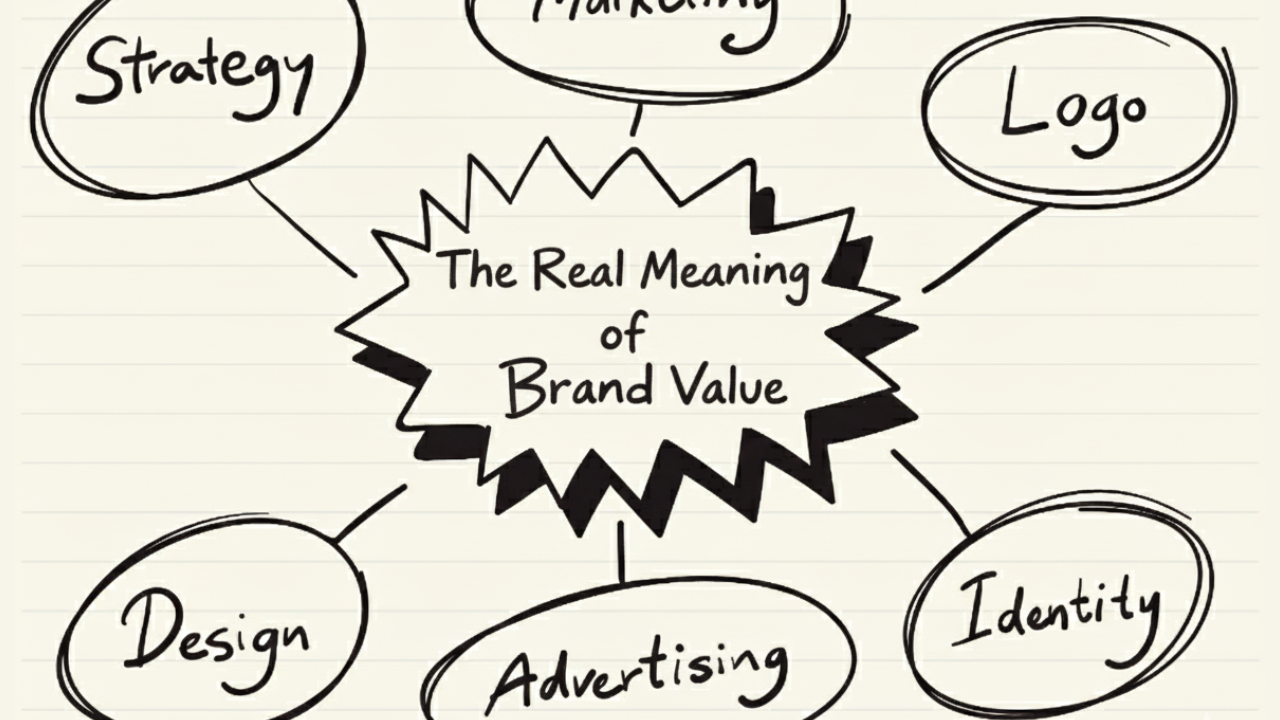
Did you know the Toyota Corolla and the Chevrolet Geo Prism were, for all practical purposes, the same car?
They rolled off the same assembly line, built by the same workers, using the same materials and identical design specifications. Yet the Corolla sold for more, depreciated more slowly, and moved faster. Buyers trusted it more. Experts rated it higher.
Nothing about the car changed.
Only the badge did.
That price premium, customer preference and perceived quality gap? That’s brand value. Not the advertising budget. Not the marketing campaigns. Not the clever slogans. The actual, measurable value that exists purely because one brand name means something different to customers than another.
The best branding agency in Ahmedabad, working with the top brands, will understand what brand value actually means and whether you’re investing strategically or spending aimlessly on marketing that doesn’t compound.
Table of Contents:
- What brand value actually means (and what it doesn’t)
- Why do two identical products sell at different prices
- The difference between brand equity and brand value
- The components that build brand value
- How brand value affects your bottom line
- Examples of brands that built extraordinary value
- How to measure what you’ve built
- Conclusion
- FAQs
What brand value actually means (and what it doesn’t)
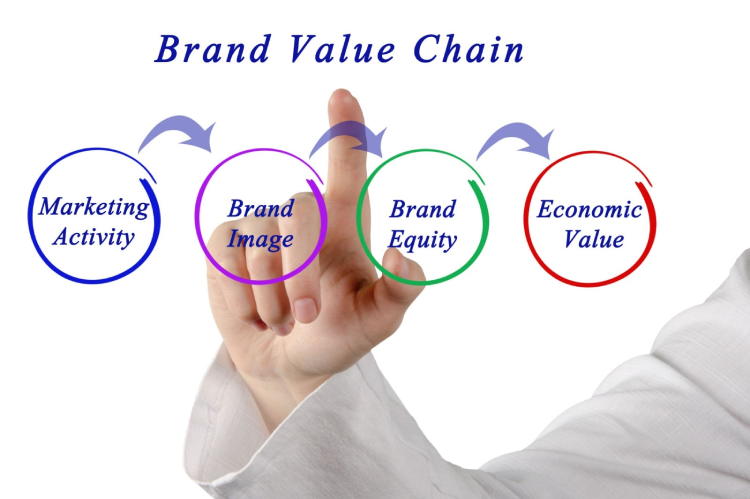
Brand value gets misunderstood more than any other business concept. Most people conflate it with brand awareness, logo recognition or marketing spend. None of these definitions captures what brand value truly represents.
Brand value is the financial worth of your brand as an intangible business asset. It’s the monetary amount someone would pay for your brand name, reputation and customer relationships if your brand were sold separately from your physical assets, inventory and operations.
Think of it this way: if you stripped away your factories, offices, products and employees but kept just your brand name, reputation and customer goodwill, what’s that worth? That’s brand value.
Apple’s brand value in 2024 exceeded $516 billion, according to brand valuation consultancies. That’s not Apple’s total company value. That’s specifically the value attributable to the Apple brand itself as an intangible asset separate from their products, patents, real estate or cash reserves.
What brand value is not: your logo design quality, your social media following, your advertising spend, your brand guidelines documentation or your brand awareness percentage. These elements contribute to building brand value but they aren’t brand value itself.
Brand value measures outcomes, not inputs. It’s what you’ve built through all your branding efforts, not the efforts themselves.
Why do two identical products sell at different prices
Understanding brand value requires understanding why customers willingly pay more for branded products than generic alternatives offering identical functional benefits.
The pharmaceutical industry provides perfect examples. Generic medications contain the same active ingredients as branded versions, are manufactured to identical standards and deliver identical therapeutic effects. Yet branded medications command significant premiums.
Advil and generic ibuprofen contain the same active ingredient in the same dosages. Advil costs 30-40% more. Consumers buy it anyway because the Advil brand name creates perceived reliability, quality assurance and trust that generic alternatives haven’t built.
The same dynamic plays across categories. Branded clothing, electronics, food products and services all command premiums when brands have built sufficient value. Customers aren’t paying for better products. They’re paying for reduced perceived risk, emotional associations, social identity expression and trust signals that brands provide beyond product functionality.
This explains why brand building isn’t a frivolous marketing expense but a strategic investment in pricing power. Every rupee of price premium you can command due to brand reputation flows directly to profit margins. That’s brand value, creating measurable financial returns.
The difference between brand equity and brand value
Brand equity and brand value are related but distinct concepts. Confusion between them causes strategic errors, so clarification matters.

Brand equity refers to the intangible value added to products through customer perceptions, associations and loyalty. An experienced digital marketing agency based in Ahmedabad will measure your brand equity through conducting a thorough analysis of your brand’s customer awareness, associations, perceived quality and customer loyalty before onboarding with you. Brand equity focuses on the customer’s mind: what do they think, feel and believe about your brand?
Brand value refers to the financial worth of the brand as a business asset. It’s measured in monetary terms through valuation models. Brand value focuses on financial impact: what’s the brand worth if you sold it?
Think of brand equity as the cause and brand value as the effect. Strong brand equity (positive customer perceptions) creates high brand value (financial worth). You build brand equity through marketing, customer experience and brand management. That accumulated brand equity translates into brand value when measured financially.
For example, Nike has extraordinarily strong brand equity: high awareness globally, powerful associations with athletic excellence and inspiration, and fierce customer loyalty. This brand equity translates into Nike’s brand value, estimated at over $50 billion, representing the financial worth of owning the Nike brand name and reputation.
But here’s the thing. Both concepts matter, but serve different purposes. Brand equity guides marketing strategy and customer relationship building. Brand value matters for financial reporting, mergers and acquisitions, licensing deals and understanding the return on branding investments. Brands that have worked with an experienced digital marketing agency for a long time understand this concept clearly
The components that build brand value
Brand value doesn’t emerge randomly. It’s built systematically through specific components that compound over time.
- Brand Awareness: Forms the foundation of brand equity. Customers can’t value what they don’t know exists. Awareness means customers recognise your brand, recall it when relevant needs arise, and remain familiar with what your brand represents. Higher awareness expands the potential customer base and provides an advantage in consideration and purchase decisions.
- Brand Associations: Shape how customers perceive your brand. These include qualities, emotions, values, and attributes people connect with it. Apple is associated with innovation and elegant design, Volvo with safety, and Dove with real beauty and self-acceptance. Such associations create meaning beyond functional benefits and differentiate brands in customers’ minds.
- Strength of Associations: Strong, positive associations increase brand value, while weak, confused, or negative ones diminish it. Managing associations requires consistent communication of brand values, thoughtful partnerships, and ensuring every touchpoint reinforces the desired perception.
- Perceived Quality: Influences willingness to pay and purchase decisions regardless of actual product quality. Brands perceived as high quality can command premium pricing, even when objective comparisons show parity. This perception develops through product experience, brand presentation, customer service, and overall reputation.
- Brand Loyalty: Represents the ultimate component of brand equity. Loyal customers repeatedly choose the brand, resist competitors, pay premium prices, and recommend it to others. They generate recurring revenue while reducing acquisition costs, turning customers into long-term brand assets.
- Brand Differentiation: Ensures the brand stands apart from competitors. Without differentiation, brands compete only on price and convenience. Effective differentiation creates preference beyond rational comparison, supports premium positioning, and reduces price sensitivity.
How brand value affects your bottom line
Brand value isn’t a marketing idea. It directly affects profits and overall business performance.
- Premium Pricing Power: Represents the most direct financial benefit of brand value. Brands with strong equity can charge 10–50% premiums over generic alternatives, with this premium flowing directly into higher gross margins and profitability. For example, a 20% price premium on a product with 40% gross margins can double net profit margins.
- Reduced Customer Acquisition Costs: Occur because strong brands attract customers organically through reputation and word-of-mouth. When customers actively seek out a brand, marketing efficiency improves significantly compared to brands that must rely on interruptive and persuasive advertising.
- Higher Customer Lifetime Value: Results from loyalty and repeat purchases. Customers who trust a brand buy more frequently, adopt new products more readily, and remain customers for longer periods, increasing overall lifetime value.
- Faster New Product Success: Happens when strong brands expand into new categories. Established brand equity transfers to new offerings, enabling quicker adoption and lower risk. Examples include Apple expanding into wearables or Nike moving into apparel.
- Resilience During Crises: Protects brands with strong equity during challenging periods. In cases of product recalls, negative publicity, or competitive pressure, brands with deep customer loyalty and positive associations recover faster due to accumulated goodwill.
- Talent Attraction and Retention: Benefit from strong brand reputation. Skilled employees prefer working for respected brands, reducing recruitment costs, improving workforce quality, and lowering employee turnover.
- Partnership and Distribution Advantages: Emerge as retailers, suppliers, and partners prefer collaborating with recognised brands. This preference leads to better shelf space, favourable partnership terms, and stronger supply chain relationships driven by proven customer demand and market credibility.
Examples of brands that built extraordinary value
Examining brands with exceptional value shows how strategy, consistency and perception translate directly into financial worth. This is the same lens a strong Branding agency in Ahmedabad would apply when helping businesses move beyond logos into long-term value creation.
- Apple: Demonstrates how innovation, reputation, and elegant design associations create extraordinary brand value. Apple consistently ranks as the world’s most valuable brand, exceeding $500 billion in brand value alone. This allows the company to command 40–50% premium pricing over competitors with similar specifications while maintaining intense customer loyalty. Customers don’t just buy Apple products; they enter an ecosystem that creates high switching costs and compounding lifetime value.
- Nike: Built its brand value through powerful associations with athletic excellence, determination, and inspiration. The swoosh logo and “Just Do It” tagline communicate meaning instantly. With a brand value exceeding $50 billion, Nike commands premium pricing on athletic wear that costs similar amounts to produce as competitors’ products. Customers pay for the emotional and social meaning Nike represents beyond functional performance.
- Coca-Cola: Proves that brand value can endure for over a century. Despite blind taste tests often favouring competitors or showing parity, Coca-Cola maintains market leadership and premium positioning through nostalgia, happiness-driven associations, and constant global brand presence. Its brand value exceeds $80 billion, built through consistency and deep emotional connections across generations.
- BMW: Illustrates how brand value operates in considered purchase categories. The “ultimate driving machine” positioning creates strong performance and self-expressive associations that justify 30–40% price premiums over functionally similar vehicles. Customers aren’t just buying transportation; they’re buying status, driving pleasure, and a brand identity that BMW represents.
These brands invested decades building equity through consistent brand management, quality delivery and strategic positioning. Their brand values represent the compound returns on those long-term investments.
How to measure what you’ve built
Brand value may feel intangible, but it can be measured.
One way is through financial models that estimate how much extra revenue your brand generates compared to a generic alternative. That added income is then converted into a brand value figure.
Another method is brand valuation rankings. Firms analyse financial performance, market position and brand strength to estimate how much value the brand itself contributes.
You can also look at the price premium. If your product sells for more than a similar unbranded option, that difference, multiplied by sales volume, reflects brand-driven revenue.
Customer metrics act as strong indicators, too. Brand awareness, consideration, preference, Net Promoter Score and brand associations show how brand strength is moving over time.
Licensing potential is another signal. Strong brands can charge a percentage of sales for others to use their name. Estimating this gives a rough value of brand power.
Most businesses only calculate formal brand value during acquisitions or funding rounds. Day to day, tracking price premiums and customer perception is enough to know whether your brand value is growing or slipping.
Conclusion
Brand value isn’t logo design or marketing spend. It’s the measurable financial worth of customer perceptions, associations and loyalty built over time through consistent brand management.
Strong brands command premium pricing, reduce customer acquisition costs, improve customer lifetime value and create competitive advantages that compound annually. The Toyota Corolla sells for more than the identical Geo Prism purely because the Toyota brand holds greater value in customers’ minds. That’s the power and purpose of brand building: creating intangible assets that generate tangible financial returns for decades.
FAQs

Vasim Samadji is a partner at Flora Fountain, where he leads the Business and Marketing Strategy divisions. In a world where everyone is used to sugarcoating, his directness is often considered rude. But that shouldn't be a problem if you like the no-nonsense approach. Because he is a seasoned professional...