


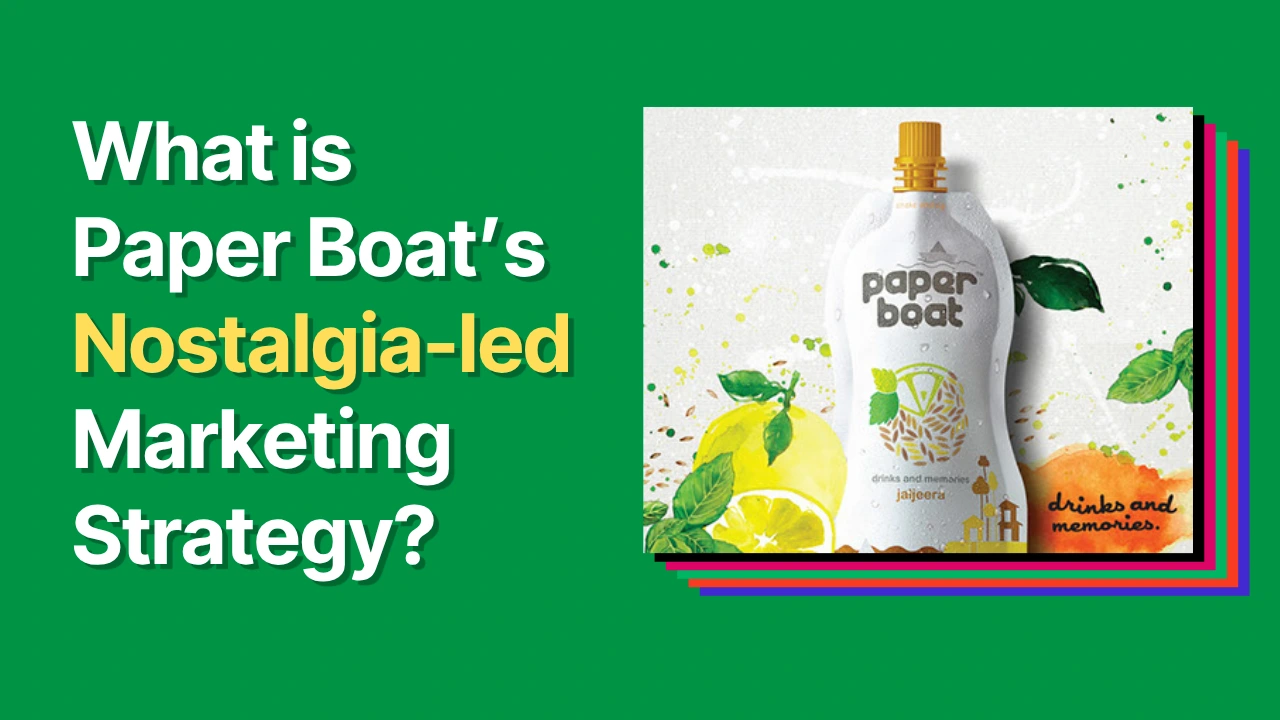
Close your eyes and think about the last time a smell, a song or a taste took you straight back to being ten years old.
That feeling has a name. And Paper Boat turned it into a ₹668 crore business.
In a market dominated by Coca-Cola, Pepsi and Frooti, a small Indian startup decided not to compete on fizz, flavour or price. It competed on feeling. And it worked better than most marketing textbooks would have predicted.
This blog breaks down how Paper Boat built one of India’s most emotionally resonant brands, why the strategy worked at a psychological level and what any business can actually borrow from it.
Table of Contents
- What Is Nostalgia Marketing (And Why Does the Brain Fall for It)?
- The Market Gap Paper Boat Saw That Nobody Else Did
- How Paper Boat Built Nostalgia Across Every Single Touchpoint
- The Numbers Behind the Feeling
- The Honest Part: Where Paper Boat Stumbled
- What Any Brand Can Take From This Playbook
- In Conclusion
- FAQs
What Is Nostalgia Marketing (And Why Does the Brain Fall for It)?
View this post on Instagram
Only 90’s kids will remember this ____________“product placement”
Nostalgia marketing is a strategy where a brand connects its product or communication to memories, emotions and experiences from the audience’s past.
Not just “retro aesthetics” or vintage fonts, but a genuine emotional trigger that makes the consumer feel something before they even think about buying.
Here is why it works at a deeper level:
- Nostalgia reduces psychological distance. When we remember the past fondly, it feels safe and familiar. Brands that tap into this feeling inherit that sense of safety.
- It bypasses rational decision-making. Most purchase decisions are emotional first and logical second. Nostalgia short-circuits the “do I need this?” question entirely.
- It builds instant trust. A brand that feels connected to your childhood feels like it has always been there, even if you discovered it yesterday.
- It creates community. Shared memories, especially cultural ones, make people feel like they belong to the same group. In India, the shared experience of drinking Aam Panna at a relative’s house in summer is almost universal among millennials.
This last point is particularly important for the Indian market.
Emotional branding here is not just about individual memories. It is about collective ones, the flavours, the festivals and the routines that an entire generation grew up with together.
The Market Gap Paper Boat Saw That Nobody Else Did
View this post on Instagram
Paper Boat was founded in 2013 by Neeraj Kakkar, Suhas Misra, Neeraj Biyani and James Nuttall, most of whom had previously worked at Coca-Cola. The idea came from a simple observation made over a lunch break.
Suhas Misra’s mother used to pack him Aam Panna every day. It sparked a question: why was something so beloved, so embedded in Indian food culture, not available commercially in a modern format?
The Indian beverage market at the time looked like this:
| Category | Who Owned It |
|---|---|
| Cola | Coca-Cola and Pepsi |
| Mango Drinks | Maaza, Slice, Frooti |
| Packaged Juices | Real, Tropicana |
| Traditional Indian Drinks | Nobody |
That last row was the gap. Traditional Indian beverages like Jaljeera, Kokum, Thandai and Aam Panna existed at home and at street stalls but had never been formalised into a modern packaged product with consistent quality and nationwide distribution.
Paper Boat did not just fill a product gap. It created an entirely new category and immediately owned it by anchoring it to cultural identity marketing before any competitor could follow.
How Paper Boat Built Nostalgia Across Every Single Touchpoint
This is what separates Paper Boat from brands that just claim nostalgia in their tagline. They built it into every single layer of the brand, from the name to the social media grid.
The Name and What It Signals Before You Even Taste the Drink
A paper boat is something almost every Indian child made.
It requires nothing, just a piece of paper, and it goes sailing in monsoon puddles or in a kitchen sink. It is innocent, simple and universally relatable.
The name does not describe the product at all. It describes a feeling. And that feeling is communicated before anyone reads a label, watches an ad or takes a sip. That is brand identity working at its most efficient.
Packaging as a Time Machine
The name, brand identity and packaging design for Paperboat was developed by Elephant, one of the country’s oldest design studios, who has forged a long-standing partnership with the company.
Its packaging is one of the most studied examples of emotional packaging design in Indian marketing. Every decision was intentional:
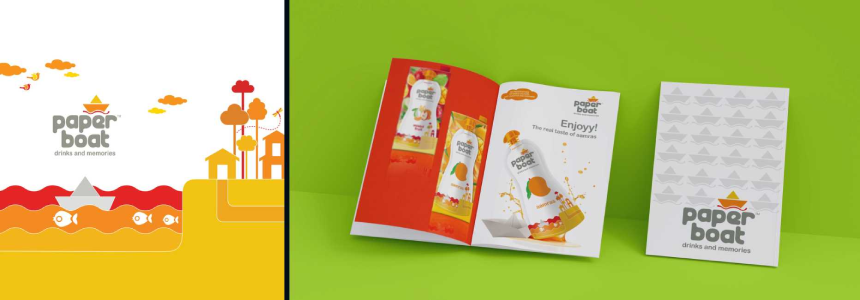
Caption: Credits: Elephant design
- Stand-up pouches instead of bottles or cartons, both portable and reminiscent of childhood lunch-box drinks
- Soft pastel colours that feel hand-painted rather than corporate
- Hand-drawn illustrations of mangoes, kites, rain and other childhood cues
- Short nostalgic lines printed on the pack itself, small stories or observations that make you pause before you drink
- The bottom of the pack was not left blank. Small messages and doodles were added there, a quirky, playful touch that felt like finding a note in your lunchbox
The visual language was deliberately imperfect and warm, the opposite of the glossy, high-contrast packaging that global FMCG brands use. That contrast made it stand out immediately on a shelf.
Ad Campaigns With No Celebrities, Only Feelings
Paper Boat’s first major ad film was written and narrated by Gulzar. It referenced Malgudi Days. It showed children playing, rain on windows and the kind of quiet summer afternoons that exist mostly in memory now. (Source)
There were no celebrities. No action sequences. No product close-ups. Just emotional storytelling set to soft music with visuals that felt like flipping through an old photo album.
The campaign strategy had two consistent rules across every film they produced:
- Never lead with the product
- Always lead with a memory the audience already owns
They also made the same films in multiple Indian languages, adding a regional layer of relatability that made the nostalgia feel personal rather than generic.
A later campaign extended this further, moving from childhood memories into young adult longing, the feeling of being away from home, of missing the flavours your mother made. This broadened the emotional territory without abandoning the core.
Social Media That Looks Like a Comic Book, Not a Brand Page
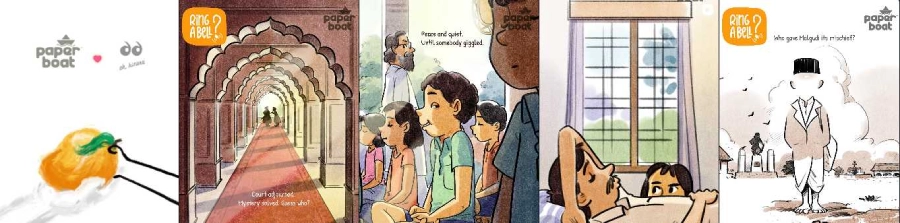
Paper Boat’s Instagram is worth studying for any brand thinking about social media branding. The feed looks like a Tinkle comic, illustrated, warm, story-driven and completely free of product-push content.
What they do instead:
- Post illustrated stories and observations about everyday Indian childhood
- Ask questions that invite people to share their own memories
- Use minimal text and maximum cultural cues, kites, chalk, mango stains, and monsoon
- Rarely mention the product directly
The result is a comment section full of genuine conversation. People are not responding to an ad. They are sharing their own memories, tagging friends and reliving experiences. The brand becomes a conversation facilitator rather than a seller.
Festival Marketing and Cultural Calendar Alignment
Paper Boat aligned its product releases and campaigns to India’s cultural calendar with precision:
| Festival | Paper Boat Product | Why It Works |
|---|---|---|
| Holi | Thandai | Traditional Holi drink, deeply associated with the festival. |
| Ugadi | Panakam | Regional festival drink from South India. |
| Diwali | Festive Gift Hampers | Connects gifting to cultural memory. |
| Monsoon Season | Aam Panna | Summer-to-monsoon transition, peak nostalgia season. |
This was not just seasonal marketing. Each product was tied to a real cultural memory associated with that time of year. The drink was not a product on promotion. It was the right thing to drink at the right moment of the year, because it always had been.
The Numbers Behind the Feeling
Nostalgia marketing is not just a soft, feel-good strategy. Paper Boat’s numbers show it translates into real commercial outcomes:
- ₹668 crore in revenue in FY25, up 16% from the previous year
- Losses narrowed to under ₹50 crore in FY25, a significant improvement from earlier years
- ₹1,620 crore estimated brand valuation
- Over 30% market share in the ethnic ready-to-drink beverage segment
- Available in 20,000+ retail outlets across India plus major e-commerce and quick-commerce platforms (Source)
These numbers matter because they prove that emotional brand positioning is not just a branding exercise. When executed consistently across every touchpoint, it builds a category, a community and a business.
The Honest Part: Where Paper Boat Stumbled
Every blog about Paper Boat reads like a celebration. Most skip the parts that did not go as planned. Here is the honest version.
The 2018 slowdown
Paper Boat’s sales dropped by 12.5% in FY18. The brand had scaled distribution rapidly but struggled to maintain the operational efficiency needed to support that scale. It was a reminder that emotional branding can build desire but distribution and supply chain have to keep up with it.
The kids’ product expansion
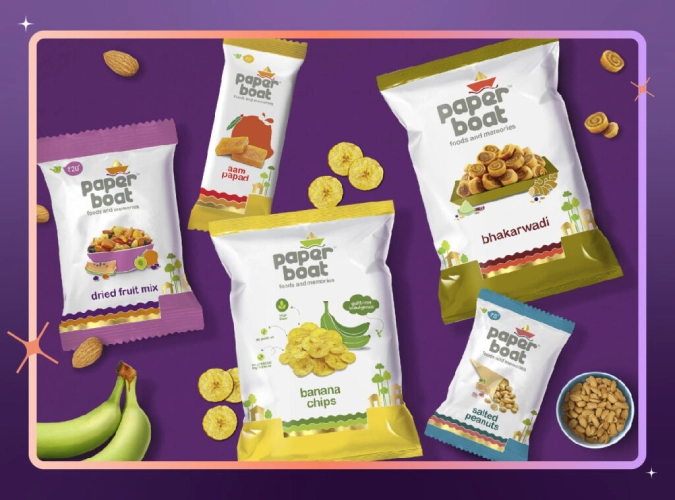
At some point Paper Boat introduced snacks and a range of products specifically for children. This was a revenue-driven decision, but it created a positioning problem. The brand was built around millennials and their adult nostalgia for childhood. Selling products directly to children is a completely different audience with different needs and different marketing logic. The expansion blurred the brand’s identity without meaningfully growing it.
The profitability question
Paper Boat remained loss-making at the operating level for most of its commercial history. The brand has made significant progress in recent years but the gap between brand love and business profitability is a real tension that any founder or marketer building an emotion-first brand needs to account for. Feeling does not automatically convert to margin.
These stumbles do not undermine what Paper Boat built. They just make the case study more honest and more useful.
What Any Brand Can Take From This Playbook
You do not need to be a beverage startup with a Gulzar ad to use what Paper Boat built. These are the principles that transfer to almost any brand, at any scale.
- Find the emotion before you find the product
Paper Boat did not start with “we want to sell drinks.” They started with “we want to sell a feeling.” If you can identify the specific emotion your audience already carries, you can build your entire brand around it. - Be consistent across every touchpoint
The name, the packaging, the social media, the ads and the festival campaigns all told exactly the same story. Brand consistency is what turns a campaign into a brand identity. One nostalgic ad is forgettable. Nostalgia at every touchpoint is unforgettable. - Let your audience bring themselves into the story
Paper Boat’s social media works because it does not tell people what to feel. It puts something familiar in front of them and lets them feel it on their own. The best content marketing strategy creates a space for the audience, not just a message at them. - Attach your brand to cultural moments your audience already owns
Paper Boat did not invent Holi or monsoon season. It just made itself the right drink for those moments. Any brand can identify the cultural rituals, seasons or occasions that already matter to their audience and find an honest way to belong there. - Do not confuse brand love with business strategy
The kids’ expansion and the profitability challenges show that emotional positioning needs to be paired with clear commercial thinking. Brand love is an asset, but it needs to be protected with disciplined decisions about where the brand extends and where it does not.
This kind of thinking is exactly what a good digital marketing agency brings to a brand strategy conversation — not just the creative angle but the commercial logic behind it.
In Conclusion
Paper Boat did not beat Coca-Cola. It did not try to.
It found a feeling that Coca-Cola could never own, the specific warmth of an Indian childhood, the flavours that belonged to home and to a simpler time, and it turned that feeling into a brand that ₹668 crore in revenue and counting.
The real lesson here is not about nostalgia as a tactic. It is about finding the emotional territory that is genuinely yours and then being ruthlessly consistent about it across every single thing your brand does.
If you are building a brand and trying to figure out what emotional territory you own, that is exactly the kind of question a branding agency in Ahmedabad like Flora Fountain helps you answer. We build brands that people feel, not just recognise. Write to us at hello@florafountain.com.
Frequently Asked Questions

The founder and partner of Flora Fountain, Shefali leads the Content and Technology divisions. A one-time engineer who started her career writing front-end code, she took a detour sometime during her 9 years in New York, studied journalism and started writing prose, poetry and sometimes jokes. She now has 15...