

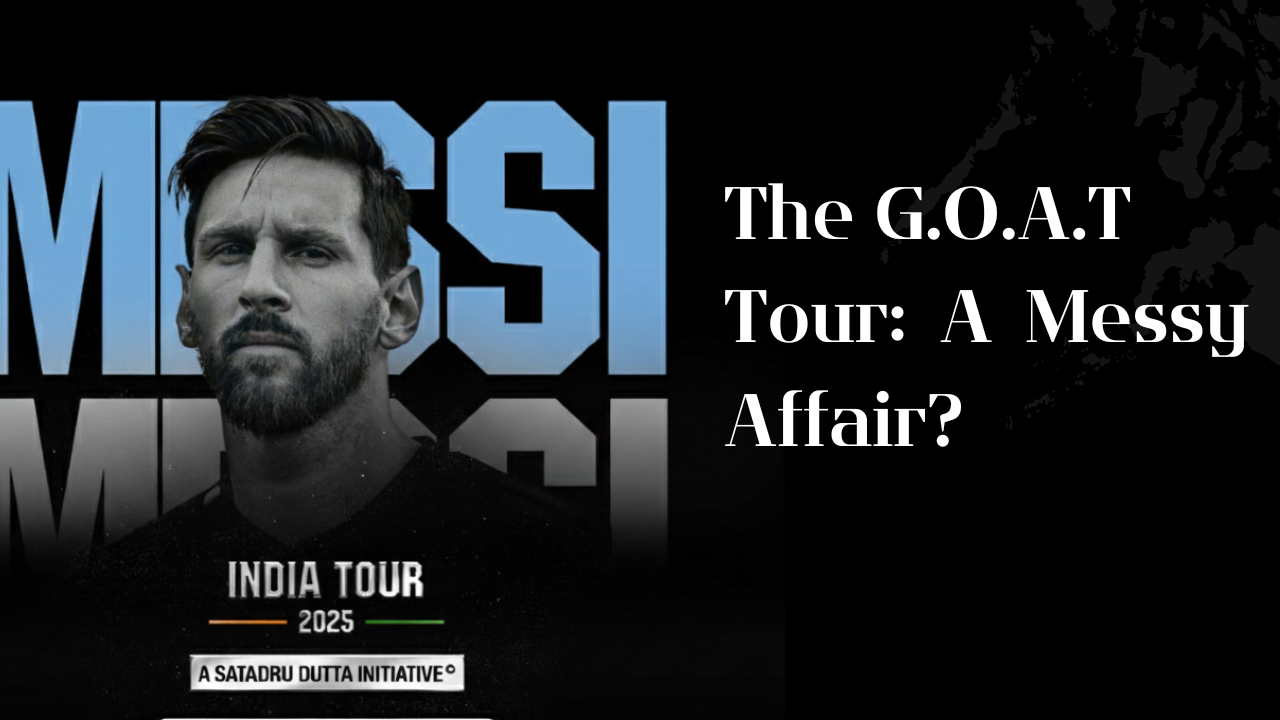
Three days. Four cities. One football legend. And somehow, Lionel Messi’s GOAT India Tour 2025 did what crores spent on tourism campaigns couldn’t: it made Delhi, Mumbai, Hyderabad and Kolkata trend globally for reasons that had nothing to do with traffic jams, pollution or bulk flight cancellations (for a change).
From December 13-15, Messi didn’t just visit India. He accidentally (or brilliantly, depending on who you ask) became the country’s most effective brand ambassador. 100 million-plus social media impressions, tickets ranging from ₹2,250 to ₹7,080 selling out within hours, global news coverage from BBC to ESPN and search interest for “Messi in India” ranking no. 1 on Google trends for days.
But here’s the marketing plot twist: the tour’s biggest viral moments weren’t the perfectly choreographed stadium appearances. They were the chaos in Kolkata, the spiritual rituals at Vantara, and the meeting of the Cricket GOAT and the Football GOAT.
As an experienced digital marketing agency that also happens to be a fan of Messi collectively (We’ll ignore the Ronaldo fans here), Messi’s GOAT Tour offers lessons that no textbook covers: how experiences trump advertisements, how controversy drives engagement and how modern-day branding tactics have changed completely.
Table of Contents:
- What made Messi’s GOAT Tour a global marketing phenomenon?
- The First Stop: Kolkata
- The GOAT reaches Hyderabad
- The City of Dreams, Mumbai, welcomes Messi
- The Final Destination: Messi reaches Delhi
- Vantara’s ‘Wild’ card entry
- What can brands learn from this masterclass?
- Conclusion
- FAQs
What made Messi’s GOAT Tour a global marketing phenomenon?
Let’s start with scale. This wasn’t a quiet charity visit or corporate event. This was a full-blown multi-city Magnum opus designed to maximise exposure, engagement and cultural impact.
The tour hit four major metros in 72 hours. Kolkata’s Salt Lake Stadium on December 13. Hyderabad’s Rajiv Gandhi International Stadium, the same evening. Mumbai’s Wankhede Stadium on December 14. Delhi’s Arun Jaitley Stadium on December 15. Each venue is packed with thousands of fans paying premium prices for proximity to greatness.
Messi arrived with teammates Luis Suárez and Rodrigo De Paul, creating built-in content multiplication. Three global football stars instead of one meant three times the photo opportunities, three times the social media posts and three times the media angles.
The programming mixed ticketed stadium events with cultural engagements and celebrity interactions. Fans got football clinics, penalty shootouts, felicitation ceremonies and musical concerts. Politicians, Bollywood stars and cricket legends appeared for photo ops. Each city received customised programming matching local interests.
Kolkata got a 70-foot Messi statue unveiling (virtually) at Sreebhumi Sporting Club. Hyderabad hosted a 7v7 exhibition match. Mumbai featured the Padel GOAT Cup at the Cricket Club of India, plus a charity fashion show. Delhi scheduled a PM Modi meeting (which got cancelled but generated more buzz because of the cancellation).
The tour was organised by West Bengal-based promoter Satadru Dutta under “A Satadru Dutta Initiative” with tickets sold through the District platform. Selective events streamed live on Prasar Bharati YouTube channel, Waves OTT app and DD Sports, democratizing access beyond stadium attendees.
The First Stop: Kolkata
Kolkata’s December 13 event descended into complete chaos. The kind that makes event planners wake up screaming. The kind that should have been a PR disaster.
Instead, it became the tour’s most talked-about moment.
What happened? Poor crowd management at Salt Lake Stadium led to overcrowding. Politicians and officials swarmed Messi on the field, blocking fans’ views despite tickets costing ₹4k+. Frustrated spectators resorted to vandalism inside the stadium. Organisers whisked Messi away after just 20 minutes instead of the scheduled hour-plus programme.
The fallout was immediate. Additional Director General of Law and Order Jawed Shamim arrested the main organiser, Satadru Dutta (Source: Telegraph). All India Football Federation (AIFF) expressed concerns. Chief Minister Mamata Banerjee attended but left embarrassed. TMC leader Kunal Ghosh called it “unfortunate” but noted it wasn’t a state government programme.
Lionel Messi fans in Kolkata a city in India absolutely destroy the stadium after he had to leave early due to fearing for his safety.
Politicians rushed the stadium to take selfies with him. pic.twitter.com/wiblNLTGV8
— 6ixBuzzTV (@6ixbuzztv) December 14, 2025
From a traditional PR perspective: disaster. From a modern marketing perspective? A redemption arc opportunity.
The chaos generated exponentially more global coverage than a perfectly executed event would have. News outlets that wouldn’t have covered a smooth stadium appearance suddenly had dramatic footage and controversial angles. Every article mentioned Kolkata by name, putting the city on global news maps.
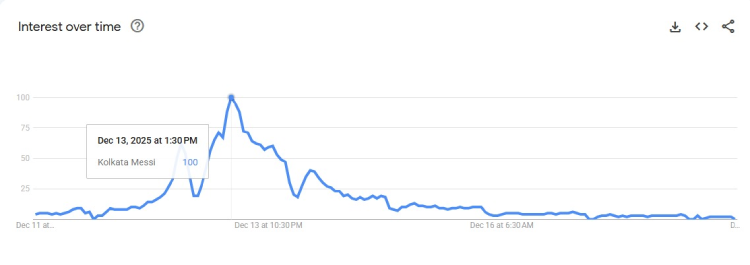
Search interest for “Kolkata Messi” spiked 890% that weekend. International travellers who’d never heard of Salt Lake Stadium suddenly knew it existed. The city became a talking point in football forums, Reddit threads and WhatsApp groups worldwide.
Kolkata’s government response actually improved the situation. By arresting the organiser and promising accountability, they positioned themselves as taking citizen concerns seriously rather than defending failed execution. The narrative shifted from “Kolkata is incompetent” to “Kolkata holds people accountable.”
I am deeply disturbed and shocked by the mismanagement witnessed today at Salt Lake Stadium. I was on my way to the stadium to attend the event along with thousands of sports lovers and fans who had gathered to catch a glimpse of their favourite footballer, Lionel Messi.
I…
— Mamata Banerjee (@MamataOfficial) December 13, 2025
The GOAT reaches Hyderabad
After Kolkata’s disaster, Hyderabad had one job: don’t screw it up. They didn’t just avoid screwing up. They nailed it so hard that Hyderabad became the tour’s positive case study.
Messi landed in Hyderabad at 5 PM on December 13 and was immediately escorted to Taj Falaknuma Palace. That detail matters. Not a regular hotel. Not a nice hotel. A literal palace converted into a luxury hotel known for hosting world leaders and royalty.
The optics? Hyderabad treats global icons like royalty. Message received globally through dozens of photos of Messi at one of India’s most stunning heritage properties.
The city also promoted Hyderabad’s burgeoning sports infrastructure and hospitality sector. Chief Minister Revanth Reddy, along with Congress leader Rahul Gandhi, met Messi, creating photo ops that positioned Hyderabad’s leadership as accessible and sports-focused.
Hyderabad’s success came from understanding the assignment: create positive viral moments that associate the city with professionalism, luxury and capability to host world-class events. They delivered exactly that.
The City of Dreams, Mumbai, welcomes Messi
Mumbai on December 14 delivered what marketers dream about: celebrity synergy creating content multiplication effects.
The Wankhede appearance starred Sachin Tendulkar, India’s cricket god meeting football’s global icon. Also present: Sunil Chhetri, Indian football’s greatest player. Three sporting legends, three different sports, one viral moment generating millions of impressions.
Photos of Messi with Tendulkar trended instantly on Instagram and Twitter. Cricket fans and football fans converged in comment sections. International sports media ran the images with headlines like “When Gods Collide” and “Sport’s Holy Trinity.”
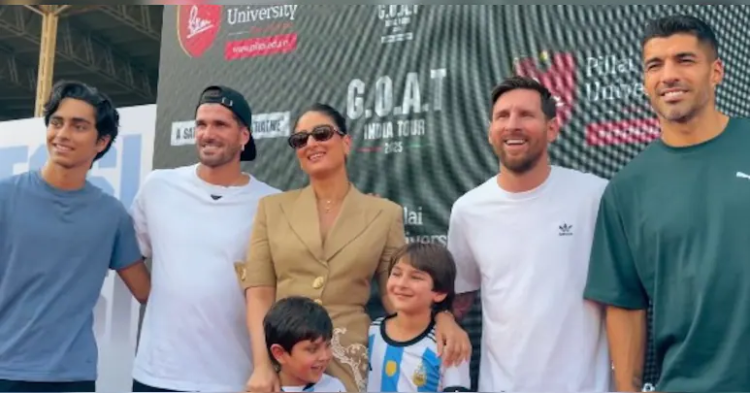
Bollywood added another layer. Kareena Kapoor Khan met Messi during the Mumbai leg. Shah Rukh Khan met him earlier in Kolkata. These Bollywood crossovers pushed the tour into entertainment industry news cycles beyond sports media.
Source: NDTV
Mumbai’s strategy? Leverage existing celebrity infrastructure and cultural cachet to amplify Messi’s visit exponentially. The city didn’t just host an event. It created content ecosystems that fed algorithms for weeks.
From a branding agency perspective, Mumbai demonstrated strategic partnership thinking. When you can’t be the biggest story, position yourself as the connector of big stories. Mumbai became the junction where football, cricket and Bollywood intersected, making the city essential to the narrative.
The Final Destination: Messi reaches Delhi
Delhi’s December 15 finale should have been straightforward: stadium event at Arun Jaitley Stadium, PM Modi meeting, tour concludes. Instead, the cancelled Modi meeting became a marketing masterclass in how absence creates presence.
Even Indian Prime Minister Narendra Modi was scheduled to meet Messi. State news, BCCI communications and tour promoters hyped the meeting, which got cancelled because Prime Minister Modi had to embark on a three-nation visit (Jordan, Ethiopia, Oman), making the meeting impossible.
The cancellation made headlines that even confirmed meetings don’t. News outlets worldwide ran stories about a meeting that didn’t happen.
Why? Because the cancelled meeting created narrative tension. What would Modi and Messi have discussed? What photo opportunity was lost? Will it be rescheduled? The speculation generated more content than one photo op ever could.
Delhi’s actual event proceeded successfully. Fog delayed Messi’s charter flight, creating minor suspense (“Will Messi make it to Delhi?”). He arrived by afternoon. The Arun Jaitley Stadium event featured football clinics with kids, interactions with young players from Minerva Academy, meetings with former Indian football captain Bhaichung Bhutia and the standard felicitation ceremonies.
Delhi also benefited from being the finale, meaning all tour retrospectives mentioned the capital. Every “Messi completes India tour” headline referenced Delhi as the closing location, cementing an association with successful completion rather than mid-tour stops.
Vantara’s ‘Wild’ card entry
After Delhi concluded the official tour on December 15, Messi made one more stop that generated perhaps the most globally shareable content: Anant Ambani’s Vantara wildlife conservation centre in Jamnagar, Gujarat.
This wasn’t on the original public tour schedule. It was a personal invitation from Anant and Radhika Ambani, yet it generated more cross-cultural content than any stadium appearance.
Messi arrived at Vantara with Luis Suárez and Rodrigo De Paul. The welcome was traditional grand Indian style: vibrant folk music, a showering of flowers symbolising blessings and ceremonial aarti. Not a corporate meet-and-greet. A full cultural immersion.
Then came the viral content goldmine: Messi participating in Maha Aarti at Vantara’s temple. The ceremonies included Ambe Mata Puja, Ganesh Puja, Hanuman Puja and Shiv Abhishek. Messi stood barefoot inside the temple, holding a thali during aarti alongside Anant and Radhika. He bowed his head at shrines. He participated in Nariyal Utsarg and Matka Phod traditional rituals symbolising goodwill and auspicious beginnings.
The images and videos went instantly viral. A Catholic football icon from Argentina participating in Hindu rituals at an Ambani-owned wildlife centre. The cultural crossover content algorithms dream about.
International media coverage focused on the novelty: “Messi Does Hindu Puja”, “Football Legend Embraces Indian Traditions”, “When Messi Met Indian Spirituality.” These headlines reached audiences who wouldn’t have clicked football event coverage but found cultural crossover fascinating.
Anant and Radhika Ambani named a lion cub “Lionel” in Messi’s honour. That gesture created permanent content: any future Vantara content featuring lion Lionel references Messi, keeping the association alive for years.
Messi’s response, delivered in Spanish: “What Vantara does is truly beautiful, the work for animals, the care they receive, the way they are rescued and looked after. It is genuinely impressive. We had a wonderful time, felt completely at ease throughout, and it is an experience that stays with you. We will surely visit again to continue inspiring and supporting this meaningful work.”
What can brands learn from this masterclass?
Strip away the football fame and celebrity glamour. What are the transferable marketing lessons?
-
Lesson 1: Experiences trump advertisements
The tour generated 100 million+ impressions through real experiences, not paid ads. People shared authentic moments (chaos in Kolkata, spirituality at Vantara, celebrity crossovers in Mumbai) because they were genuinely interesting, not because brands asked them to.
Modern consumers, especially Gen Z and millennials, don’t trust traditional advertising. They trust peer recommendations and authentic experiences. Brands succeeding today create experiences worth sharing rather than ads interrupting experiences.
-
Lesson 2: Multi-city tours amplify reach geometrically, not linearly
Four cities didn’t create 4x the impact of one city. They created 10–15x impact through cumulative coverage, regional engagement and comparative narratives (which city hosted best?).
Brands launching products or campaigns should consider sequential multi-city activations rather than simultaneous launches. The momentum compounds as the tour progresses, with each city building on the previous city’s content and learnings.
-
Lesson 3: Controversy drives engagement (if managed correctly)
Kolkata’s chaos generated more awareness than Hyderabad’s perfection. The key isn’t creating controversy deliberately. It’s having response systems ready when unplanned moments happen and leveraging attention constructively.
Brands fear controversy, but controlled controversy (or quick response to uncontrolled controversy) often outperforms vanilla campaigns in the attention economy. The question isn’t “will controversy happen?” It’s “when it happens, do you have narrative frameworks to benefit from the attention?”
-
Lesson 4: Celebrity crossovers multiply audience reach
Messi meeting Tendulkar, Chhetri, Kareena and Shah Rukh wasn’t coincidence. It was strategic audience multiplication. Each crossover introduced Messi to new audiences whilst introducing each celebrity’s brand to Messi’s followers.
Brands should map audience ecosystems and create partnership opportunities with complementary but non-competing brands. The ROI of strategic co-marketing often exceeds solo campaigns.
-
Lesson 5: Cultural authenticity beats cultural simplification
Vantara didn’t water down Hindu rituals for global sensibilities. They presented authentic cultural experiences, and that authenticity made them shareable. Global audiences crave authentic glimpses into cultures different from their own.
Brands entering new markets should resist the urge to make everything “safe” for global audiences. Authentic cultural engagement creates differentiation and memorable content.
-
Lesson 6: Scarcity and absence drive desire
The cancelled Modi meeting generated more interest than most confirmed meetings. Delhi became the finale people wanted to see because it was the conclusion. Tickets sold out quickly because FOMO drove urgency.
Brands overestimate the value of accessibility and underestimate the value of scarcity. Limited releases, exclusive access and strategic unavailability often build brand value more effectively than constant availability.
-
Lesson 7: Measure long-term brand equity, not just immediate ROI
The tour’s success can’t be measured purely in ticket sales. City branding, tourism pipelines, cultural diplomacy and long-term search interest represent compound returns far exceeding immediate revenue.
Digital marketing agencies and branding agencies must educate clients that some campaigns deliver value over months or years through awareness and positioning rather than immediate conversions. The best marketing investments build assets, not just transactions.
-
Lesson 8: Platform-specific content creation matters
The tour generated different content types optimized for different platforms. Instagram got visual moments. Twitter got news and controversy. TikTok got short-form viral clips. YouTube got long-form event coverage.
Brands still making one video and posting it everywhere miss platform-specific optimization opportunities. Modern marketing requires platform-native content strategies, not distribution strategies.
-
Lesson 9: Real-time response beats planned messaging
The tour’s best moments weren’t in the original marketing deck. They emerged organically and required real-time response to amplify. The Vantara content wasn’t planned until days before. The Kolkata chaos response was improvised.
Brands need marketing teams empowered to respond in real time rather than waiting for approval chains. The speed of modern content cycles rewards agility over perfection.
-
Lesson 10: One person can city-brand better than entire campaigns
Messi’s three-day tour achieved more for Delhi, Mumbai, Hyderabad and Kolkata’s global brand awareness than years of large-scale tourism campaigns.
Brands should invest more in influencer experiences and authentic endorsements than traditional advertising. The ROI gap between paid celebrity endorsements and genuine celebrity engagement is enormous.
Conclusion
Lionel Messi’s GOAT India Tour 2025 wasn’t just a football event. It was a masterclass in modern marketing disguised as stadium appearances and cultural exchanges.
In 72 hours, four Indian cities received global brand exposure worth hundreds of crores, generated 100 million-plus social impressions, drove measurable tourism search interest increases and created cultural content that will compound for years.
The tour succeeded because it understood what modern marketing actually is: creating authentic, shareable experiences that audiences want to engage with rather than interrupt with messages audiences want to skip.
The cold truth? Experiences beat advertisements. Authenticity beats perfection. Controversy (when managed correctly) beats bland safety. Strategic partnerships multiply impact. Long-term brand building matters more than short-term metrics. And sometimes, the best marketing isn’t marketing at all. It’s just creating moments worth sharing.
As a branding agency, we don’t have the expectation if your brand can afford a Messi-level activation. It’s whether you’re applying these principles at whatever scale you’re operating. Because the marketing rules that made the GOAT Tour work aren’t exclusive to football legends. They’re available to anyone willing to prioritize experiences, authenticity and cultural intelligence over traditional advertising playbooks.
FAQs
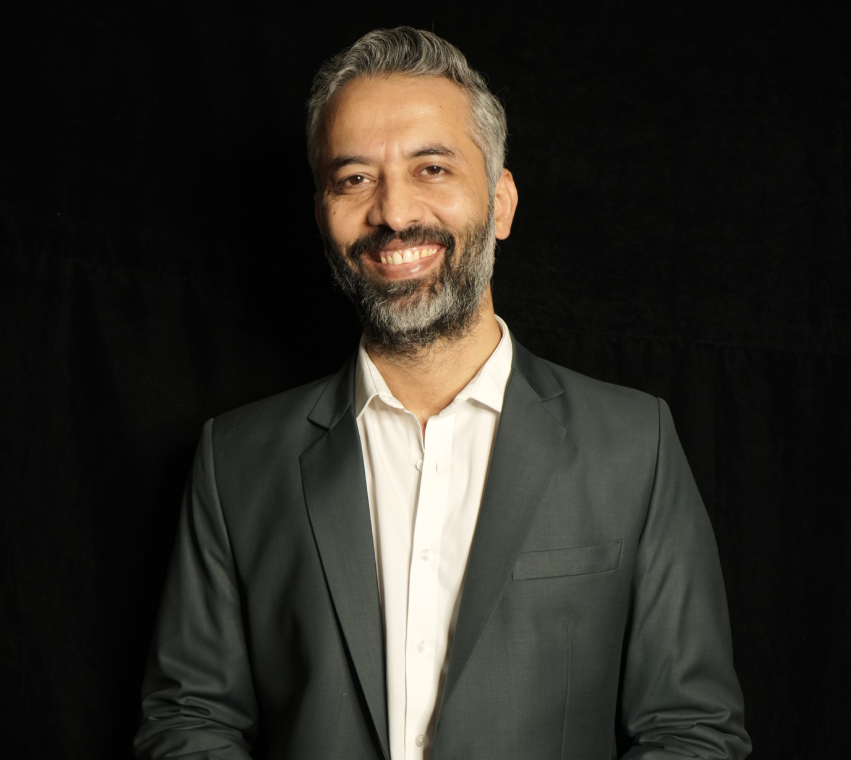
Vasim Samadji is a partner at Flora Fountain, where he leads the Business and Marketing Strategy divisions. In a world where everyone is used to sugarcoating, his directness is often considered rude. But that shouldn't be a problem if you like the no-nonsense approach. Because he is a seasoned professional...