

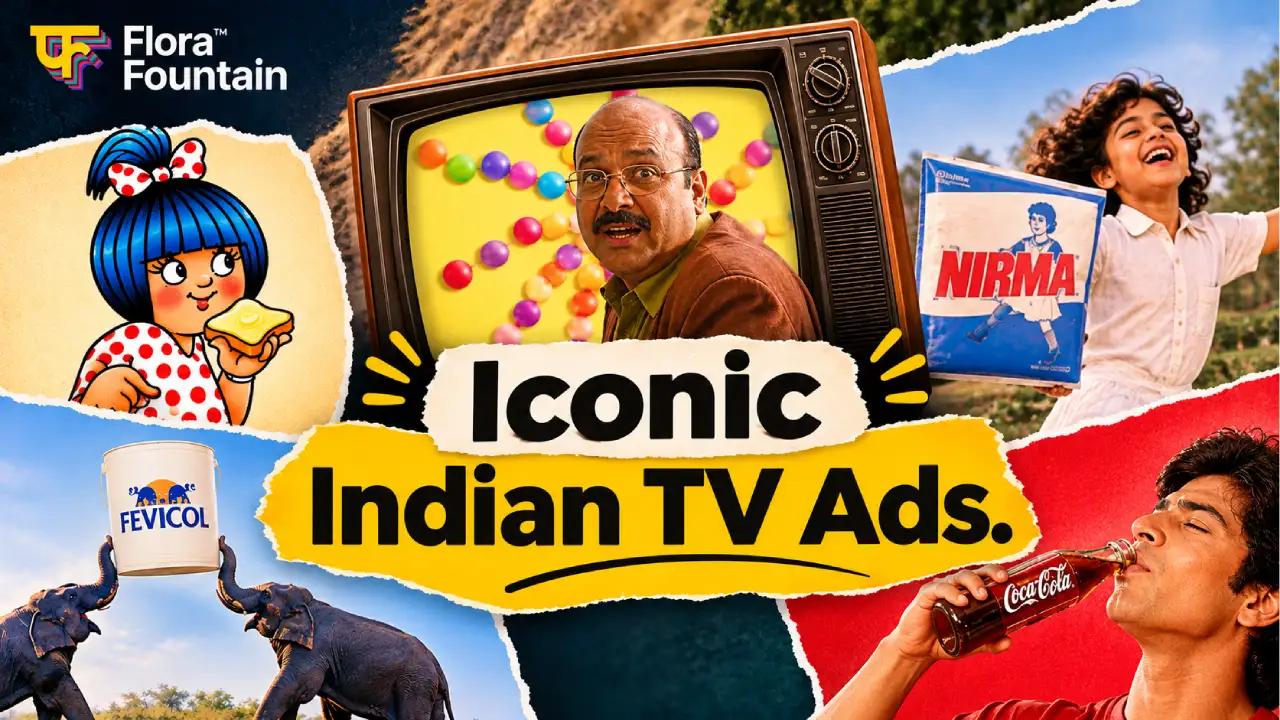
Ask anyone in India to finish the line Washing Powder Nirma or hum the tune of Kuch Khaas Hai, and chances are they’ll do it without thinking. That’s what separates famous ads in India from ordinary advertising. They stay in memory long after the campaign ends.
This guide covers 15 of the best Indian ads of all time, from Amul’s butter girl in 1966 to the viral hits of 2024. For each one, you’ll find the year, the idea behind it and a marketing lesson you can borrow.
Whether you’re feeling nostalgic or planning your own campaign, start with the table below.
Table of Contents
- Famous Indian Ads at a Glance
- 15 Famous Indian Ads That Became Iconic
- Piyush Pandey: The Creative Mind Behind Many of These Ads
- What Makes an Indian Ad Memorable?
- Conclusion: What Famous Indian Ads Teach Us
- Frequently Asked Questions
Famous Indian Ads at a Glance
| Brand | Campaign | Year |
|---|---|---|
| Amul | Utterly Butterly Delicious | 1966 |
| Nirma | Washing Powder Nirma | 1975 radio, 1982 TV |
| Cadbury Dairy Milk | Kuch Khaas Hai | 1994 |
| Pepsi | Yeh Dil Maange More | 1998 |
| Fevicol | Fevicol Ka Jod Hai, Tootega Nahi | 1999 |
| Coca-Cola | Thanda Matlab Coca-Cola | 2002 |
| Asian Paints | Har Ghar Kuch Kehta Hai | 2003 |
| Surf Excel | Daag Ache Hain | 2005 |
| Happydent White | City Light | 2006 |
| Vodafone | Zoozoo Ads | 2009 |
| Idea Cellular | Hello Honey Bunny | 2012 |
| Cadbury Gems | Pikle Pikle Ping Ping | 2012 |
| Tanishq | Remarriage | 2013 |
| Airtel | Replayed 175 | 2023 |
| Swiggy Instamart | Yeh Se Leke Woh Tak | 2024 |
15 Famous Indian Ads That Became Iconic
1. Amul: Utterly Butterly Delicious (1966)
Tagline: Utterly Butterly Delicious
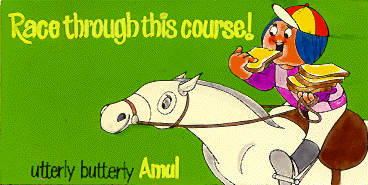
Amul’s butter girl is widely described as India’s longest-running ad campaign. She first appeared in 1966, created by Sylvester daCunha, then at the agency ASP, with art director Eustace Fernandes. The line itself came from a conversation between daCunha and his wife Nisha: she suggested “Utterly Amul” and he added “Butterly”, as The Quint reported.
The first outdoor ad played on a Mumbai horse-racing derby with the line “Thoroughbread”. Since then, the girl in the polka-dot frock has commented on cricket wins, film releases and political news, always bringing the moment back to butter with a pun.
Amul later built a second hit in a different format with its Amul Doodh Peeta Hai India jingle, which linked the brand with a healthy, energetic India.
Why it worked: The idea is simple enough to repeat for decades and flexible enough to stay topical.
Marketing takeaway: A recognisable character and a consistent voice build long-term recall without constantly reinventing the idea.
2. Nirma: Washing Powder Nirma (1975 radio, 1982 TV)
Tagline: Washing Powder Nirma
You may not remember the visuals, but you probably remember the jingle. Washing Powder Nirma first aired on radio in 1975 before becoming a television commercial in 1982, as Indian Television reported.
The ad positioned Nirma as an effective, affordable detergent. Because the tune was so easy to sing along to, it did the work of explaining the product. Nirma kept using the same jingle in later versions of its commercials.
Marketing takeaway: When a sound or phrase works, keep building on it instead of replacing it with something new.
3. Cadbury Dairy Milk: Kuch Khaas Hai (1994)
Tagline: Asli Swaad Zindagi Ka
Few ads have been recreated and remembered as much as this one. Made by Ogilvy and directed by Mahesh Mathai, it shows a woman (model Shimona Rashi) running onto a cricket field to celebrate with a Dairy Milk bar as her partner scores. Shankar Mahadevan’s Kuch Khaas Hai jingle carried the film.
Before this ad, chocolate was mostly seen as a children’s treat. Industry coverage credits the film with changing that perception and linking the brand to adult celebration.
In 2021, Ogilvy brought the ad back with the genders reversed. This time, a woman plays cricket and her boyfriend dances onto the field.
Marketing takeaway: Tie your brand to a feeling people already recognise, such as the joy of celebrating someone else’s win.
4. Pepsi: Yeh Dil Maange More (1998)
Tagline: Yeh Dil Maange More
Pepsi used cricket and cinema to capture young people’s appetite for more. According to LBB, the 1998 JWT spot starred Sachin Tendulkar and a young Shahid Kapoor, alongside the cast of the film Kuch Kuch Hota Hai.
One simple device, the paper mask, let everyday fans imagine stepping into their hero’s shoes. The tagline then became a staple of Pepsi’s advertising, featuring prominent Indian cricketers across later versions.
Marketing takeaway: Repeat one clear idea across campaigns and stars, and the line starts to belong to your brand.
5. Fevicol: Fevicol Ka Jod Hai, Tootega Nahi (Bus Ad, 1999)
Tagline: Fevicol Ka Jod Hai, Tootega Nahi
Fevicol rarely explains its product. Its ads show strength through exaggeration. In the 1999 bus ad, an overloaded rural bus carries passengers, animals and luggage, and nothing falls apart. The line delivers the product promise in a few words. Marketing Monk credits the work to Piyush Pandey’s team at Ogilvy India.
Pidilite’s Fevikwik later used a similar mix of humour and storytelling in its 2014 fish ad, built around the line Todo Nahi, Jodo.
Marketing takeaway: If a visual makes your point instantly, you don’t need to explain it.
6. Coca-Cola: Thanda Matlab Coca-Cola (2002)
Tagline: Thanda Matlab Coca-Cola
Coca-Cola’s McCann campaign with Aamir Khan took a global brand into small-town and rural India by borrowing a word Indians already used. Thanda refers to any cold drink, so Thanda Matlab Coca-Cola attached the brand to everyday vocabulary. LBB’s Immortal Awards guide credits the campaign for its culturally rooted, slice-of-life stories and Aamir Khan’s relatable performances.
Marketing takeaway: Use the language your audience already uses. A local word can do more than a global slogan.
7. Asian Paints: Har Ghar Kuch Kehta Hai (2003)
Tagline: Har Ghar Kuch Kehta Hai
Paint is a functional product, but Asian Paints sold the feelings attached to a home. According to Marketing Monk, the campaign created at Ogilvy under Piyush Pandey showed families preparing a house for a festival or a wedding, and ended each story with the line Har Ghar Kuch Kehta Hai (“every home says something”).
Marketing takeaway: Sell what your product means in people’s lives, not only what it does.
8. Surf Excel: Daag Ache Hain (2005)
Tagline: Daag Ache Hain
Detergent ads used to focus on stain removal. Lowe Lintas changed the conversation in 2005 with Daag Ache Hain, which suggests that stains earned while doing something good are worth celebrating, as LBB notes.
One of the best-known films is The Puddle War. A boy sees his sister fall into a puddle, so he angrily “fights” the puddle to cheer her up. Both end up covered in mud and smiling. The idea has guided Surf Excel’s communication for more than two decades.
Marketing takeaway: Reframe the problem your product solves. Surf Excel turned dirt into a sign of good experiences.
9. Happydent White: City Light (2006)
Happydent’s McCann ad imagines white teeth as a source of light. Directed by Ram Madhwani, it follows a man rushing to a palace where people perched on street lights and chandeliers use their teeth to light up the place. When he arrives, he joins in and lights up the whole kingdom. Humour and Sufi music helped the film reach audiences across social and economic groups, according to LBB.
Marketing takeaway: A single memorable visual can carry a product benefit without a long explanation.
10. Vodafone: Zoozoo Ads (2009)
Vodafone’s Zoozoos, small white, egg-headed characters who speak in gibberish, first appeared in 2009 after IPL season 2.
Marketing Monk credits the idea to Piyush Pandey and the Ogilvy team.
Each film explained a Vodafone service through slapstick humour, with no celebrity and no spoken language.
Marketing takeaway: A brand character can travel across languages and age groups when its humour is visual.
11. Idea Cellular: Hello Honey Bunny (2012)
Say Hello Honey Bunny to anyone who watched TV in 2012 and chances are they will hum the tune. Lowe Lintas made the film for Idea Cellular. It shows people from different parts of the country singing their own version of the same song, with the words changing from one singer to the next.
Idea’s Sashi Shankar said the aim was to show that Idea is a pan-India network, as exchange4media reported. Amit Trivedi composed the jingle. Idea recorded more than five million downloads of the Honey Bunny dialer tone, according to afaqs.
Marketing takeaway: A tune people can sing back proves your reach better than a coverage map.
12. Cadbury Gems: Pikle Pikle Ping Ping (2012)
Gems has been a children’s chocolate since it launched in India in 1968. Around 2012, Cadbury began its Raho Umarless campaign to speak to adults as well as children. The sing-song Pikle Pikle Ping Ping jingle gave children a tune to repeat.
Marketing takeaway: Give your brand a sound that even a child can repeat.
13. Tanishq: Remarriage (2013)
Most jewellery ads of the time centred on first marriages. Tanishq’s 2013 Lowe Lintas film showed a woman’s second wedding, with her daughter taking part in the ceremony. LBB notes that the film had no voiceover and almost no dialogue, and that it sparked wide conversation by also featuring a bride with a darker complexion.
Marketing takeaway: Take a clear stand on a real social shift, and tell the story with restraint.
14. Airtel: Replayed 175 (2023)
Kapil Dev’s 175 at the 1983 World Cup is one of cricket’s great innings, but it was never recorded because of a BBC strike. Leo Burnett India’s campaign for Airtel rebuilt it using interviews with Kapil Dev, players and spectators, then presented it as an immersive experience with 4K video and interactive holograms. The campaign positioned Airtel as a 5G brand and was one of the first Indian finalists at the Immortal Awards in 2023, LBB reports.
Marketing takeaway: Use technology to deliver an emotional story, not just to show off the product.
15. Swiggy Instamart: Yeh Se Leke Woh Tak (2024)
Tagline: Yeh Se Leke Woh Tak
Rohit Sharma is known for saying “yeh” and “woh” when he can’t find the word. Swiggy turned that habit into a campaign. In the June 2024 film, his wife Ritika Sajdeh orders from Instamart while he signals what he needs with vague hints, and she understands every one.
The line highlighted Instamart’s range of 12,000+ products and its 10-minute delivery. The idea also moved offline, including a branded conveyor belt at Bengaluru airport. ThePrint reported more than 24 million Instagram views for the film.
Marketing takeaway: Look for a real habit or quirk in your spokesperson and build the idea around it.
Piyush Pandey: The Creative Mind Behind Many of These Ads
Several of the most famous Indian advertisements on this list, including Cadbury’s Kuch Khaas Hai, Fevicol’s bus ad, Asian Paints’ Har Ghar Kuch Kehta Hai and Vodafone’s Zoozoos, are credited to the Ogilvy India team led by Piyush Pandey.
Pandey spent more than four decades leading Ogilvy India and died in October 2025 at the age of 70. His work helped move Indian advertising away from polished, English-language scripts towards humour, Hindi and everyday life.
Most of the ads on this list can be understood in seconds, without a single line of product explanation.
What Makes an Indian Ad Memorable?
Looking across all 15 top Indian advertisements, a few patterns repeat.
- Feeling before features: Cadbury, Surf Excel and Asian Paints sold joy, warmth and belonging before they mentioned the product.
- Culture and language people already use: Coca-Cola borrowed “thanda”, Fevicol speaks in everyday Hindi humour and Amul builds puns around current events.
- Something easy to repeat: Nirma’s jingle, Pepsi’s tagline, Idea’s Honey Bunny tune and Amul’s line are all short enough for people to say back to you.
- Humour or a striking visual: Fevicol’s overloaded bus, Happydent’s palace of light and the Zoozoos made the idea visible without explanation.
- Consistency over time: Amul has run its idea since 1966 and Surf Excel has built on Daag Ache Hain for over two decades.
- Celebrities with a reason: Rohit Sharma’s speech habit and Aamir Khan’s rural storytelling worked because the star supported the idea instead of replacing it.
- A point of view on society: Tanishq’s Remarriage gave audiences something to talk about beyond the product.
You don’t need these brands’ budgets to use these principles. You need a clear idea, a sharp understanding of your audience and the patience to keep telling the same story.
Conclusion: What Famous Indian Ads Teach Us
From a butter girl on a Mumbai hoarding to a viral Swiggy Instamart film, famous ads in India share one trait: they give people something to remember and repeat.
At Flora Fountain, we help brands turn ideas like these into practical campaigns.
Because an ad that nobody remembers is just a media bill.
Looking for an advertising agency in Ahmedabad to create an ad people remember? Get in touch with our team at hello@florafountain.com.
Frequently Asked Questions
There's no single official answer, because it depends on whether you measure recall, longevity, awards or views.
Amul's Utterly Butterly campaign is widely described as India's longest-running ad campaign. Cadbury's Kuch Khaas Hai, Fevicol's ads and Surf Excel's Daag Ache Hain are among the best ads in India by most people's reckoning.
Common picks include Amul's Utterly Butterly Delicious, Cadbury Dairy Milk's Kuch Khaas Hai, Pepsi's Yeh Dil Maange More, Fevicol's bus ad, Surf Excel's Daag Ache Hain, Asian Paints' Har Ghar Kuch Kehta Hai and Vodafone's Zoozoos.
The full list of 15 is in the guide above, with a video and a marketing takeaway for each.
Vasim Samadji is a partner at Flora Fountain, where he leads the Business and Marketing Strategy divisions. In a world where everyone is used to sugarcoating, his directness is often considered rude. But that shouldn't be a problem if you like the no-nonsense approach. Because he is a seasoned professional...