


Today, people form opinions about leaders long before the first handshake. That perception is shaped almost entirely online. When someone searches for an executive, LinkedIn is typically the first destination. Your profile, your content, and even your absence of activity directly influence how your credibility and leadership are perceived.
For modern executives, LinkedIn personal branding is not about seeking visibility for its own sake; it is about establishing clarity. It provides a platform to define your expertise and leadership philosophy beyond a simple designation. This is why many leaders collaborate with a social media marketing agency to ensure their digital footprint is intentional rather than accidental.
Whether you actively manage your presence or not, a personal brand already exists. The real choice is whether that brand reflects your leadership accurately or leaves space for assumptions. In this blog, we explore how to build a LinkedIn presence that feels credible, controlled, and professional.
Table of Contents:
- Redefining Leadership Presence for the Digital Era
- Why Your LinkedIn Profile is Your Most Valuable Asset
- The Real Business Results of a Strong Personal Brand
- How to Build a High Impact Presence Without the Noise
- A Practical Framework for Your Digital Brand
- Learning From Leaders Who Master the Platform
- Breaking the Myths That Hold Executives Back
- Conclusion
- FAQs
Redefining Leadership Presence for the Digital Era
Leaders often misunderstand personal branding, equating it with self-promotion or excessive visibility. In reality, executive branding is far more subtle and strategic. It represents the collective perception stakeholders hold before any direct interaction occurs. This includes your leadership philosophy, decision-making style, and clarity of thought.
LinkedIn simply scales these perceptions. When investors evaluate leadership or senior talent to assess an organisation, they look beyond titles for specific signals. Your profile acts as a live, evolving reference point for your credibility.
The distinction at the executive level lies in intent. Branding is not about increasing post frequency; it is about communicating perspective. It explains how you think, rather than advertising what you do. Many leaders partner with a digital marketing agency to ensure this communication remains consistent. Whether you engage or remain silent, your brand continues to form. Thoughtful presence communicates leadership; silence only communicates distance.
Why Your LinkedIn Profile is Your Most Valuable Asset
LinkedIn occupies a unique position in the digital ecosystem as the intersection of professional identity and public perception. Unlike other platforms, LinkedIn prioritises context. Users arrive expecting insight, leadership, and relevance, making it the natural space for executives to communicate without diluting their authority.
LinkedIn profiles typically dominate search results for executive names. Consequently, your presence functions as your most visible reputation asset rather than mere social media. More importantly, the platform allows one message to reach multiple stakeholders simultaneously. Employees, clients, and investors all view the same update through different lenses, yet a single thoughtful post can reinforce trust across every group. It ensures consistency, clarity, and alignment with broader business goals. On LinkedIn, clarity always outweighs noise.
The Real Business Results of a Strong Personal Brand
Strong LinkedIn personal branding changes professional outcomes quietly but powerfully. Rather than acting as a simple marketing tactic, it functions as a leadership asset that drives long-term opportunity through five key shifts:
- Pre-establishes Trust: Consistent, thoughtful perspectives build natural credibility. Consequently, meetings start “warmer” and stakeholders reach decisions faster.
- Attracts High-Value Opportunities: Board roles, advisory positions, and speaking invitations often originate from visible leadership thinking rather than active outreach.
- Strengthens Internal Confidence: Open communication reassures employees. During periods of organisational change, executive visibility significantly reduces uncertainty.
- Boosts Talent Attraction: Top-tier candidates evaluate leaders as much as companies. A grounded digital presence enhances employer branding and attracts senior talent.
- Builds Long-term Equity: Unlike temporary campaigns, personal branding compounds over time. Each contribution reinforces a narrative of leadership maturity.
Executives who invest in their digital reputation move from chasing influence to commanding it.
How to Build a High Impact Presence Without the Noise
Effective executive branding manifests in long-term perception rather than posting frequency. A high-impact LinkedIn presence prioritises coherence; when stakeholders visit a profile, they immediately recognise a steady leadership style. The messaging remains consistent, maintaining a firm point of view that ignores passing trends.
Content reflects professional judgment. Instead of reacting to every industry update, successful executives choose their contributions carefully. They share considered stances that add context or explain implications rather than repeating generic information. This composed language conveys confidence without assertion and authority without performance. Every post feels deliberate, never rushed or forced.
Furthermore, engagement remains purposeful. Selective, relevant comments reinforce a leader’s presence without creating a distraction. Whether an executive manages their profile independently or collaborates with a social media marketing company, their original thinking remains unmistakable. Ultimately, the brand feels owned rather than managed, projecting an image of authentic, grounded leadership.
A Practical Framework for Your Digital Brand
Building a commanding LinkedIn presence requires more than just frequent posting; it requires a deliberate, technical, and narrative-driven framework:
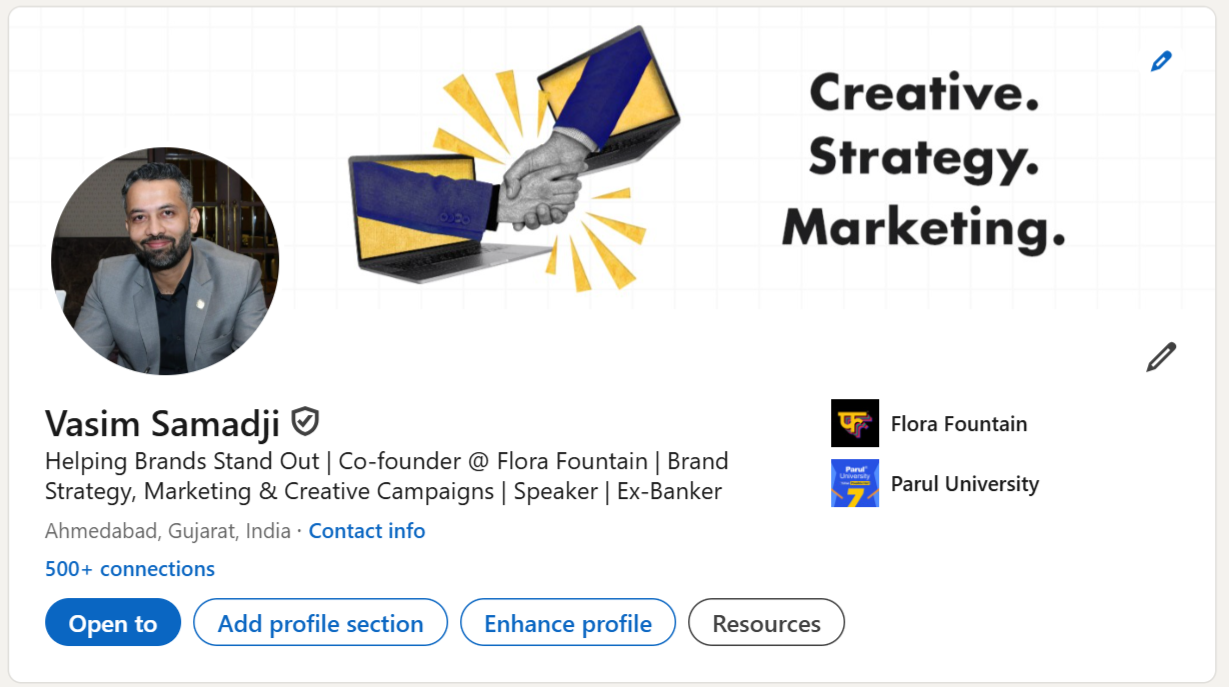
Audit Your Visual First Impression: Replace generic banners with a custom graphic reflecting your value proposition. Ensure your headshot is high-resolution, approachable, and professional.
Optimise Your Headline for Search: Move beyond “CEO at XYZ Company.” Use your 220 characters to blend your title with your unique impact (e.g., “Transforming Supply Chains through AI”).
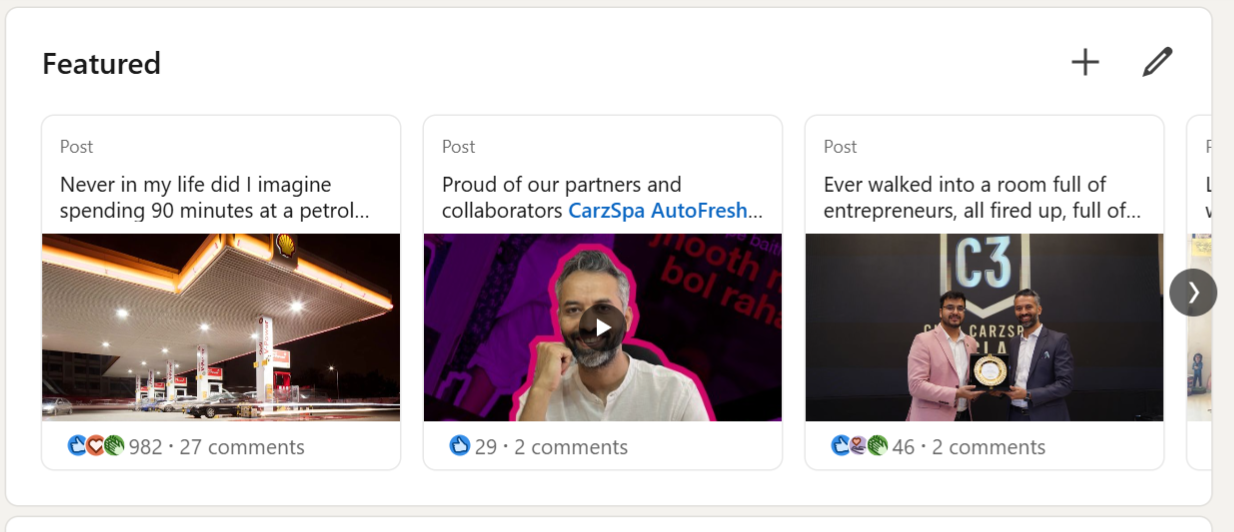
Curate Your “Featured” Section: Treat this as your digital trophy case. Pin high-performing articles, media appearances, or keynote videos to validate your authority instantly.
Leverage Support Strategically: Partner with a digital marketing agency to maintain a consistent cadence. Professional support ensures your profile stays updated while you focus on high-level decision-making.
Humanise the About Section: Write in the first person. Share your “why,” not just your “what,” to build an authentic connection with your audience.
Learning From Leaders Who Master the Platform
Strong executive personal branding is rarely loud. The leaders who do it well use LinkedIn to clarify thinking rather than chase visibility.
Ritesh Agarwal
Ritesh Agarwal exemplifies the transition from “startup founder” to “global ecosystem leader.” As the head of PRISM, his strategy focuses on radical transparency and “backing builders.” He utilises LinkedIn to share “lessons from losses,” humanising his billionaire status by discussing the emotional toll of leadership. By leveraging his Shark Tank India presence to provide data-backed insights on spiritual tourism and AI, he builds deep trust with the next generation of founders. His brand succeeds because it feels aspirational yet accessible, proving that visibility works best when paired with a “student mindset.”
Raj Shamani
Raj Shamani demonstrates how to translate digital influence into a multi-million dollar business engine. He pioneered the protection of “personality rights,” treating his identity as high-value intellectual property. His brand centres on a “mentor” persona, focusing on the “Golden Age for India.” Rather than chasing views, he shares practical toolkits for his House of X incubator and family FMCG interests. By maintaining a relentless, value-first posting schedule, Shamani proves that consistency and strategic transparency can turn a personal profile into a powerful revenue engine for an entire business ecosystem.
Nithin Kamath
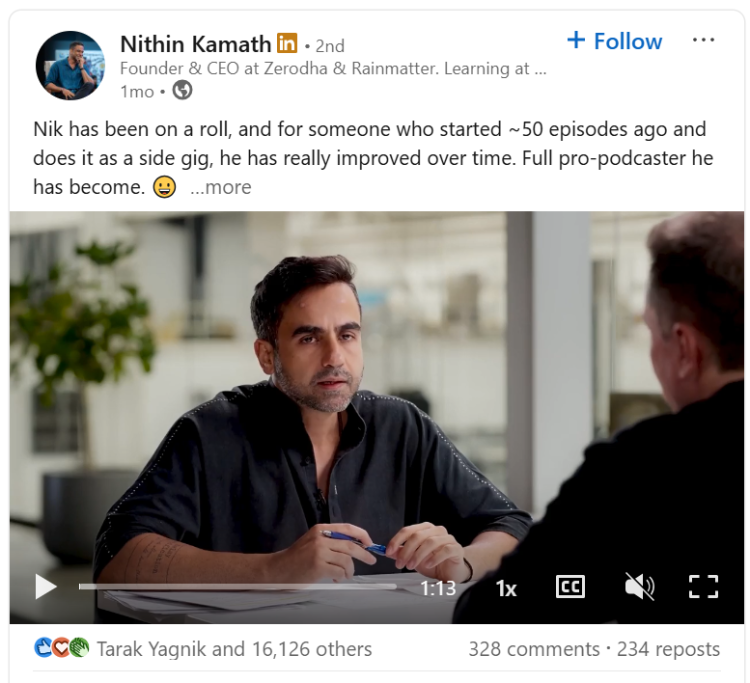
Nithin Kamath has mastered a brand defined by intellectual honesty and restraint. Since his 2024 health journey, he has championed “health as a competitive edge,” sharing transparent reflections on recovery and mental wellness. His strategy focuses on sustainability over “vanity metrics,” often critiquing the obsession with growth at all costs. Through the Rainmatter Foundation, he elevates grassroots social enterprises rather than promoting Zerodha. Kamath’s brand stands out in a trust-starved fintech sector by proving that “less is more” when the point of view is rooted in radical honesty.
Kunal Shah
Kunal Shah uses LinkedIn to share a unique, philosophy-driven operating system for business. His “intellectual branding” avoids direct promotion of CRED, focusing instead on human behavior and “second-order thinking.” His “National Listening Journey” reinforces his image as a leader who prioritises learning over speaking. By posing provocative questions about wealth, time and AI productivity, he attracts an elite audience of high-intent “builders.” Shah demonstrates that LinkedIn rewards precision and original insight, effectively selling a way of thinking that positions him as a mentor for the modern economy.
Breaking the Myths That Hold Executives Back
Many executives hesitate to engage on LinkedIn due to misconceptions.
One is the fear of oversharing. Effective executive branding focuses on perspective, not personal life.
Another is the belief that daily posting is necessary. Consistency matters more than volume.
Some worry about sounding promotional. The strongest executive brands rarely promote. They interpret and explain.
Others assume LinkedIn can be fully delegated. While support from a digital marketing agency helps, the thinking and voice must remain authentic.
Finally, many underestimate the audience. LinkedIn is watched by peers, competitors, recruiters and media. Silence also communicates.
Conclusion
LinkedIn personal branding now serves as a critical extension of leadership in our digital-first world. When executed with precision, it builds trust, attracts high-value opportunities, and strengthens organisational confidence. Effective branding ignores fleeting trends, requiring instead clarity, consistency, and strategic intent.
Executives who invest in their digital presence transform from distant titles into credible, influential voices. Whether you manage your profile independently or partner with a social media marketing agency, the primary objective remains unchanged. You must communicate your leadership philosophy in a way that feels human, grounded, and enduring. Authentic digital presence is no longer optional; it is essential.
FAQs

Vasim Samadji is a partner at Flora Fountain, where he leads the Business and Marketing Strategy divisions. In a world where everyone is used to sugarcoating, his directness is often considered rude. But that shouldn't be a problem if you like the no-nonsense approach. Because he is a seasoned professional...