


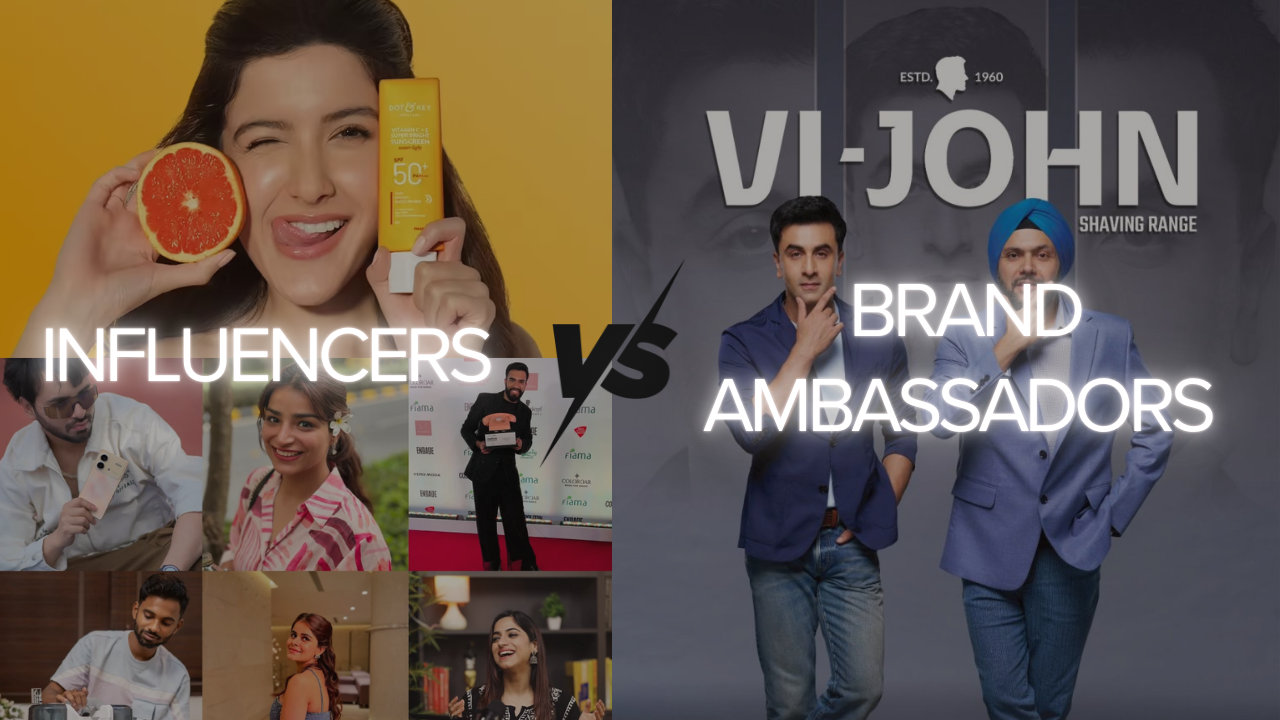
A fashion brand launches a new collection. They have two options: partner with an influencer who’ll create one viral post reaching 500,000 people, or work with a brand ambassador who’ll consistently promote the line over six months to their 50,000 loyal followers.
Which drives more sales? Which builds stronger brand loyalty? Which delivers better ROI?
The answer isn’t what most marketers expect: it depends entirely on what you’re trying to achieve and when you need to achieve it.
The influencer versus brand ambassador debate has consumed marketing teams for years, with passionate advocates on both sides claiming their approach builds superior loyalty. The truth is more nuanced. Neither strategy universally outperforms the other. They serve different purposes, operate on different timelines and deliver different types of value. Understanding these differences determines whether your marketing investment compounds into lasting loyalty or generates impressive metrics that don’t translate to repeat customers.
For a business that wants to work with a digital marketing agency to flesh out their next IP, the question isn’t which strategy is better. The question is which strategy aligns with your current business objectives, budget constraints and timeline expectations.
Table of Contents:
- Understanding the fundamental difference
- What influencer marketing actually delivers
- What brand ambassadors bring to the table
- The old playbook versus the new approach
- The hybrid model winning brands use
- Measuring what actually matters
- Conclusion
- FAQs
Understanding the fundamental difference
Influencers are content creators with established audiences who partner with brands for specific campaigns or promotions. The relationship is typically short-term, transactional and non-exclusive. Influencers work with multiple brands simultaneously, often within the same category. Their primary value proposition is reach and immediate visibility through content that resonates with their followers.
Brand ambassadors are individuals who form long-term, often exclusive relationships with brands they genuinely use and love. They may be loyal customers, employees or public figures who align deeply with brand values. Ambassadors promote brands consistently over extended periods. Their primary value proposition is authentic endorsement and sustained advocacy.
The distinction matters strategically because these different relationship structures create different marketing outcomes. Short-term transactional partnerships generate different results than long-term invested relationships. Understanding which outcome your business needs right now guides the strategic choice.
What influencer marketing actually delivers
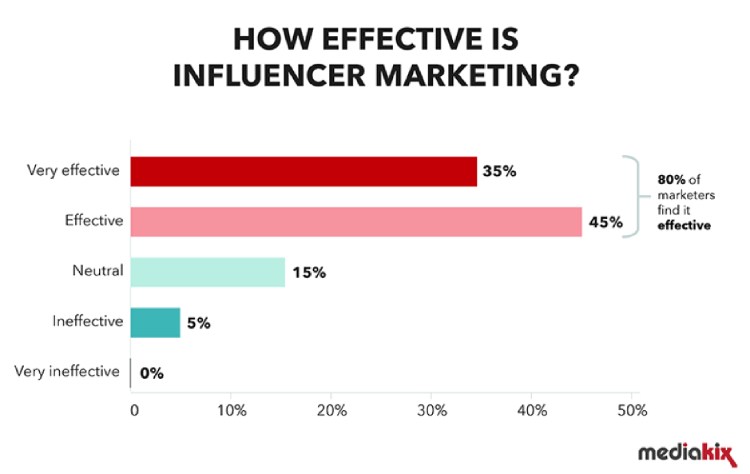
Source: Mediakix
Influencer marketing has evolved into a $16.4 billion industry because it delivers specific benefits that traditional advertising cannot match and brand ambassador programmes struggle to replicate.
- Immediate Visibility and Reach: Represent influencer marketing’s primary strength. Partnering with an influencer who has 500,000 followers enables brands to reach large audiences almost instantly. This is especially valuable for product launches, limited-time promotions, or entering new markets where brand awareness is low.
- Targeted Demographic Access: Allows a level of precision that mass media cannot match. Micro-influencers with 10,000–50,000 followers often serve highly specific niches such as vegan fitness enthusiasts, sustainable fashion advocates, or budget travel experts.
- Content Creation Expertise: Means influencers produce high-quality, engaging content optimised for their platforms. They understand audience preferences, platform algorithms, and creative formats that drive engagement. As a result, influencer content often outperforms brand-created content because it feels native rather than promotional.
- Social Proof at Scale: Occurs when influencers showcase real product usage to their followers. Studies indicate that businesses generate approximately $5.20 for every $1 spent on influencer marketing, with 74% of U.S. consumers purchasing products based on influencer recommendations. This effectiveness comes from perceived peer endorsement rather than traditional advertising.
- Flexibility and Experimentation: Enable brands to test different influencers, messages, and platforms quickly. If a collaboration underperforms, brands can pivot without long-term contractual commitments, supporting rapid experimentation and optimisation.
However, influencer marketing carries inherent limitations. The relationships are transactional, meaning loyalty flows toward the influencer rather than the brand. Followers trust the influencer’s judgment but may not develop a lasting connection to the brands that the influencer promotes. Once the campaign ends, brand presence in followers’ minds diminishes rapidly unless you continue paying for new partnerships.
What brand ambassadors bring to the table
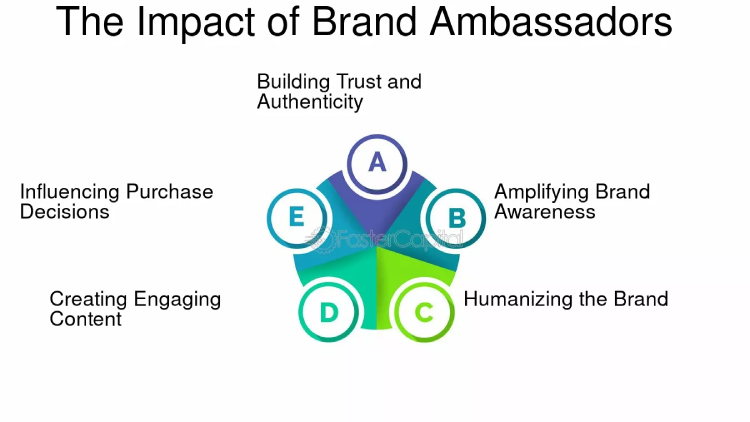
Caption: Source: Fastercapital
Brand ambassador programmes operate on fundamentally different principles that create different value propositions.
Authentic Long-Term Advocacy: Builds credibility that paid promotions cannot replicate. When brand ambassadors genuinely use and love products over months or years, their endorsements carry far more weight than short-term influencer posts. Nielsen research shows that 88% of consumers trust recommendations from people they know, making ambassadors’ organic advocacy highly persuasive.
Consistent Brand Messaging: Emerges from long-term relationships where ambassadors deeply understand brand values, positioning, and key messages. This consistency strengthens brand identity instead of fragmenting it across multiple influencer voices that may not fully align with brand strategy.
Cost Efficiency: Makes ambassador programmes especially attractive for businesses with limited budgets. Many ambassadors promote brands in exchange for free products, early access, or small incentives, significantly reducing customer acquisition costs compared to paid influencer campaigns.
Deep Customer Loyalty: Develops when ambassadors maintain a sustained presence within their networks. Repeated, authentic endorsements over time build trust and familiarity in ways one-off influencer posts cannot achieve.
Valuable Product Feedback: Flows from ambassadors who use products extensively. Their insights help improve product development, identify issues early, and better understand customer needs, multiplying programme ROI by combining promotion with feedback.
Community Building: Occurs naturally as ambassadors form deeper connections with the brand. Many successful programmes create ambassador communities where members share experiences, support one another, and strengthen their relationship with the brand beyond transactional interactions.
The limitations of ambassador programmes mirror their strengths. The reach is typically smaller than influencer campaigns. Building programmes takes time before results compound. Finding and recruiting the right ambassadors requires more effort than hiring influencers through agencies. And poor ambassador behaviour can damage brand reputation more severely than short-term influencer controversies.
The old playbook versus the new approach
Traditional marketing playbooks treated brand building as a linear process: create awareness, generate consideration, drive conversion and build loyalty sequentially. This framework made brand ambassadors seem like loyalty stage tactics whilst treating influencers as awareness tools.
The modern marketing playbook created by top social media marketing agencies in Tier 1 and 2 cities, like those in Mumbai, Delhi, Ahmedabad, etc, recognises that these stages overlap and cycle continuously. Customers discover brands through influencers, become ambassadors themselves and influence new customers who become future ambassadors. The ecosystem is circular rather than linear.
| Category | Old Thinking | New Thinking |
|---|---|---|
| Strategy Mix | Choose either influencers for awareness or ambassadors for loyalty. | Layer both strategies to serve different functions simultaneously. |
| Timing & Scale | Invest in brand ambassadors only after achieving significant scale. | Identify and activate your first ambassadors from day one, even if they are enthusiastic early customers. |
| Success Metrics | Measure influencer success purely through reach and engagement metrics. | Track influencer campaigns through customer acquisition cost, lifetime value, and actual conversion data. |
| Compensation | Pay influencers substantial fees while expecting ambassadors to promote for free. | Invest appropriately in both relationships, recognising that compensation structures differ but both require budget allocation. |
The hybrid model winning brands use
The most sophisticated marketing strategies don’t choose between influencers and ambassadors. They deploy both strategically for different purposes.
Nike exemplifies this hybrid approach. They partner with influencers for product launch campaigns, generating immediate buzz and visibility. Simultaneously, they maintain long-term ambassador relationships with athletes who embody brand values and provide sustained, authentic advocacy. The influencers drive spikes. The ambassadors maintain momentum between spikes.
The hybrid model works because it addresses both immediate tactical needs and long-term strategic objectives. Influencers handle time-sensitive campaigns, whilst ambassadors build the brand equity foundation that makes influencer campaigns more effective.
Implementation requires clear role definitions. Influencers drive awareness and trial. Ambassadors nurture consideration and loyalty. Influencers create content that educates and excites. Ambassadors provide ongoing validation and community connection. Both matter, but for different reasons at different customer journey stages.
Measuring what actually matters
The measurement frameworks for influencer campaigns versus ambassador programmes differ because the expected outcomes differ.
Influencer campaign metrics should focus on immediate impact: reach and impressions, engagement rates, click-through rates to product pages, conversion rates within the campaign period, customer acquisition cost and immediate revenue generated.
Ambassador programme metrics should measure sustained impact: retention rates amongst customers acquired through ambassadors, lifetime value differences between ambassador-referred versus other customers, organic reach and word-of-mouth generation, programme cost per retained customer, brand sentiment and community engagement and long-term revenue contribution.
The mistake many brands make is applying influencer metrics to ambassador programmes or vice versa. Judging ambassadors by immediate reach misses their compounding value. Judging influencers by long-term loyalty ignores that this wasn’t the strategic objective.
For an Ahmedabad-based apparel brand, partnering with a social media marketing agency in Ahmedabad brings structure and clarity to social strategy. The agency defines clear KPIs for each initiative and builds attribution models that show how influencers and brand ambassadors contribute at different stages of the customer journey.
This works because a social media marketing agency in Ahmedabad begins by understanding your business context, competitive environment and growth goals. From there, it determines whether your priority is immediate visibility, long-term brand loyalty or a balance of both, and designs programmes that align precisely with those objectives.
Conclusion
The question isn’t whether influencer marketing or brand ambassadors build more loyalty. The question is what type of loyalty your business needs and on what timeline. Influencers generate immediate awareness and trial amongst new audiences through paid short-term partnerships. Brand ambassadors cultivate sustained, authentic advocacy from individuals genuinely committed to your brand over extended periods. Both build loyalty, but different types of loyalty serve different strategic purposes. The most effective approach often combines both strategies: influencers for launches and campaigns requiring immediate impact, and ambassadors for sustained community building and retention. Understanding this distinction and implementing both strategically rather than choosing one exclusively maximises marketing ROI whilst building both immediate visibility and lasting brand loyalty.
FAQs

The founder and partner of Flora Fountain, Shefali leads the Content and Technology divisions. A one-time engineer who started her career writing front-end code, she took a detour sometime during her 9 years in New York, studied journalism and started writing prose, poetry and sometimes jokes. She now has 15...