


Internal linking does one job extremely well. It tells Google, and your readers, what matters on your site and how everything connects. That’s the whole idea behind internal links seo strategy, minus the mystery.
Short answer to do internal links help seo: yes. Internal links help Google discover new pages, understand how your content relates to itself, and give readers a reason to explore past the page they landed on. They won’t fix thin content or replace a genuine backlink profile, but they’re one of the few SEO improvements a website can make immediately, on every page, for free.
Table Of Contents
- What Is Internal Linking in SEO?
- Do Internal Links Actually Help SEO?
- How Does Internal Linking Help SEO?
- What Role Does Anchor Text Play?
- Internal Links vs Backlinks: What’s the Difference?
- Where Does Internal Linking Fit Into a Bigger Strategy?
- Concluding It For You
- FAQs
What Is Internal Linking in SEO?
Interlinking in SEO is basically the practice of linking from one page on your website to another page on the same website, using a clickable piece of text called anchor text. The image below is an example of how an internal link looks on the live page.
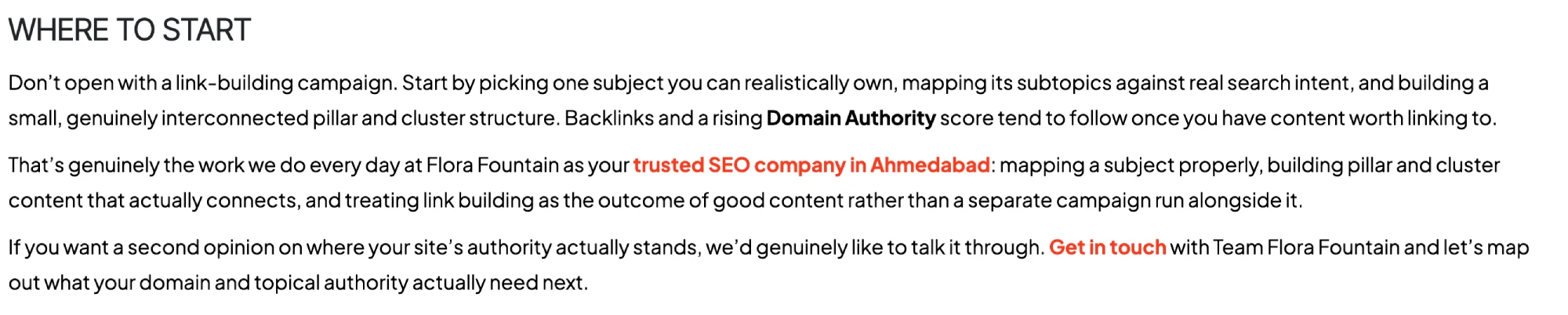
A sample
<a href=”https://www.example-site.com/“>trusted SEO company in Ahmedabad</a>
That’s different from a backlink, which is a link from someone else’s website pointing to yours. Internal links stay inside your own domain. You control where they point, what they say and how many of them exist on any given page.
Every internal link does two things at once. It gives a reader somewhere to go next, and it gives Google another path to a page it might not have found otherwise.
Do Internal Links Actually Help SEO?
Yes, and Google says as much directly. According to Google’s own SEO Starter Guide, the vast majority of new pages Google finds every day come through links, which makes internal linking one of the more reliable ways to get a page noticed in the first place.
That doesn’t mean internal links are a ranking factor on their own. Google has also said plainly that PageRank, which links feed into, is just one signal among many it uses to rank pages, not the whole story.
What internal links reliably do is more practical than any of that. Without them, pages sit in isolation. Google has a harder time finding them, understanding what they’re about and deciding they’re worth showing to anyone.
How Does Internal Linking Help SEO?
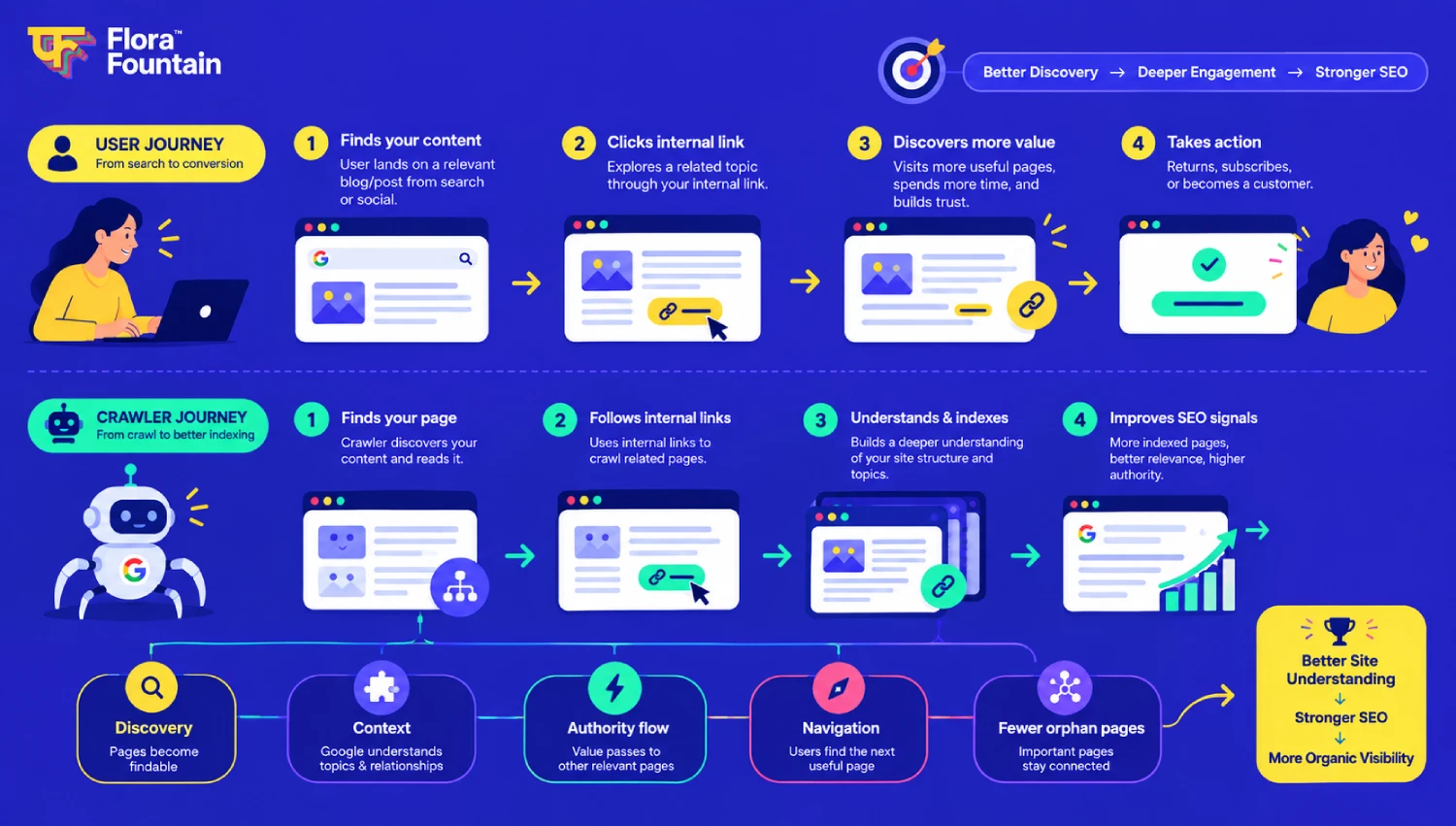
Once a link exists, it works in a few different ways at once. Here’s the real breakdown of internal linking seo benefits, without the folklore.
-
Discovery: According to Google’s link best practices, links help search engines find new pages and understand how a site is organised, and every page worth ranking should have a link from at least one other page on the site. A page with no internal links pointing to it, known as an orphan page, is much harder for Google to find and index, even if it’s technically live.
-
Context: The words around a link, and the anchor text itself, tell Google what the linked page is about. A group of pages linking to each other with relevant anchor text signals that a site has real depth on a topic, not just one page mentioning it in passing.
-
Distributing authority: Pages that earn backlinks from other websites carry more weight with Google. Internal links let some of that weight flow to other pages on the same site, so a well-linked-to page can help lift a newer or less visible one. Semrush’s internal linking guide notes that this works best when the link is genuinely relevant to both pages, not just present for the sake of it.
-
Navigation and time on site: Readers who find a useful next link tend to stay longer and explore more, which is a better experience before SEO even enters the conversation.
-
Fewer orphan pages: Any page without at least one internal link pointing to it risks being ignored, both by readers browsing the site and by Google’s crawlers.
None of this works as a shortcut. A page stuffed with irrelevant internal links won’t outrank a competitor with none, if the content itself doesn’t answer the query.
What Role Does Anchor Text Play?
Anchor text is where a lot of internal linking advice falls short, and it shouldn’t. This is exactly where anchor text internal links seo guidance earns its place.
Anchor text is the visible, clickable text of a link, and it does real work. Descriptive anchor text like “guide to XML sitemaps” tells readers and Google what to expect on the other side of the click. Vague anchor text like “click here” or “read more” tells them nothing.
A few habits worth keeping:
- Keep anchor text specific to the destination page, not generic
- Avoid forcing keywords into anchor text that don’t reflect the actual sentence
- Space links out. Stacking several links together in one sentence makes them harder to tell apart, and gives Google less context for each one
Good anchor text isn’t an optimisation trick. It’s about making the link genuinely useful before it’s anything else.
Internal Links vs Backlinks: What’s the Difference?
It’s easy to lump internal links and backlinks together because both involve links and both matter for SEO, but they don’t do the same job.
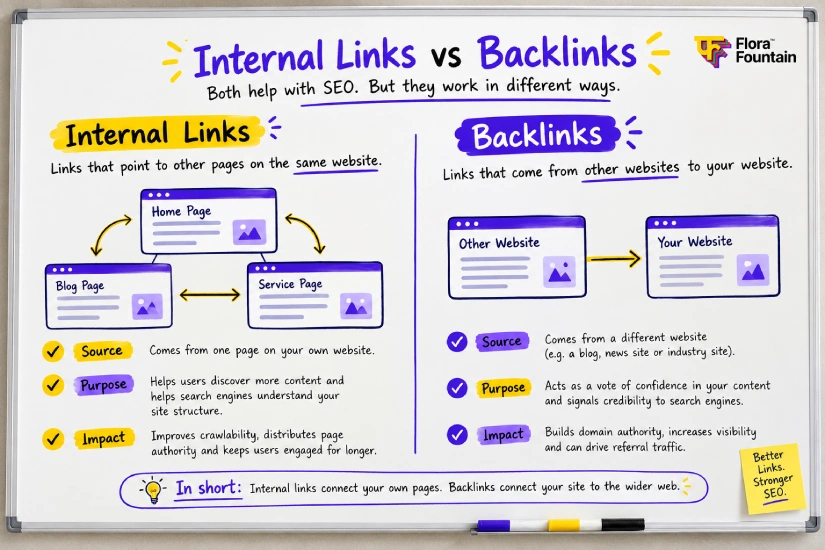
Internal links connect pages within your own site. You control the anchor text, the destination and the placement completely. Backlinks are links from other websites pointing to yours, and they signal trust that Google weighs heavily. You don’t control whether or how another site links to you.
A strong internal linking structure makes the most of the backlinks a site already has, spreading their value to other pages. It doesn’t replace the need to earn them in the first place.
Where Does Internal Linking Fit Into a Bigger Strategy?
Understanding the benefits is only half the picture. Two practical questions follow naturally from everything above.
The first is how many links a page actually needs. Google is explicit that no fixed number works for every page, so look at what actually determines that number for a given page.
The second is how to plan a proper seo internal linking strategy across an entire site, rather than adding links one page at a time with no real structure.
Concluding It For You
Internal linking won’t rescue weak content, and Google won’t name it outright as a ranking factor. What it does is remove friction for readers and for Google’s crawlers, and it’s one of the few SEO improvements a business can make without waiting on backlinks, budget or a redesign.
If you’re reviewing your own site’s internal links as part of a wider SEO or content strategy, Flora Fountain works through exactly this kind of structural groundwork alongside content and technical SEO. Write us at hello@florafountain.com if that’s useful or schedule a call with our professional team.
Frequently Asked Questions

The founder and partner of Flora Fountain, Shefali leads the Content and Technology divisions. A one-time engineer who started her career writing front-end code, she took a detour sometime during her 9 years in New York, studied journalism and started writing prose, poetry and sometimes jokes. She now has 15...