


Two water bottles sit side by side. Both hold 750ml. Both keep water cold for 12 hours. Both are made from stainless steel. One costs ₹400. The other costs ₹2,500.
The expensive one isn’t 6x better. It just had the backing of a much more experienced advertising agency. And that’s not manipulation. That’s understanding a fundamental truth about human purchasing behaviour: people don’t buy products. They buy what owning those products says about them.
Premium pricing isn’t about having a superior product (though that helps). It’s about creating perceived value that justifies higher prices. And advertising is the mechanism that builds this perceived value systematically.
Most businesses operate in a race to the bottom, competing on price because they don’t know how else to differentiate. Then they complain about thin margins and demanding customers. Meanwhile, smart businesses use strategic advertising to position themselves as premium options, charging much more for essentially similar offerings whilst building customer loyalty that price-focused competitors never achieve.
Let’s break down exactly how advertising creates the conditions that enable premium pricing.
Table of Contents:
- The Psychology of Premium Pricing (Why People Pay More)
- Creating Perceived Scarcity Through Advertising
- Building Aspirational Identity Through Brand Positioning
- Using Storytelling to Justify Premium Prices
- The Social Proof Strategy That Commands Higher Prices
- Visual Language That Signals Premium Quality
- Strategic Channel Selection for Premium Positioning
- Concluding Thoughts
- Frequently Asked Questions
The Psychology of Premium Pricing (Why People Pay More)
Before diving into tactics, understand the psychological mechanisms that make premium pricing work.
The Quality Heuristic
Human brains use shortcuts. One powerful shortcut: “expensive means good quality.” When customers see higher prices, they automatically assume better quality even before trying your product. This isn’t stupidity. It’s efficient decision-making based on generally reliable patterns.
Research consistently shows that identical wines are rated as tasting better when consumers are told they’re expensive versus cheap. The wine didn’t change. The perception did. Price itself becomes a quality signal that advertising amplifies.
The Status Signal
Products signal identity. Wearing Nike signals something different from wearing an unknown brand, regardless of actual shoe quality. Driving a Mercedes signals something different from driving a Maruti, regardless of both getting you from point A to B.
Premium-priced products offer customers a way to signal status, taste and success. Your advertising’s job is to make your product an effective status signal worth paying for.
The Effort Justification
When people pay more for something, they convince themselves it’s worth it. This cognitive dissonance reduction means premium-priced products often receive more favourable reviews and higher satisfaction ratings, not despite being expensive but because they’re expensive.
Your advertising leverages this by positioning your offering as worth the effort (financial and otherwise) to obtain.
Creating Perceived Scarcity Through Advertising
Scarcity is one of the most powerful tools for premium pricing. When something feels scarce, people assign it higher value and accept higher prices.
The Scarcity Levers
Limited Availability: “Only 50 units produced.” “Available while stocks last.” “Limited time offer ending soon.” These phrases trigger fear of missing out (FOMO) that overrides price sensitivity.
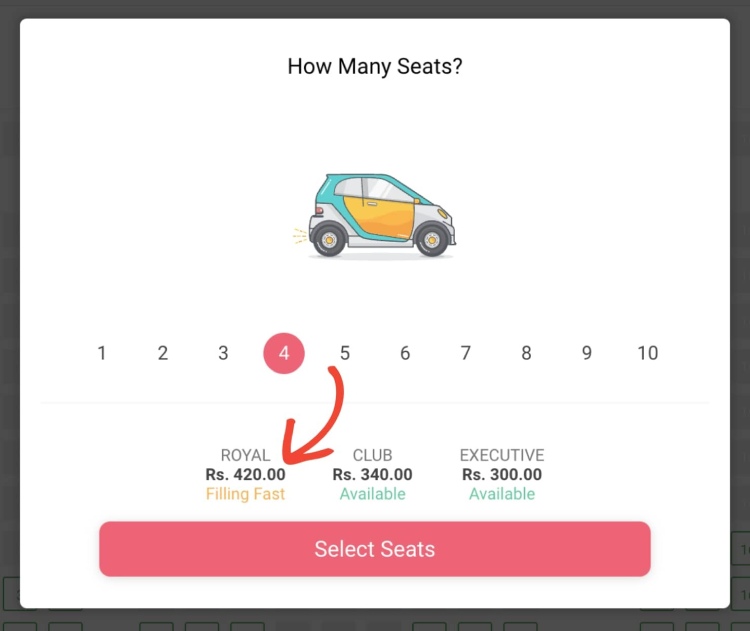
But here’s the key: the scarcity must feel authentic. Obviously, fake scarcity (“only 50 units” every single week) destroys trust. Real scarcity or thoughtfully created scarcity (genuine limited editions, seasonal offerings) builds it.
Geographic Exclusivity: “Available only in select stores.” “Exclusive to Ahmedabad.” Geographic limitation creates perceived value by suggesting the product is special enough that it’s not everywhere.
For Ahmedabad businesses, this works particularly well. An advertising agency in Ahmedabad can help position your offering as special to the local market, creating regional pride that justifies premium pricing.
The Implementation: Your advertising should consistently communicate elements of scarcity without feeling desperate. Phrases like “Small batch production ensures quality we’re proud of” communicate limited availability whilst reinforcing quality positioning. “Our craftsmen produce only 100 pieces monthly”, explains why you’re expensive, whilst building appreciation for craftsmanship.
The Warning: Artificial scarcity backfires when discovered. Don’t claim limited availability on products you produce infinitely. Don’t create fake urgency with countdown timers that reset daily. Customers aren’t stupid. When they catch you lying about scarcity, they assume you’re lying about quality too.
Building Aspirational Identity Through Brand Positioning
Premium products sell identity, not utility. Your advertising needs to clearly articulate who your customer becomes by choosing your brand.
The Identity Questions:
What does buying your product say about the customer? Are they sophisticated? Discerning? Successful? Environmentally conscious? Innovative? Athletic? Cultured? Your advertising must answer this clearly and consistently.
Example 1: Apple
Apple advertising never focuses on specifications. It focuses on creativity, innovation and thinking differently. Buying Apple products signals you’re creative, forward-thinking and willing to pay for quality. This identity positioning allows Apple to charge 2-3x more than competitors with similar specifications.
Example 2: Patagonia
Patagonia charges premium prices not by advertising superior materials alone but by selling environmental stewardship. Buying Patagonia signals you’re someone who cares about the planet and is willing to pay more for sustainability. This identity justifies price premiums that pure functionality wouldn’t support.
Your Implementation:
Identify what aspirational identity your brand enables. Then consistently communicate this through:
- Imagery: Show customers who embody this identity using your product. Not models. Real people (or people who look real) who represent the identity you’re selling.
- Language: The words you use signal identity. Technical and precise signals competence. Warm and friendly signals approachability. Bold and confident signals leadership. Choose a language matching the identity you’re selling.
- Lifestyle Context: Show your product within the lifestyle your target customer aspires to, not just on white backgrounds. Restaurant advertising should show the experience and ambience, not just food. Clothing advertising should show confidence and style, not just fabric.
The Consistency Requirement:
Identity positioning only works with absolute consistency. Every ad, every post and every customer interaction must reinforce the same identity. Inconsistency confuses customers and destroys the premium positioning you’re building.
Working with a digital marketing agency in Ahmedabad that understands brand positioning ensures your advertising consistently builds the identity that justifies premium prices, rather than randomly featuring whatever someone thought looked nice that week.
Using Storytelling to Justify Premium Prices
Facts tell, but stories sell. And stories justify premium prices in ways specifications never can.
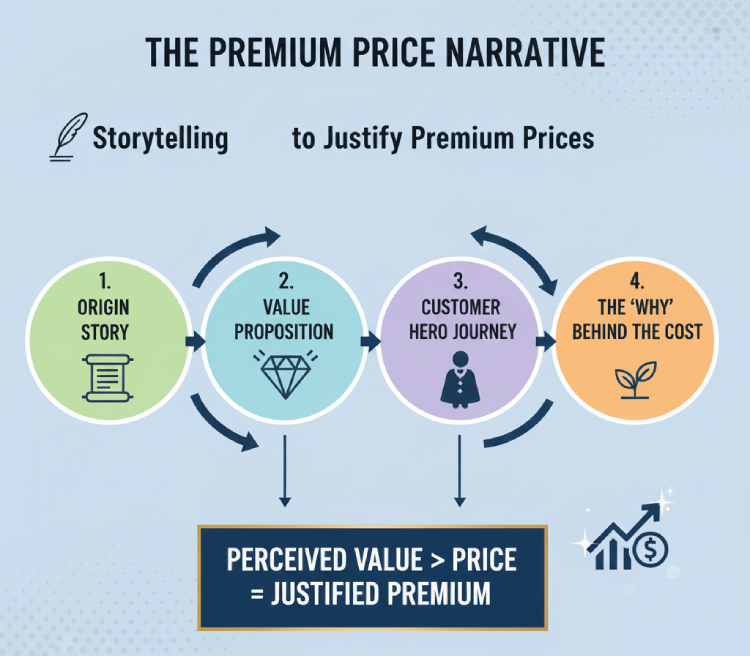
The Origin Story
Where did your product come from? Why does it exist? Who created it? Origin stories create emotional connections that make premium prices feel justified.
“We source coffee beans from single-origin Ethiopian farms where farmers are paid 3x fair trade prices” justifies ₹800 per kg coffee in ways “high-quality coffee beans” never could. The story makes the price feel right rather than expensive.
The Craftsmanship Story
How is your product made? Who makes it? How long does it take? Craftsmanship stories transform commodities into premium offerings.
“Each piece is hand-stitched by master craftsmen with 20+ years of experience”, justifies ₹15,000 for a leather bag. “Assembled in factories” does not. Same functionality. Different story. Massively different pricing power.
The Customer Transformation Story
What changes for customers who buy your product? Not just what they get but who they become or what they accomplish. Transformation stories justify premium prices by focusing on outcomes rather than features.
Gym memberships sell transformation (fit, confident, healthy), not access to equipment. Premium-priced gyms advertise transformation stories through member testimonials and before/after narratives rather than listing equipment specifications.
The Social Proof Strategy That Commands Higher Prices
Humans look to others when making decisions, especially expensive decisions. Social proof communicates that your premium prices are justified because other smart, successful people have already paid them happily.
Celebrity and Influencer Endorsements
When recognisable people endorse your product, it signals value. If someone famous chooses your brand despite having unlimited options, it must be worth premium prices.
But here’s the nuance: the celebrity must match your positioning. Premium fashion brands use fashion icons, not random celebrities. Luxury car brands use successful entrepreneurs, not movie stars (unless it’s Tom Cruise). The endorser must embody the identity you’re selling.
Customer Testimonials
Real customer stories carry immense weight, particularly when they address price concerns directly. “I was hesitant about the price, but after three years of daily use, it’s paid for itself twice over” is advertising gold for premium-priced durable goods.
Video testimonials work best. They’re harder to fake (though people try), feel more authentic and communicate emotion that text can’t capture.
Award and Recognition Advertising
Awards from credible sources justify premium pricing by providing third-party validation. “Winner of 2024 Design Excellence Award” or “Featured in Architectural Digest” signal quality is worth paying for.
Display these prominently in all advertising. Awards are social proof you’ve already paid for (through participation fees or PR efforts). Use them maximally.
User Volume Claims
“Trusted by 10,000+ Ahmedabad businesses” or “Over 50,000 satisfied customers” provides social proof through numbers. If thousands chose you despite higher prices, new prospects assume you must be worth it.
This tactic works best for services and B2B offerings where individual customer names matter less than aggregate trust.
Visual Language That Signals Premium Quality
Visual aesthetics communicate price positioning instantly. Before reading a single word, customers judge whether your product is premium or budget based purely on visual presentation.
Photography Quality
Premium brands invest in premium photography. Professional lighting, thoughtful composition and careful styling communicate quality immediately. DIY smartphone photography communicates budget positioning regardless of your actual prices.
If you’re charging premium prices, your advertising photography must match. Budget ₹15,000-50,000 for professional photography sessions. The ROI appears in customers accepting higher prices without resistance.
Colour Palette Sophistication:
Premium brands typically use restrained colour palettes: blacks, whites, greys, golds and one or two accent colours maximum. Budget brands use bright, varied colours, attempting to grab attention through visual chaos.
Your advertising colour palette should be sophisticated and consistent. Bright, clashing colours signal discount positioning that makes premium prices feel unjustified.
Typography Choices:
Premium brands use elegant, readable typography. Budget brands use decorative fonts, attempting to look fancy but achieving a cluttered mess instead.
Choose 1-2 clean, professional fonts for all advertising. Consistency and readability signal premium quality. Font chaos signals amateur hour.
Product Presentation:
Premium products are photographed in aspirational contexts: elegant homes, beautiful locations, sophisticated lifestyles. Budget products are photographed on white backgrounds or in cluttered, generic spaces.
Your advertising should show products in the lifestyle context that justifies premium pricing. Sell the experience, not just the object.
The Investment Reality:
Professional design and photography for advertising isn’t optional for premium positioning. It’s the admission price. You can’t charge premium prices with budget aesthetics. The visual language must match the price positioning, or customers will reject the prices as unjustified.
An advertising agency in Ahmedabad with strong creative capabilities ensures your advertising’s visual language consistently reinforces premium positioning rather than accidentally undermining it through poor aesthetics.
Strategic Channel Selection for Premium Positioning
Where you advertise affects perceived value as much as what you advertise. Premium brands choose channels carefully because channel selection itself communicates positioning.
Premium Channel Characteristics:
- Selective Placement: Premium brands don’t advertise everywhere. They choose channels matching their target audience and reinforcing desired positioning. Budget brands blast ads across every available platform, hoping something sticks.
- Quality Over Quantity: Premium advertising prioritises reach within the target audience over mass reach. Better to reach 10,000 right people than 100,000 wrong ones.
- Content Integration: Premium brands favour content partnerships, sponsorships and native advertising over interruptive display ads. They integrate into premium content environments rather than interrupting cheap content.
Channel Examples:
-
LinkedIn for B2B Premium:
If you’re selling premium B2B services, LinkedIn advertising reaches decision-makers in professional contexts that reinforce premium positioning. Facebook advertising for B2B often undermines premium positioning by appearing alongside cat videos. -
Instagram for Visual Premium B2C:
Premium fashion, hospitality, lifestyle products thrive on Instagram, where visual storytelling capabilities match premium positioning needs. Twitter advertising for these categories often fails to convey visual luxury. -
Print in Premium Publications:
Despite digital dominance, print advertising in premium publications (business magazines, lifestyle magazines) still communicates prestige that digital often doesn’t. A full-page ad in a premium publication signals “we can afford this,” reinforcing premium positioning. -
Sponsorships and Events:
Premium brands sponsor premium events. Wine brands sponsor food festivals. Luxury cars sponsor golf tournaments. Tech brands sponsor innovation conferences. Strategic sponsorships place your brand in contexts that reinforce premium positioning.
Concluding Thoughts
Premium pricing is less about having the best product and more about communicating value so clearly that customers choose to pay more for what they want. Strong advertising builds this perception through scarcity, status cues, aspirational identity, meaningful storytelling, social proof, refined visuals and smart channel selection.
Brands that charge two or three times more than competitors usually do it because their advertising shapes a premium image, not because their product is dramatically better. Begin by defining the identity your brand helps customers express, then communicate it with consistent storytelling and social proof.
Working with an advertising agency in Ahmedabad that understands premium positioning ensures your brand feels high value. Higher prices are possible when your advertising shows why they matter
Frequently Asked Questions

Vasim Samadji is a partner at Flora Fountain, where he leads the Business and Marketing Strategy divisions. In a world where everyone is used to sugarcoating, his directness is often considered rude. But that shouldn't be a problem if you like the no-nonsense approach. Because he is a seasoned professional...