

2026 is the year of_________?
90% of the world population will unanimously answer ‘that’ one event.
THE FIFA WORLD CUP!
Every four years, six billion people stop what they are doing to watch 22 men kick a ball around a pitch.
Governments reshuffle schedules.
Brands spend hundreds of millions for a few seconds of association.
Entire countries grind to a halt during a Tuesday afternoon match.
This did not happen by accident. It was built, deliberately and over decades, through one of the most effective branding strategies in history.
Here is how FIFA built the greatest spectacle in human history: the Football World Cup.
Table of Contents
- How did the FIFA World Cup start?
- FIFA World Cup’s Branding Strategy
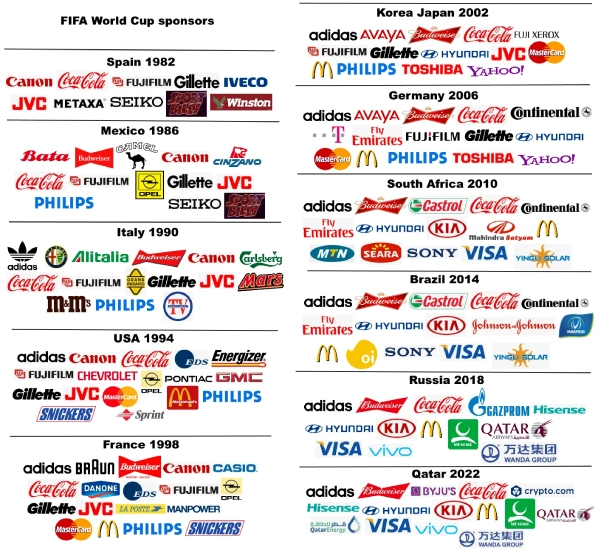
- FIFA’s Sponsorship Strategy
- The 2026 FIFA World Cup Sponsorships/ Partners
- Which teams are there for the FIFA World Cup 2026?
- The Campaigns That Defined the FIFA World Cup
- What Every Brand Can Learn From FIFA’s World Cup Branding
- Conclusion
- Frequently Asked Questions
How did the FIFA World Cup start?
Uruguay hosted the first-ever FIFA World Cup in 1930, a fact that many people may still not know.
Thirteen teams participated, but most European nations skipped it, unwilling to make the long boat journey across the Atlantic. The host nation won, attendance was modest, and at that time, nobody was calling it the greatest show on earth.
After this modest beginning, the tournament grew quietly over the next two decades, though the Second World War interrupted its progress and cancelled the 1942 and 1946 editions entirely.
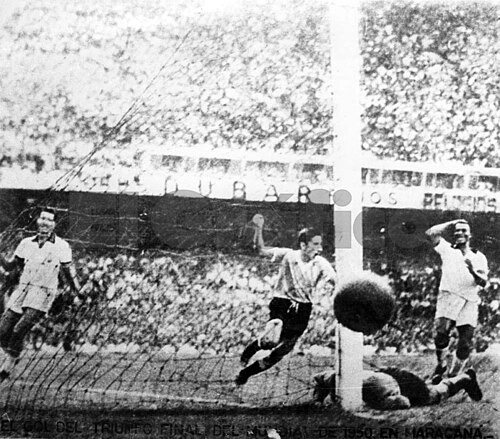
The 1950 World Cup in Brazil was the first to feel genuinely large, most memorably for the Maracanazo (The match between Uruguay and Brazil at the Maracanã Stadium).
Uruguay’s shock defeat of Brazil in front of nearly 200,000 people at the Maracanã. But even then, the World Cup was largely a regional affair. Europe watched Europe. South America watched South America.
The Rise in Popularity of the FIFA World Cup
The shift happened in 1954 when the tournament was televised for the first time. West Germany’s dramatic final victory over Hungary was broadcast live across Europe, and an entirely new audience discovered what a World Cup final felt like. The seed was planted.
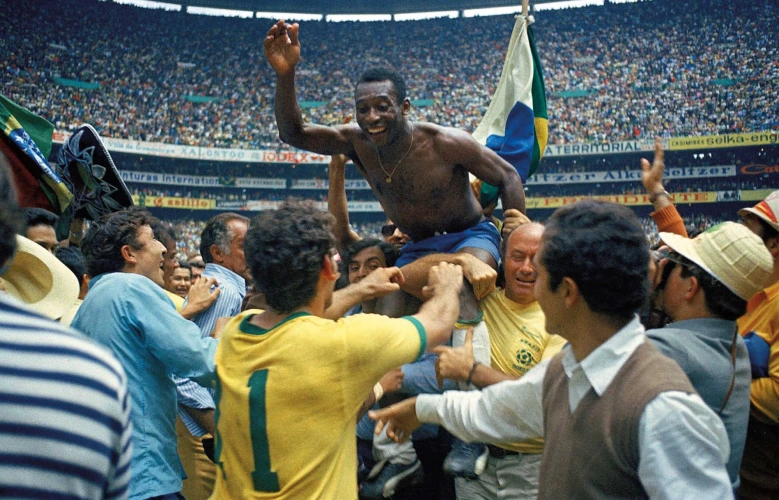
Source: Americas Quarterly
But the moment that genuinely changed everything was Mexico 1970. It was the first World Cup broadcast in colour, and the first to reach audiences across Asia and Africa through satellite technology. Suddenly, the green of the pitch, the yellow of Brazil’s famous kit, the roar of a crowd 10,000 miles away was visible in living rooms across the world.
Brazil’s 1970 squad, widely considered the greatest football team ever assembled, gave the world its first truly global sporting moment. Pelé, Jairzinho and Rivellino are names that became universal precisely because television made them so.
From that point forward, the World Cup was no longer a football tournament. It was a broadcast event. And FIFA, whether by design or instinct, began treating it accordingly.
FIFA World Cup’s Branding Strategy
The most important thing FIFA ever did was resist the temptation to position the World Cup as a sports competition.
Competitions have winners and losers. Brands align with winners. Markets fragment along national lines. That is a small game.
Instead, FIFA built the World Cup around a singular idea: this is the one moment when the entire world watches the same thing at the same time. Not a football match. A shared human experience.
Every element of the FIFA brand strategy reinforces this. The tagline rotates, but the underlying message never does.
FIFA World Cup’s positioning
This positioning does something commercially brilliant.
The World Cup is not competing with the Super Bowl or the Olympics for the title of biggest sporting event.
It is operating in a different category entirely.
The Super Bowl is an American cultural institution. The Olympics are a celebration of athletic excellence across multiple disciplines (including Football).
The World Cup is the only property that can genuinely claim to be the shared language of humanity. Nearly every nation on earth plays football. No other sport comes close. FIFA simply turned that fact into a brand.
The Four-year cycle
The World Cup only happens every four years, primarily to maintain the tournament’s prestige, allow for extensive global qualification cycles, and protect players’ health.
Scarcity creates anticipation. Anticipation creates cultural conversation. Cultural conversation creates the sense of an event that brands pay extraordinary sums to be associated with.
If the World Cup happened every year, it would be the Premier League of countries. Every four years, it becomes a generational marker. People remember where they were when their country scored in a World Cup final in a way they simply do not remember a club match from the same era.
FIFA’s Sponsorship Strategy
FIFA’s commercial model is built on exclusivity, and it is extraordinarily well constructed.
There are three tiers.
Tier 1: FIFA Partners
- The Strategy: This is the most prestigious and expensive tier. FIFA Partners own perpetual global rights across all FIFA competitions and initiatives, not just the Men’s World Cup. They are deeply embedded in FIFA’s corporate identity, supporting everything from grassroots youth programs to the official match equipment.
- Core Rights: Full brand association with FIFA as an organisation, continuous global exposure, maximum in-stadium LED board placement, and preferential access to prime broadcast advertising.
- Key Brands (2026): Adidas (sportswear), Coca-Cola (beverage), Visa (payment tech), Hyundai–Kia (mobility), Qatar Airways (airline), Aramco (energy), and Lenovo (technology).
Tier 2: FIFA World Cup Sponsors
- The Strategy: This middle tier targets brands looking for global impact but with an association restricted entirely to the specific World Cup cycle. These brands do not have rights to other FIFA properties or organisation-wide initiatives.
- Core Rights: Global marketing rights to the specific World Cup edition, premium in-stadium branding, official marks/imagery licensing, and dedicated ticket and hospitality packages.
Key Brands (2026): McDonald’s, Verizon, Frito-Lay (Lay’s), Bank of America, Hisense, AB InBev (Budweiser), Mengniu Dairy, and Unilever.
Tier 3: Regional Supporters / Tournament Supporters
- The Strategy: This tier allows brands with targeted geographic budgets to activate within specific, pre-defined global regions (such as North America, Europe, or Asia). This structure gives local corporations a more affordable entry point into the tournament ecosystem while allowing FIFA to heavily monetise localised host markets.
- Core Rights: Territory-specific advertising and event activation rights within their designated continental or regional zone. They do not receive global visibility on international broadcasts.
Key Brands (2026 North American Region): DoorDash, The Home Depot, Marriott Bonvoy, Valvoline, Airbnb, and Diageo.
The 2026 FIFA World Cup Sponsorships/ Partners
The 2026 World Cup is on track to generate the highest partnership revenue in the history of any sporting event, with projections sitting at $1.8 billion from sponsorship alone.
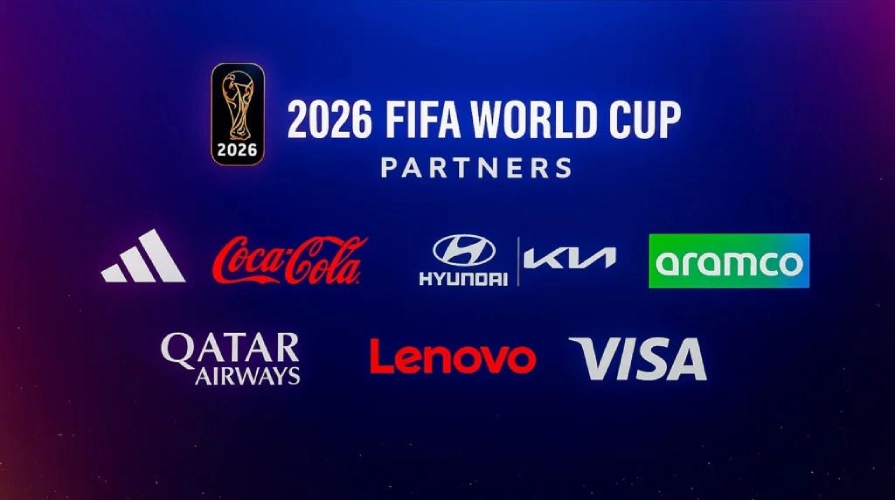
The confirmed Tier 1 FIFA Partners for 2026 are Adidas, Coca-Cola, Visa, Hyundai-Kia, Aramco, Qatar Airways and Lenovo. These brands hold global rights across all FIFA events, not just the World Cup. (Source)
The Tier 2 World Cup Sponsors include AB InBev, Lay’s, McDonald’s, Bank of America, Hisense, Verizon, Unilever and Mengniu. These brands hold rights specific to the 2026 tournament. (Source)
Major Highlights of the 2026 World Cup Sponsorships
- Aramco’s partnership reflects FIFA’s growing connection with Gulf capital, especially after the 2022 Qatar World Cup.
- Bank of America’s presence shows the rising commercial value of football in the US, with the country hosting 78 of the 104 matches.
- Lay’s “No Lay’s, No Game” campaign shows how sponsorship has evolved, moving from simple stadium branding to digital audience-building through WhatsApp.
- The World Cup will have a massive broadcast presence in the US across platforms like Fox, Tubi, Fubo, YouTube TV, Hulu, Peacock and Telemundo.
- Ad inventory being almost sold out on Fox and Telemundo proves the huge commercial appetite for the 2026 World Cup on American soil.
Which teams are there for the FIFA World Cup 2026?
View this post on Instagram
The 2026 FIFA World Cup will be the first edition to feature 48 teams, expanding from the 32-team format used from 1998 to 2022. The tournament runs from 11 June to 19 July 2026 across the United States, Canada and Mexico, with the 48 nations divided into 12 groups of four. FIFA confirms that the top two teams from each group, along with the eight best third-placed teams, will qualify for the Round of 32.
- Group A to C: Mexico, South Africa, South Korea and Czechia form Group A. Canada, Bosnia and Herzegovina, Qatar and Switzerland are in Group B. Brazil, Morocco, Haiti and Scotland make up Group C.
- Group D to F: The United States are grouped with Paraguay, Australia and Türkiye in Group D. Germany faces Curaçao, Ivory Coast and Ecuador in Group E, while the Netherlands, Japan, Sweden and Tunisia are placed in Group F.
- Group G to I: Belgium, Egypt, Iran and New Zealand make up Group G. Spain, Cape Verde, Saudi Arabia and Uruguay are in Group H. France, Senegal, Iraq and Norway form Group I.
- Group J to L: Argentina are drawn with Algeria, Austria and Jordan in Group J. Portugal, DR Congo, Uzbekistan and Colombia are in Group K. England, Croatia, Ghana and Panama complete Group L.
Key storylines: First-time qualifiers include Cape Verde, Curaçao, Jordan and Uzbekistan, while Iraq and DR Congo return after long gaps.
Italy’s absence remains one of the biggest talking points, as the four-time champions miss a third consecutive World Cup.
The Campaigns That Defined the FIFA World Cup
The World Cup has produced some of the most celebrated advertising ever made, and not always from official sponsors.
Nike’s Iconic Airport FIFA World Cup Commercial
Nike’s 1998 “Airport” advertisement remains the benchmark. Shot in a Brazilian airport, the Brazilian squad playing a spontaneous match through departure halls and escalators, it was technically not about the World Cup at all. Nike was not an official sponsor. It was about football as joy, as instinct, as something that cannot be contained. It ran before France 98 and is still discussed in creative departments today as a masterclass in brand storytelling.
Adidas’ Legendary World Cup 2026 Advertisement
Adidas has matched the brief repeatedly as an official partner.
Their 2026 campaign “Backyard Legends,” featuring Timothée Chalamet, Lionel Messi, Bad Bunny, Lamine Yamal and Jude Bellingham in a street football setting with a deliberate 90s aesthetic, is a textbook example of a brand using a sponsored property to tell a story that extends far beyond the event itself. The film is about where greatness begins, not about the World Cup. The World Cup is simply the context.
Coca-Cola’s Flashy World Cup tour
View this post on Instagram
Coca-Cola’s Trophy Tour is a different kind of campaign entirely.
Since 2006, they have taken the actual World Cup trophy on a global tour ahead of every tournament, visiting communities in countries that will never host the event, letting people who will never attend a match hold the same object that the winning captain lifts at the final. It is brand activation as genuine cultural access, and it works precisely because it is not advertising in any conventional sense.
What Every Brand Can Learn From FIFA’s World Cup Branding
FIFA’s brand is not free from controversy
The governance scandals, the 2015 corruption crisis, the ethical questions around Qatar 2022 and the political tensions surrounding 2026 are all part of FIFA’s story. But even with those issues, the commercial and brand architecture it has built remains highly instructive.
Scarcity is one of FIFA’s strongest brand strategies.
The four-year cycle is not just a scheduling format. It is the reason every World Cup feels rare, urgent and unmissable. Any brand that gives people something to wait for can often command more attention than one that is always available.
The emotional core stays consistent, even when the creative changes.
FIFA changes its host countries, taglines, visual systems and campaigns every four years. But the larger emotion remains the same: unity, humanity and the belief that football belongs to everyone. That consistency is what makes the brand durable across generations.
Exclusivity creates commercial value.
FIFA’s sponsorship model works because every category is protected. The official beverage partner, for example, knows that no direct competitor can enter that space inside the tournament ecosystem. That kind of exclusivity gives partnerships value beyond ordinary media visibility.
The bigger lesson for brands is simple.
As a leading digital marketing agency working with brands across industries, we see FIFA’s model as proof that a powerful brand strategy does not have to be complicated. It needs one clear idea, strong protection around that idea and consistent communication over a long period of time.
Conclusion
The FIFA World Cup did not become the world’s biggest spectacle by having the best players, though it has had those, too. It became the world’s biggest spectacle because someone understood that football was not the product. Belonging was the product.
From a modest tournament in Montevideo in 1930 to a 48-team, 104-match event projected to reach six billion viewers in 2026, the World Cup’s growth is a story about brand architecture as much as it is about sport. The sponsorship model, the broadcast strategy, the four-year scarcity cycle, the emotional positioning that transcends nationality and language, all of it was built piece by piece into something no other sports property has replicated.
As 2026 kicks off on 11 June, with new nations on the pitch for the first time, familiar brands activating on a scale never seen before, and the world’s attention converging on North America, the machine FIFA built over nearly a century will do what it always does. It will make the world stop and watch.
Frequently Asked Questions

Vasim Samadji is a partner at Flora Fountain, where he leads the Business and Marketing Strategy divisions. In a world where everyone is used to sugarcoating, his directness is often considered rude. But that shouldn't be a problem if you like the no-nonsense approach. Because he is a seasoned professional...