


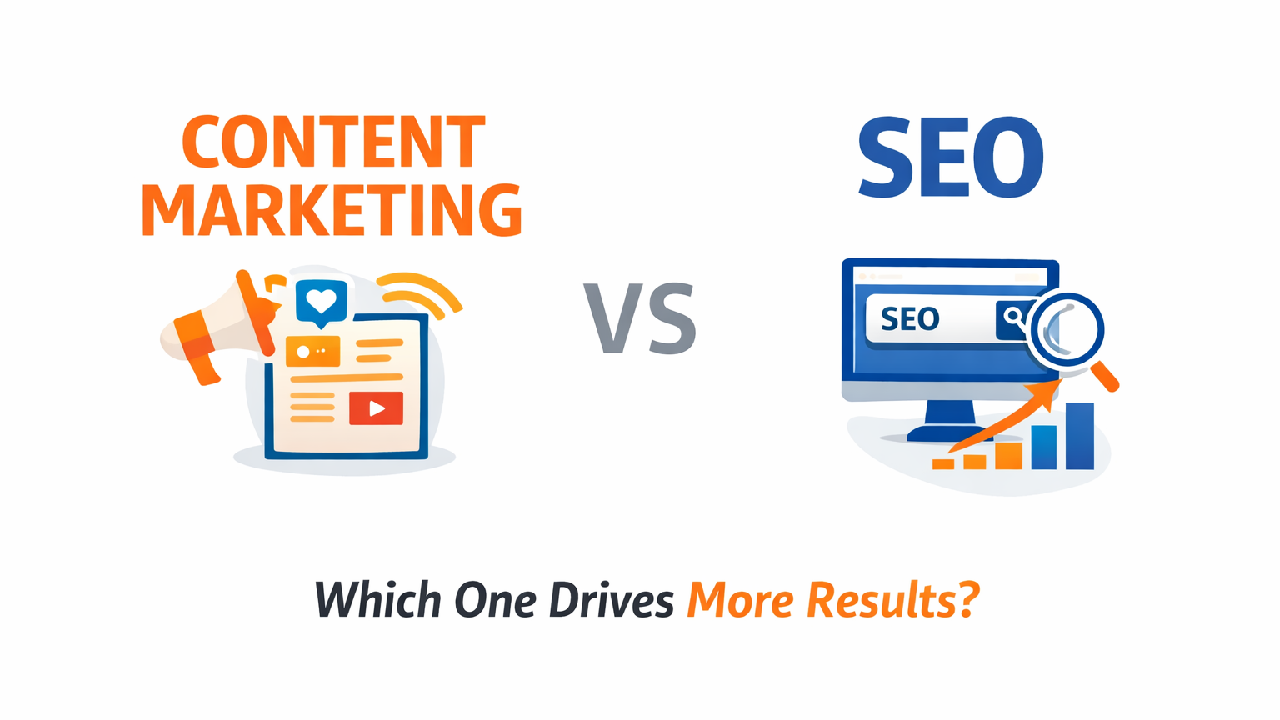
A business publishes blogs every week. Well-written, informative and polished blogs. Six months later, traffic is flat. No enquiries. No visibility. They assume content marketing does not work.
Another business ranks on page one for multiple keywords. Impressive impressions. Strong click-through rates. Yet visitors bounce within seconds and never return. They assume SEO is broken.
Neither assumption is entirely wrong. Neither is fully right.
Most businesses struggle not because content marketing or SEO fails, but because they confuse the two. They expect content marketing to magically bring traffic without understanding search intent. They expect SEO to generate trust without substance.
Content marketing and SEO solve different problems. One builds meaning. The other builds discoverability. When treated as interchangeable, both weaken. When used intentionally, they support each other.
This blog breaks down the real difference between content marketing vs SEO, why businesses blur the line between them and how to use each deliberately instead of hoping one compensates for the other.
Table of Contents
- Why Businesses Confuse Content Marketing and SEO
- What Content Marketing Actually Does
- What SEO Is Responsible For
- Content Marketing vs SEO: The Core Differences
- Where Content Marketing and SEO Overlap
- Why Should Brands Focus On Both
- Conclusion
- FAQs
Why Businesses Confuse Content Marketing and SEO
The confusion usually begins with a very reasonable assumption. Blogs are content. Blogs rank on Google. So content marketing must be SEO.
It sounds logical. It just does not tell the full story.
Most businesses encounter content through SEO-led conversations. A consultant recommends blogs to improve rankings. An SEO agency talks about publishing consistently to grow traffic. Slowly, content stops being a strategic choice and becomes a task to fulfil.
What follows is familiar. Blogs written with algorithms in mind instead of people. Keywords awkwardly stitched into sentences. Articles published without a clear idea of who they are meant to convince, once someone finishes reading.
At the other end of the spectrum, businesses that invest deeply in brand storytelling often push SEO aside as a technical detail. They focus on voice, narrative and long-form thinking, but forget that discovery still matters. Great ideas do not help if no one finds them.
This creates internal silos. Content teams write without worrying about visibility. SEO teams optimise without thinking about the reader experience. Both teams feel productive. Results still fall short.
Understanding content marketing vs SEO starts with accepting that they operate at different moments in the decision process. One influences belief. The other creates access.
What Content Marketing Actually Does
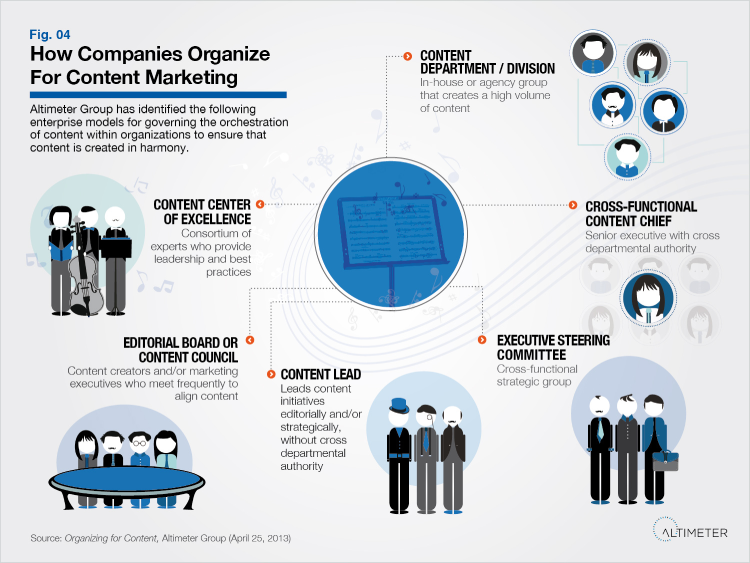
Content marketing exists to answer the questions people are already asking themselves.
Not search queries. Real questions.
Is this brand credible?
Do they understand what I am dealing with?
Do they sound like someone I would trust with my time and money?
Good content marketing is not about posting frequently or hitting word counts. It is about relevance and clarity. It shows how a business thinks. What it prioritises. What it believes matters.
Strong content marketing works even when nobody is actively searching. It appears in sales conversations, onboarding decks, internal training, newsletters and social platforms. It builds familiarity before urgency shows up.
This is why content marketing often feels slow. Its impact is rarely immediate. It builds through repetition and consistency. When it works, prospects show up already informed, already aligned and already comfortable.
Many businesses give up on content marketing because they expect it to behave like SEO. When traffic does not spike quickly, they assume it is not working. In reality, they are measuring it against the wrong outcome.
Content marketing is not meant to deliver instant visibility. It is meant to build trust.
What SEO Is Responsible For
SEO answers a completely different question.
Can the right people find you at the moment they are looking?
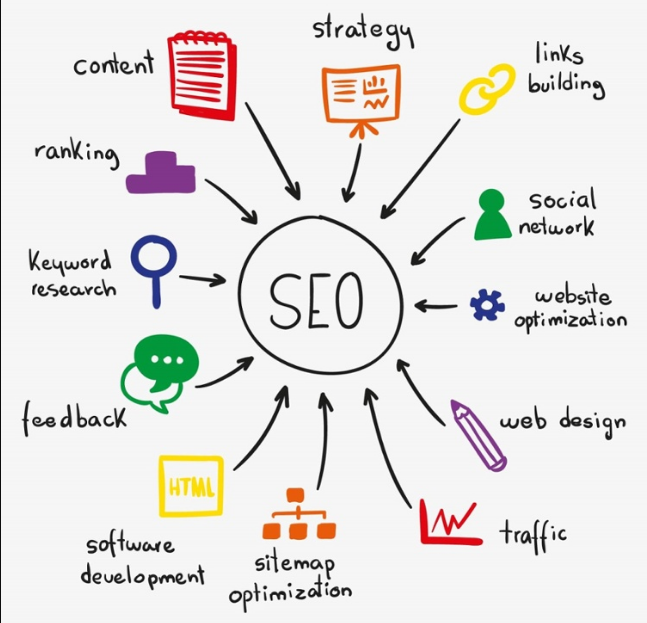
SEO focuses on visibility, structure and relevance. It ensures that when someone searches for a problem you solve, your page has a fair chance of appearing and being understood.
This includes:
- Keyword research and intent mapping
- On-page optimisation
- Technical performance, like page speed and mobile usability
- Internal linking and crawlability
- Authority signals,s such as backlinks
SEO does not create demand. It captures demand that already exists.
A SEO company may improve rankings significantly, but rankings alone do not guarantee engagement. Without strong content, traffic becomes noise. Visitors arrive, skim and leave without understanding why your brand matters.
SEO brings people to the door. Content decides whether they stay.
Content Marketing vs SEO: The Core Differences
| Aspect | Content Marketing | SEO |
|---|---|---|
| Primary Responsibility | Shapes how your brand is understood, felt, and remembered once attention is already earned | Ensures your content is discovered when people are actively searching |
| Stage in the Journey | Works after attention is captured | Works before attention exists |
| Core Focus | Clarity, meaning, depth, and connection | Visibility, structure, relevance, and performance |
| What It Prioritises |
|
|
| Primary Operating Space | The reader’s mind | Search systems and algorithms |
| Failure When Used Alone | Well-written, thoughtful content that never gets seen because it wasn’t designed to be found | Pages that rank well but feel hollow because they were built around structure, not substance |
| Common Misuse | Treated as optional “nice writing” without discovery planning | Treated as a writing exercise instead of a discovery system |
| Result of Imbalance | Effort without reach | Reach without impact |
| Underlying Problem | Substance without visibility | Visibility without meaning |
Where Content Marketing and SEO Overlap
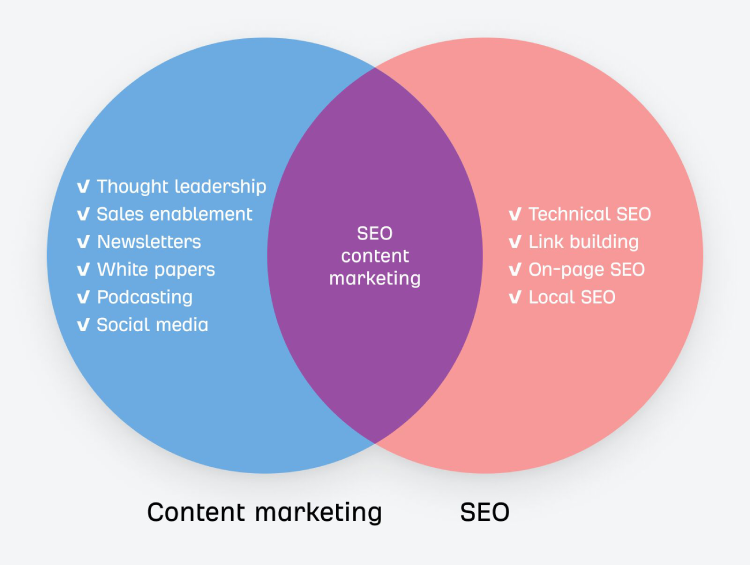
Despite their differences, content marketing and SEO are not competing forces. They overlap at execution.
Search engines increasingly reward pages that feel genuinely useful, clear and engaging. This means strong content naturally supports SEO performance.
At the same time, SEO insights shape content direction. Keyword research reveals what people are confused about, what they are comparing and what they want clarity on.
This overlap is where alignment matters.
A digital marketing agency that understands both does not force content into rigid keyword templates. Instead, it uses search data to guide topics while preserving voice, depth and narrative flow.
This balance works best when:
- Content is written for humans first
- SEO structure supports readability rather than restricting it
- Keywords are integrated naturally
- Pages answer real questions properly
Most businesses struggle here not because they are lazy, but because teams and goals are misaligned.
Why Should Brands Focus On Both
Businesses that rely only on content marketing often hit a visibility ceiling. Their ideas are strong, but discovery remains limited. Growth depends heavily on distribution, referrals or paid promotion.
Businesses that rely only on SEO hit an engagement ceiling. Traffic arrives, but does not convert. Bounce rates increase. Brand recall stays weak.
Both situations feel frustrating. Marketing begins to feel expensive and unpredictable.
The problem is not investment. It is a misalignment.
Content marketing without SEO is like writing a book and keeping it in a drawer. SEO without content marketing is like advertising a store with empty shelves.
How Businesses Should Prioritise Between the Two
The real question is not content marketing vs SEO. It is timing.
Early-stage businesses benefit more from content marketing. Before visibility, they need clarity. Without a clear message, SEO traffic will not convert anyway.
Growth-stage businesses benefit from SEO once positioning is clear. Visibility amplifies what already works.
Mature businesses need both to work together. Content sustains trust. SEO sustains scale.
This is where working with a grounded SEO agency or digital marketing agency matters. Not one that sells shortcuts, but one that understands context and sequencing.
Content should shape perception. SEO should widen reach.
Conclusion
Content marketing vs SEO is not a rivalry. It is a misunderstanding.
Content marketing shapes how people feel about your brand. SEO determines whether they find you at all.
When businesses expect one to replace the other, both underperform. When they work together intentionally, results build steadily over time.
Working with a premier digital marketing agency ensures brands to grow consistently because they are not chasing cheap hacks. They are aligning messages with discoverability.
The real advantage does not come from choosing between content marketing or SEO. It comes from knowing exactly what role each plays in your growth.
Frequently Asked Questions

The founder and partner of Flora Fountain, Shefali leads the Content and Technology divisions. A one-time engineer who started her career writing front-end code, she took a detour sometime during her 9 years in New York, studied journalism and started writing prose, poetry and sometimes jokes. She now has 15...