


Most businesses approach global expansion as a series of disconnected campaigns. They launch in a new territory, hire a local team, spend a few million on brand awareness, then wonder why the unit economics do not make sense six months later. The budget is spent, the press releases are out, but the sustained growth has not materialised.
The problem is not the market. The issue is treating global growth as a geographical exercise rather than a systemic one. Airbnb does not just "enter" markets; they engineer them. By 2026, Airbnb will have established a presence in over 220 countries and regions, effectively covering 98% of the world. This was not achieved through brute-force advertising. It was achieved through a self-reinforcing marketing strategy that turned local hosts into global brand ambassadors. From the perspective of a premier Digital Marketing Agency, Airbnb’s success is the ultimate proof that community-led growth is the only sustainable way to scale at a planetary level.
Table of Contents:
- The Myth of the Billion-Dollar Ad Budget
- How Did Airbnb Disrupt the Whole Hospitality Industry
- Why is Airbnb So Popular In Countries Like India
- What is the Airbnb SEO Strategy
- Hyper-Localisation: Why "One Size Fits None"
- What Can Brands Learn From Airbnb’s Marketing Strategy
- Conclusion
- FAQs
The Myth of the Billion-Dollar Ad Budget
The default assumption is that Airbnb’s 98% global coverage is a result of infinite capital. However, their history tells a different story. In 2008, the founders were selling cereal boxes to keep the lights on. Their early growth in the US was not driven by TV spots, but by a “growth hack” that hijacked Craigslist’s existing traffic.
As a strategic Seo company, we observe that Airbnb’s real genius was shifting from performance marketing to brand-building early. They realised that in a peer-to-peer marketplace, the product is not the room; the product is the trust between two strangers.
One of the most powerful ways they scaled this trust was through Programmatic SEO. Instead of manually creating content for every city, they built an automated system that generated millions of high-quality landing pages. According to recent case studies, this “Programmatic Moat” helped Airbnb reach a valuation of over $80 billion.
How Airbnb’s Programmatic SEO Works:
- Scalable Templates: They created thousands of pages based on a single URL structure (e.g., airbnb.com/country/stays). This allowed them to launch in new countries like India almost instantly.
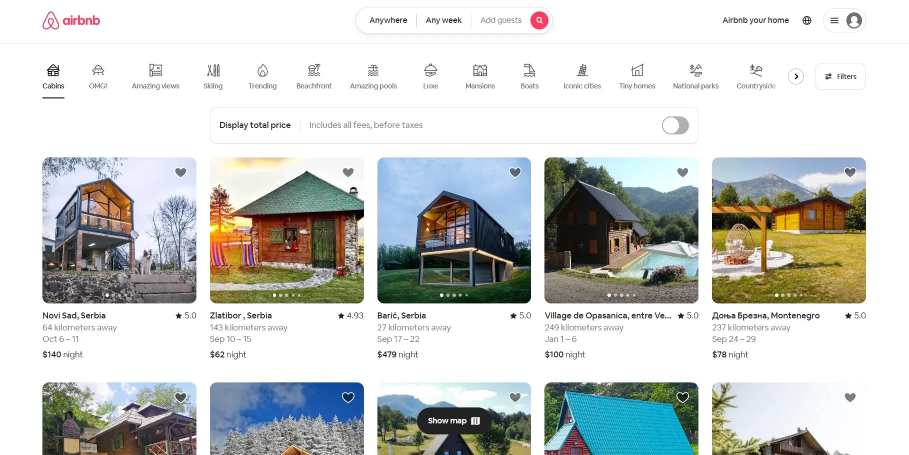
- Category Dominance: They didn’t just target “rentals.” They built specific templates for “Beachfront houses,” “Mansions,” and “Unique stays,” capturing searchers at every intent level.
- Internal Linking Flow: By linking nearby destinations and unique accommodation types, they ensured “link juice” flowed through 1.1 million pages effortlessly.
By 2025, Airbnb’s marketing spend became significantly more efficient because its brand began to do the heavy lifting that paid ads used to perform. This is the goal of any high-level Digital Marketing Agency: building a brand so strong that the market seeks you out.
Most legacy hospitality brands believe their competition is other hotels. They focus on linen counts, breakfast buffets, and loyalty points. They missed the tectonic shift in consumer psychology: modern travellers no longer want to be “guests”; they want to be “locals.”
How Did Airbnb Disrupt the Whole Hospitality Industry
Airbnb did not just disrupt an industry; it invalidated the traditional hotel business model. Airbnb moved the goalposts from “Accommodation” to “Authentic Immersion.”
1. Engineering the “Unique” at Scale
The disruption began by challenging the stale notion that travel equals resorts and standardised rooms. Airbnb recognised that a “comfortable bed” is now a commodity. The real value lies in the “Hidden Gem”, the converted windmill in Kent or the treehouse in Bali.
By launching “Airbnb Experiences,” they integrated guided tours and cooking classes directly into the booking flow. This did not just enhance the trip; it created a self-sustaining ecosystem. For a brand manager, the insight is clear: do not sell the product, sell the transformation. Airbnb transformed a tourist into a temporary citizen. This experiential depth is a goldmine for any Seo company, as it generates rich, intent-driven content that hotels simply cannot replicate.
2. Frictionless UX as a Competitive Moat
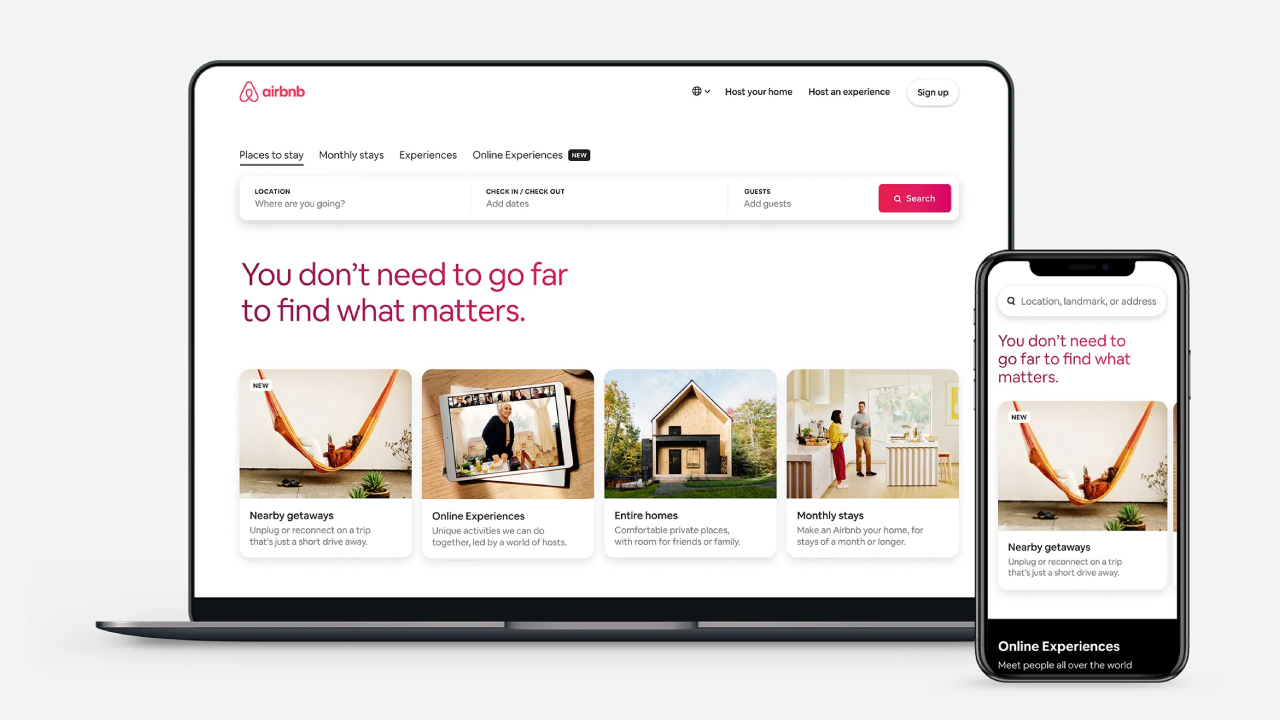
Disruption is often just the removal of friction. Airbnb’s interface turned a complex global search into a three-click process. Their mobile app was not an afterthought; it was the primary touchpoint for a generation that prioritises speed and visual storytelling.
As a high-growth Digital Marketing Agency, we study their UX because it balances high-density information with minimalist design. They use social proof (reviews) as the primary conversion driver, creating a “Trust Economy” that functions more efficiently than any traditional customer service desk.
3. Democratising Tourism Revenue
Airbnb’s most profound impact was the decentralisation of the tourism dollar. By pushing travellers into residential neighbourhoods rather than tourist traps, they injected capital directly into local economies.
- Support for the “Small Player”: Individual homeowners became hospitality entrepreneurs overnight.
- Micro-Economy Growth: Local cafes and boutiques in non-tourist zones saw a surge in “Airbnb-driven” footfall.
- Economic Resilience: By distributing guests across a city rather than a single hotel block, they made urban tourism more sustainable and less invasive.
Airbnb’s disruption was not a technological fluke; it was a psychological victory. They understood that the modern traveller values storytelling over service-delivery. By connecting hosts and guests through a shared sense of community, they built a platform that is practically “un-blockable” by traditional competitors.
Why is Airbnb So Popular In Countries Like India
Airbnb’s expansion into India is not just a growth story; it is a masterclass in adapting a global “Belonging” framework to a complex, diverse market. They did not simply copy-paste their San Francisco strategy. Instead, they built a localised flywheel that turned India into one of their fastest-growing global markets by 2026.
By 2024, Airbnb had successfully shifted the narrative from “foreigners staying in India” to “Indians exploring India.” The data reflects a massive systemic win:
- Domestic Dominance: Domestic travellers now comprise 91% of all Airbnb guests in India, up from 79% in 2019.
- Economic Ripple Effect: In 2024 alone, Airbnb contributed INR 113 billion to India’s GDP and supported over 111,000 jobs.
- Gen Z Catalyst: Over 90% of first-time bookers in India are Gen Z, signalling a permanent shift in how the next generation perceives hospitality.
To win in India, Airbnb pivoted from a “Price” narrative to an “Authenticity” narrative. While local competitors like OYO focused on budget standardisation, Airbnb focused on Unique Stays.
- Influencer Credibility over Ads: Rather than traditional TV spots, they partnered with Bollywood icons (like Janhvi Kapoor and Shah Rukh Khan) to list their homes. This addressed the primary barrier in the Indian market: Trust.
- Hyper-Localised Safety: They introduced “AirCover” and collaborated with the Ministry of Tourism to launch heritage stay microsites. This repositioned Airbnb as a partner to the state, not just a disruptor.
- The Non-Urban Pivot: Gross Booking Value (GBV) in non-urban, rural areas tripled since 2019. Airbnb realised that the “Real India” was their biggest USP.
What is the Airbnb SEO Strategy
If marketing is the soul of Airbnb, Programmatic SEO is the skeleton. Airbnb uses a sophisticated system of templated landing pages that pull data from its vast database of listings and reviews.
As a strategic Seo company, we observe that this community trust feeds back into their search rankings. Every time a guest leaves a detailed local review, they are essentially writing high-quality, long-tail SEO content for the platform. This grassroots virality is what any credible Digital Marketing Agency aims to replicate: a system where the customer acquisition cost (CAC) trends toward zero as the brand footprint grows.
| Strategy Component | Airbnb’s Approach | Why it Works |
|---|---|---|
| URL Structure | /rooms/[ID] or /s/[City] | Clean, hierarchical, and easy for bots to crawl. |
| Dynamic Content | User reviews + Local tips | Provides “Freshness” signals to Google daily. |
| Internal Linking | Breadcrumbs to “Nearby Cities” | Distributes link equity across millions of pages. |
Whether a user searches for a “pet-friendly cabin in the Lake District” or a “luxury villa in Jaipur,” Airbnb has a programmatically generated page ready to greet them. While competitors are overbidding on expensive keywords like “Hotel Mumbai,” Airbnb is vacuuming up thousands of long-tail searches for free.
Hyper-Localisation: Why “One Size Fits None”
Airbnb’s global dominance is actually a collection of thousands of successful local launches. They understand that “Belonging” feels different in Tokyo than it does in Paris.
- Experience-Driven: They don’t just sell a bed; they sell “Experiences” like pottery classes in Kyoto or cooking in Tuscany.
- Regional Payment Gates: Integrating UPI in India or Alipay in China to remove friction.
- Content Localisation: Neighbourhood guides written by locals, not generic copywriters.
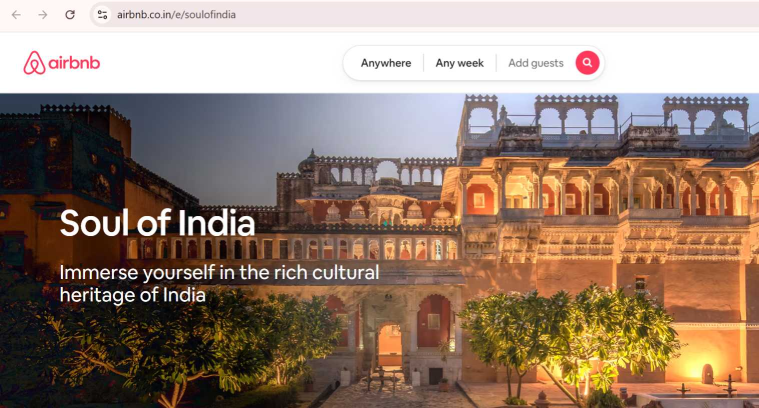
In the 2026 SEO landscape, a “backlink” is a vote of confidence, but a government endorsement is a “Trust Moat.” Airbnb’s partnership with the Indian Ministry of Tourism for the “Soul of India” campaign is a masterclass in building authority. By showcasing 500-year-old Rajasthani mansions and Assamese tea bungalows on an official platform, they earned links from .gov.in domains, the most trusted sources in Google’s eyes.
A leading Digital Marketing Agency understands that global reach is a result of local depth. They don’t just list properties; they provide editorial-style content about the best cafes in Shoreditch or the hidden parks in Tokyo. This content provides value at the “top of the funnel,” capturing travellers before they have even decided where to stay.
What Can Brands Learn From Airbnb’s Marketing Strategy
You don’t need a billion dollars to use the Airbnb playbook. Here is how modern brand managers can apply these tactics:
- Focus on the “Supply Side”: Your best customers are your best marketers. Give them the tools to promote you.
- Build an SEO System, Not a Blog: Use programmatic templates to cover every niche and location your brand touches.
- Sell a Feeling, Not a Feature: Stop marketing “fast delivery” and start marketing “time saved for family.”
- Validate the Market: Like Airbnb in India, don’t be afraid to adjust your messaging to align with local cultural values.
Conclusion
Airbnb’s journey from a San Francisco apartment to 98% of the world’s countries is a testament to the power of marketing systems over marketing campaigns. They didn’t just build a website; they built a global infrastructure for trust. This required a seamless blend of emotional storytelling and technical excellence, particularly through their programmatic SEO and community-led growth models. Partnering with a professional SEO company ensures you build a brand that is not just seen, but remembered and sought out by a global audience.
For modern brand owners, the takeaway is simple: do not just aim for traffic; aim for a position in the customer’s life. Airbnb is not just as a travel company, but a blueprint for how any brand can scale globally by staying relentlessly local. True growth is not about being everywhere at once; it is about making sure that wherever you are, your customers feel like they belong.
FAQs

Vasim Samadji is a partner at Flora Fountain, where he leads the Business and Marketing Strategy divisions. In a world where everyone is used to sugarcoating, his directness is often considered rude. But that shouldn't be a problem if you like the no-nonsense approach. Because he is a seasoned professional...