


As a business owner, you’re constantly trying to reach the right customers and add real value to their lives. Data analytics is what tells you whether you’re actually doing that.
The importance of data analytics in digital marketing comes down to one thing: it replaces guesswork with evidence. It shows you who your customers are, what they respond to, where your marketing budget is working and where it isn’t, and what to change to get better results. Without it, you’re making decisions based on assumptions. With it, you’re making decisions based on what your audience is actually doing.
The role of data analytics in digital marketing isn’t limited to reporting numbers at the end of the month. It shapes what you create, who you target and how you spend, before a campaign even goes live. As a digital marketing agency that works with data analytics across every client campaign, we’ve broken down what data analytics actually means for your marketing, why it matters, and how to put it to work.
Table of Contents
- What Is Data Analytics in Digital Marketing?
- Why Is Data Analytics Important in Digital Marketing?
- How Data Analytics Shapes Real Marketing Decisions
- How Data Analytics Helps SEO
- Understanding Consumer Behaviour Through Data
- Tools Marketers Use for Data Analytics
- Common Challenges of Using Data Analytics
- What’s Next for Data Analytics in Digital Marketing
- Schedule A Direct Conversation With Team Flora Fountain
- Frequently Asked Questions
What Is Data Analytics in Digital Marketing?
Data analytics in digital marketing is the process of collecting, organising and interpreting information from your marketing activity, and using it to make better decisions.
That information can come from many places, including:
- Website traffic and behaviour
- Search engines and search queries
- Social media platforms
- Paid advertising campaigns
- Email marketing
- Customer relationship management systems
- Sales and conversion data
On its own, this data just tells you what happened. Analytics is what helps you understand why it happened and what to do about it.
Why Is Data Analytics Important in Digital Marketing?
Why data analytics is important comes down to this: it moves your decisions away from assumptions and towards evidence. Instead of guessing whether a campaign is working, you can see exactly which audience is converting, which channel is producing genuine leads, and where potential customers are dropping off.
Here’s what that looks like in practice.
- It reduces guesswork: Instead of relying on intuition, you can see directly what your audience responds to and adjust accordingly.
- It helps you understand your customers: Analytics shows you purchasing patterns, browsing behaviour and preferences, so you can shape campaigns around real behaviour instead of assumptions.
- It improves campaign targeting: You can see which audiences actually convert, not just which ones click, and put your budget behind the ones that matter.
- It measures what’s really working: Traffic and clicks look good on a report, but analytics connects that activity to enquiries, leads and sales, which is what actually matters to your business.
- It tracks the metrics that count: From conversion rate to cost per acquisition, analytics keeps your key performance indicators visible so you always know where you stand.
- It lets you adjust pricing and offers with confidence: When you understand your audience’s behaviour and price sensitivity, you can compete more effectively without guessing.
How Data Analytics Shapes Real Marketing Decisions
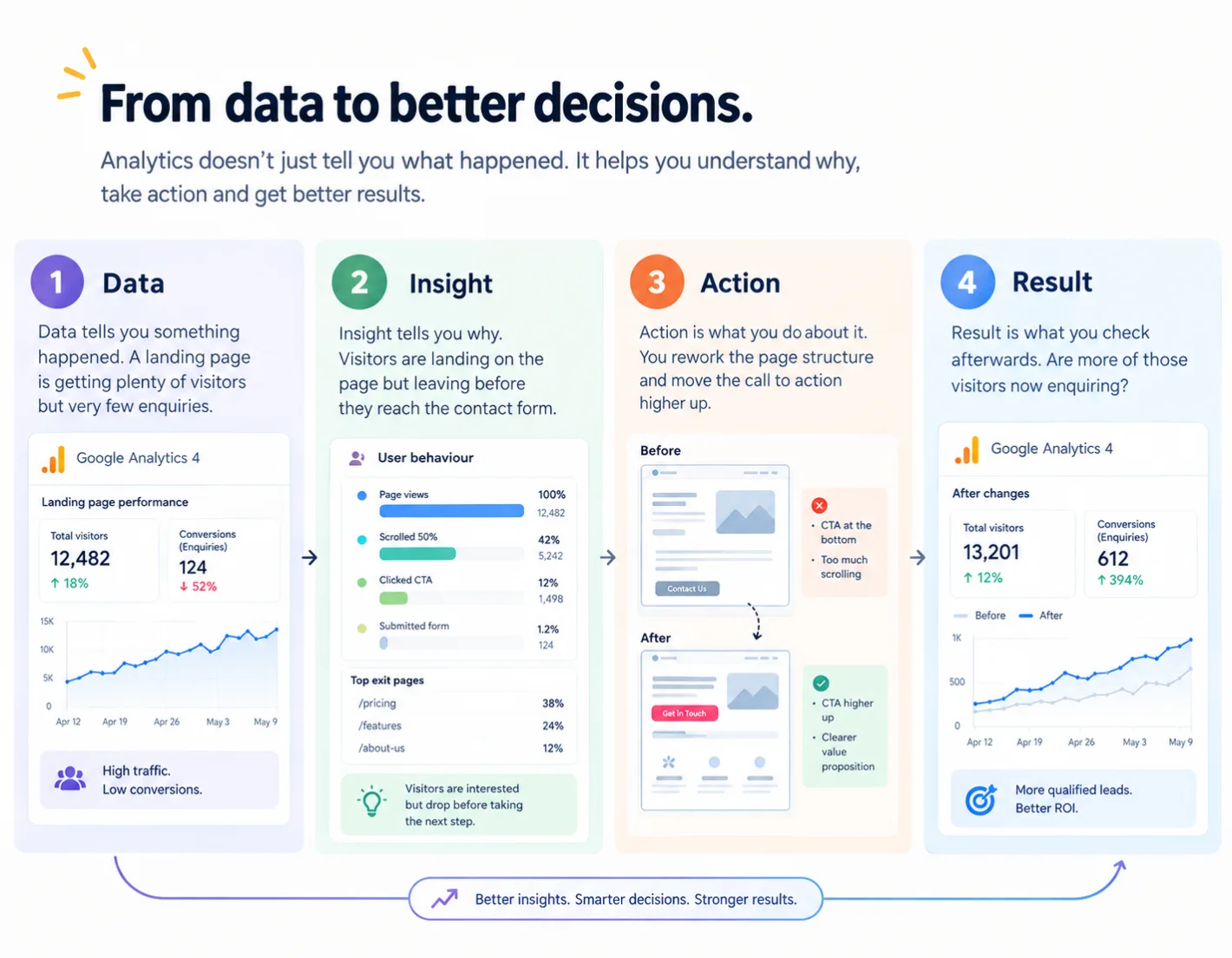
The clearest way to see the value of data analytics is to look at how it actually changes a decision, not just what it measures.
👉 Data tells you something happened. A landing page is getting plenty of visitors but very few enquiries.
👉 Insight tells you why. Visitors are landing on the page but leaving before they reach the contact form.
👉 Action is what you do about it. You rework the page structure and move the call to action higher up.
👉 Result is what you check afterwards. Are more of those visitors now enquiring?
How Data Analytics Helps SEO
How data analytics helps SEO comes down to one thing: search data is one of the clearest signals you have about what your audience actually wants.
Tools like Google Search Console show you which queries bring people to your site, how you’re ranking for them, and how often people click through once they see you in the results. That data can reveal opportunities you wouldn’t otherwise notice, such as a page that’s getting plenty of impressions for a topic but very few clicks. That’s usually a sign the title or meta description needs work, or that the content itself doesn’t fully answer what the searcher is looking for.
Used well, this data doesn’t just measure your SEO performance. It shapes it, pointing you towards which topics to cover, which questions to answer more directly, and which pages need a rework rather than a rewrite from scratch.
Understanding Consumer Behaviour Through Data
Understanding consumer behaviour is one of the most valuable applications of data analytics in digital marketing. Here’s how it plays out.
- Personalised marketing: When you understand a customer’s purchasing patterns, you can tailor your messaging to them directly. Zomato and Swiggy do this well with their personalised in-app notifications, which build familiarity and keep customers engaged with the brand.
- Spotting trends early: Purchasing patterns shift, sometimes quickly. A restaurant might notice a spike in bulk evening orders during a major sporting event and adjust its offers accordingly. Analytics is what makes that pattern visible in time to act on it.
- Acting on feedback: Customer feedback, read alongside your behavioural data, shows you exactly where to improve and how to shape content for specific audience segments.
Tools Marketers Use for Data Analytics
You don’t need to become a data scientist to use analytics well. Most marketing teams rely on a manageable set of tools:
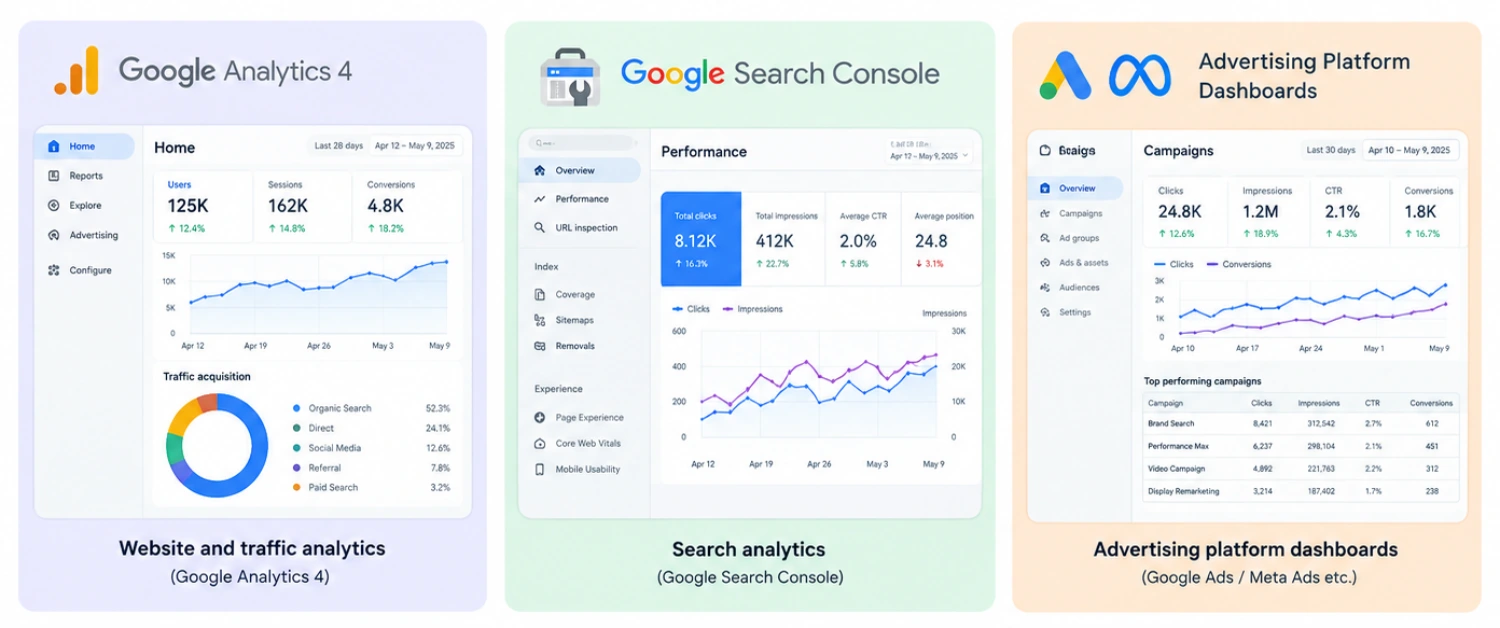
👉 Website and traffic analytics (such as Google Analytics 4) to understand visitor behaviour and conversions
👉 Search analytics (such as Google Search Console) to understand how people find you through search
👉 Advertising platform dashboards to track campaign, audience and creative performance
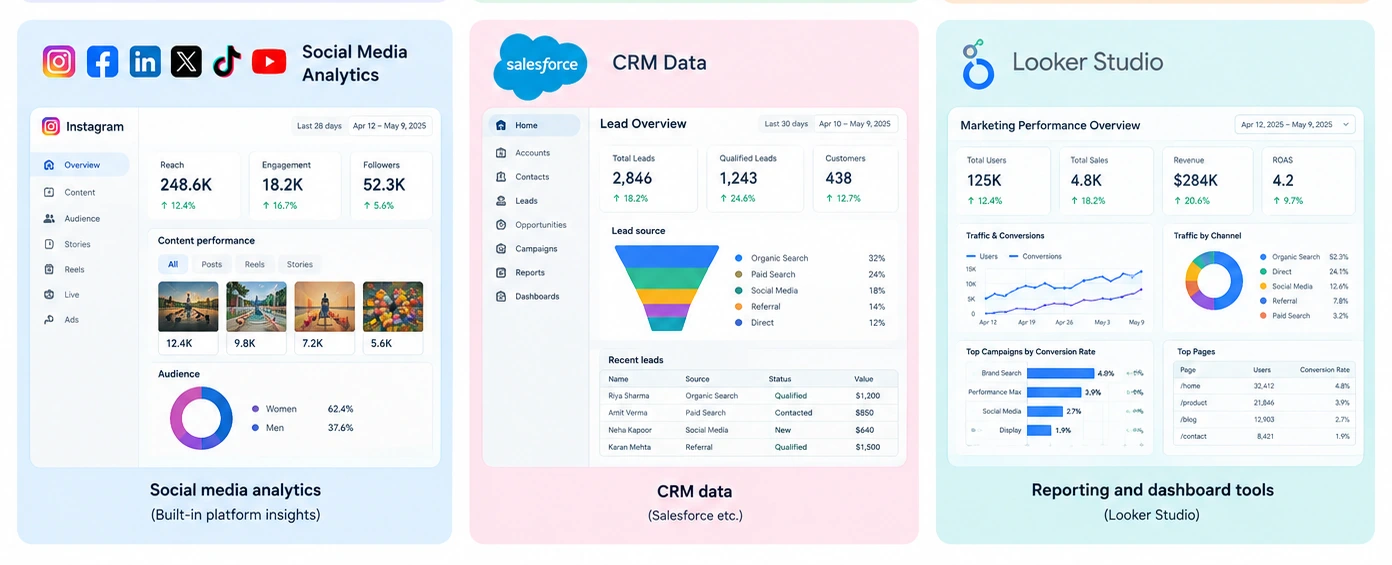
👉 Social media analytics built into each platform, to understand engagement and reach
👉 CRM data to connect marketing activity to actual leads and customers
👉 Reporting and dashboard tools (such as Looker Studio) to bring everything together in one view
The goal isn’t to collect data from every tool available. It’s to connect the data you have to the decisions you need to make.
Common Challenges of Using Data Analytics
Data analytics is powerful, but more data doesn’t automatically mean better decisions. A few challenges come up often:
- Data overload: Too much information, tracked without a clear purpose, makes it harder to spot what actually matters.
- Data quality: Incomplete or inconsistent data can lead you to the wrong conclusion just as easily as no data at all.
- Privacy: Customer data comes with real responsibility, and businesses need to stay compliant with applicable privacy regulations.
- Chasing vanity metrics: High traffic or impressions can look impressive without translating into leads or revenue.
The way through these challenges is to start with the business question you’re trying to answer, then work backwards to the data that actually answers it, rather than tracking everything and hoping a pattern appears.
What’s Next for Data Analytics in Digital Marketing
Digital marketing analytics keeps getting more sophisticated, with more automation and AI-assisted analysis becoming part of everyday marketing tools. Predictive analytics, real-time reporting and deeper personalisation are all becoming more accessible to businesses of every size, not just large enterprises.
What hasn’t changed is the underlying principle: understanding your customers and using that understanding to make better decisions. The businesses that get the most value from data analytics won’t necessarily be the ones collecting the most of it. They’ll be the ones who turn it into action fastest.
Schedule A Direct Conversation With Team Flora Fountain
Data analytics won’t run your marketing for you, but it will tell you what’s working, what isn’t, and what to try next. Businesses that use it well make fewer assumptions and get better results from the same effort.
Have a digital marketing challenge you’d like to talk through? Get in touch with Team Flora Fountain today.
Frequently Asked Questions

The founder and partner of Flora Fountain, Shefali leads the Content and Technology divisions. A one-time engineer who started her career writing front-end code, she took a detour sometime during her 9 years in New York, studied journalism and started writing prose, poetry and sometimes jokes. She now has 15...