


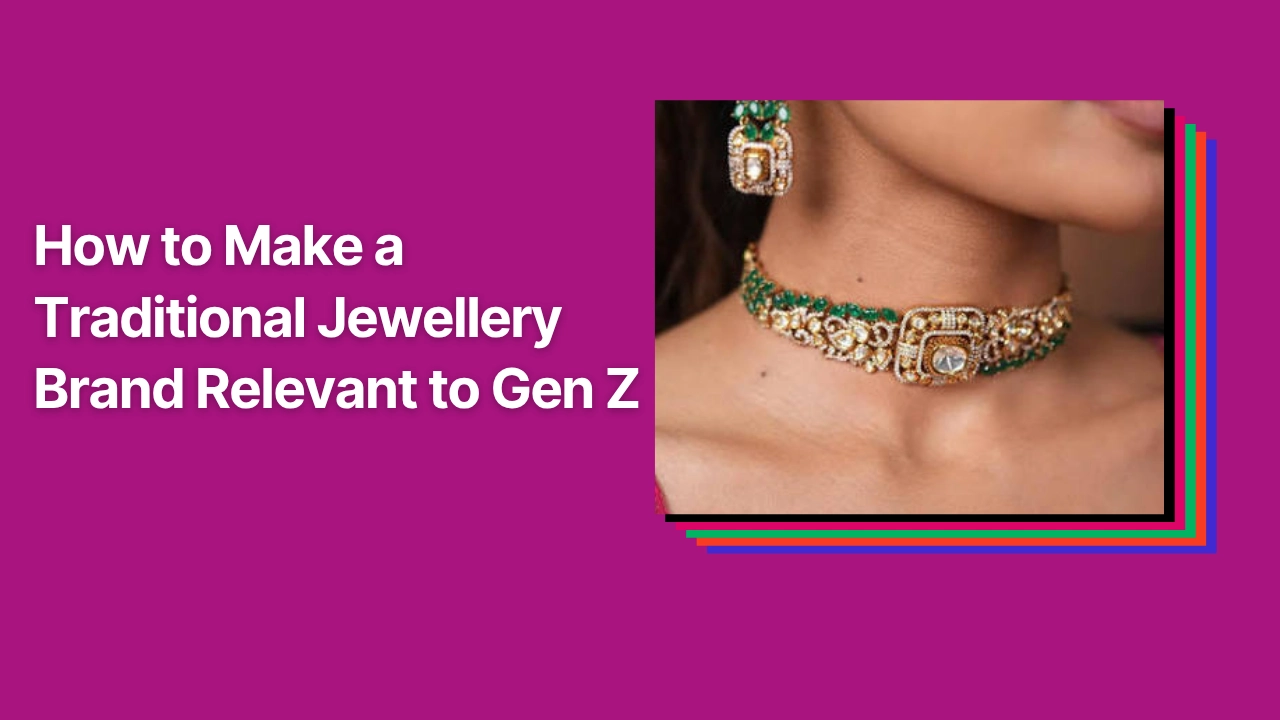
A 22-year-old Gen Z browsing fine jewellery on her lunch break bypasses the mahogany showroom doors entirely.
Instead of listening to a sales rep quote spot rates over a heavy velvet tray of 22k gold, she buys an 18k recycled gold signet ring from an indie brand on her phone.
Today, legacy houses face a core challenge: How do traditional jewellers win Gen Z without losing the bridal clientele that keeps the lights on?
The direct answer is utility and transparency.
Gen Z sees jewellery as daily self-expression rather than a bank-locker investment. Capturing this market requires shifting focus from gross metal weight to everyday versatility, styling pieces in real-world contexts, maintaining transparent digital pricing, and offering ethical sourcing narratives.
Drawing from retail analytics and real-world luxury brand turnarounds, this guide outlines the operational steps to modernise your brand identity, update your social funnels, and turn young browsers into lifelong collectors.
Table of Contents
- The Real Reason Heritage Jewellers Are Losing Gen Z
- Gen Z Purchasing Behaviour for Buying Jewellery
- Social Media as a Tool for Jewellery Businesses to Cater to Gen Z
- Designing a High-Converting Jewellery Branding Strategy
- Omnichannel Realities: Bridging the Screen to the Showroom
- Conclusion
- Frequently Asked Questions
The Real Reason Heritage Jewellers Are Losing Gen Z
For three generations, Indian jewellery houses marketed to exactly one customer: the matriarch financing a wedding.
View this post on Instagram
The advertisements practically wrote themselves. A tearful bride in a crimson lehenga, an emotional father fastening a diamond necklace, classical sitar music crescendoing in the background, and a solemn tagline about lifelong bonds. That campaign formula sold billions in 22-karat hallmarked gold between 1995 and 2015.
Today, that exact creative brief is commercially exhausted.
Gen Z views marriage differently. They marry later, skip lavish five-day banquets to fund travel, or opt out entirely. When they do marry, they want agency over their looks rather than wearing whatever was stashed away in a bank locker seven years prior.
More importantly, waiting around for a wedding to justify purchasing gold feels absurd to someone earning their own salary at 24. They buy ornaments to mark promotions, solo trips, breakups, or random Tuesday dinners with friends. When a legacy retailer fills its entire catalogue with 80-gram bridal sets that cannot be worn outside an air-conditioned banquet hall, they make themselves invisible for 360 days of the year.
This disconnect is rarely about product craftsmanship. It is an editorial failure. If your visual narrative tells an independent young buyer that your shop exists only for their wedding day, they will believe you and go elsewhere for everyday wear.
Gen Z Purchasing Behaviour for Buying Jewellery
Generations of Indian buyers were conditioned to look at jewellery as an emergency asset first and personal adornment second.
Parents calculated making charges down to the fractional percentage point to ensure liquidity remained high.
Gen Z calculates utility completely differently.
Traditional Buyer Value Formula:
Value = (Gold Weight × Daily Spot Rate) – Making Charges + Purity Assurance
Gen Z Buyer Value Formula:
Value = (Cost per Wear × Visual Versatility) + Styling Freedom + Ethical Narrative
To an older buyer, an expensive necklace that sits in a bank safe for 360 days a year is a prudent financial decision. To a 22-year-old, a ₹90,000 piece that can only be worn once every two years is dead capital with zero return on happiness.
They evaluate purchases through the lens of cost-per-wear:
- Can I wear this emerald pendant with an oversized white linen shirt to work?
- Can this traditional jadau cuff be styled alongside a stainless steel watch?
- Does this ring feel natural at a casual Sunday brunch, or does it look like costume drama?
If a traditional brand insists on speaking exclusively in grams, karats, and resale policies, it speaks a dialect Gen Z cares very little about at the discovery stage. Purity and hallmarking are baseline expectations now, not selling propositions. The brands capturing market share lead with styling, versatility, and wearability, leaving the metal specifications for the receipt.
Social Media as a Tool for Jewellery Businesses to Cater to Gen Z
Open the Instagram profile of an average city jeweller. You will almost certainly find high-contrast catalogue cutouts floating on solid black backgrounds, stiff portraits of hired models staring grimly into lighting rigs, and festival greeting graphics wishing followers a happy Dhanteras or Diwali.
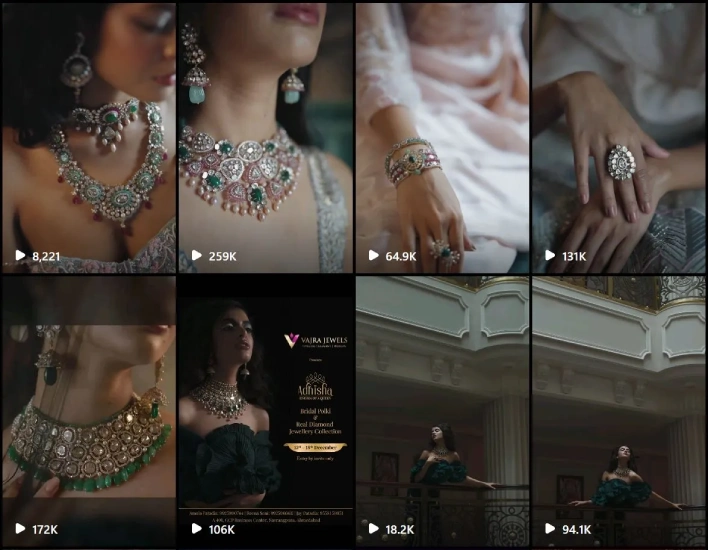
Gen Z spots sterile studio cutouts and overproduced bridal shoots instantly, swiping past them without a second thought. An effective social media strategy for jewellery brand growth needs real-world context and operational clarity.
- Ditch the velvet trays for everyday wear: Shoot pieces in natural daylight paired with linen shirts, tailored blazers, or simple denim rather than heavy lehengas against black studio drops.
- Document raw workbench craft: Film the friction at the karigar’s bench—open flames, gem setting under a loupe, and molten pours. Unfiltered human process beats corporate polish.
- Run “1 piece styled 3 ways” videos: Prove cost-per-wear value by showing how a single heritage choker or cuff transitions from a cocktail party to a casual brunch.
- Publish no-nonsense buyer education: Demystify gold purities, hallmark stamps, lab-grown vs. natural diamonds, and daily care tips to build credibility without hard-selling.
- Route inquiries straight to WhatsApp video: Drop the vague “DM for price” gatekeeping. Share clear starting pricing immediately and follow up with quick, unedited daylight clips on a real hand to secure store appointments.
Designing a High-Converting Jewellery Branding Strategy
Revamping your brand does not require hiring Bollywood stars or alienating the loyal older clientele who fund your bottom line. It simply requires segmenting your communication channels so both audiences get what they want without tripping over each other.
1. Introduce Modular and Multi-Wear Collections
The quickest way to solve the utility problem is functional design. Younger shoppers love modularity:
- Jhumkas where the heavy hanging drop detaches to leave an understated stud for office wear.
- Traditional gold coin necklaces engineered to separate into two lighter choker chains.
- Elaborate bridal cocktail rings designed with inner clip mechanisms that turn into casual pendants.
Highlighting this versatility directly in your messaging alters the price psychology. You are no longer selling a single-use ceremonial artifact; you are selling an adaptable accessory designed for regular rotation.
2. Take a Clear Stance on Sourcing and Ethics
Older generations rarely inquired where an uncut diamond was mined or how wastewater from plating was processed. Gen Z asks these questions routinely in comment sections and store visits.
If you source recycled gold, highlight it. If your diamonds are certified conflict-free or if you carry an ethical lab-grown alternative alongside natural stones, explain the trade-offs clearly without condescension. Greenwashing falls apart instantly under scrutiny, so honesty pays dividends here. If your packaging uses recycled paper boxes rather than unrecyclable synthetic leather cases, tell that story openly.
3. Normalise Casual Self-Gifting
Historically, women were gifted fine jewellery by fathers, husbands, or in-laws. Marketing campaigns leaned heavily into patriarchal benevolent gifting tropes: the proud father on wedding day, the husband marking an anniversary.
Gen Z buys their own jewellery.
Frame your product line around self-celebration and individual milestones. A marketing push targeting a first corporate appraisal, passing a difficult entrance exam, or celebrating five years of running a small agency resonates infinitely more with a 25-year-old professional than another patronizing campaign about becoming someone’s daughter-in-law.
Omnichannel Realities: Bridging the Screen to the Showroom
A common trap for traditional retailers is believing they must transform into an Amazon-style e-commerce business overnight.
Selling a ₹2,50,000 diamond necklace entirely through an automated digital cart checkout remains rare in India. High-ticket fine jewellery purchases still require tactile confirmation. Shoppers want to feel the weight on their neck, test the clasp mechanism, and see the color against their skin tone under natural light.
The job of your digital footprint is not to close the sale online. Its job is to qualify interest, build trust, and bring the shopper through the showroom door.
Digital Touchpoint (Instagram/Reels)
│ Hook with styling versatility & transparent pricing
▼
WhatsApp Conversation (Immediate & Personal)
│ Send unpolished video clips under daylight; discuss customisation
▼
Showroom Experience (Friction-Free)
No intimidation; curated trays ready on arrival; transparent billing
If a potential buyer discovers a modern jadau ring on your feed, sends a direct message asking for the price, and receives an automated reply saying “Please check DM” followed by three days of silence, that customer is gone.
Modern buyers expect an immediate handoff:
- Clear, frictionless price guidance without hidden catches.
- A direct link to WhatsApp where an attentive human sends clear video clips of the piece shot in natural daylight.
- An effortless booking option to view the physical piece in-store without enduring aggressive sales pitches.
When that customer does arrive at your showroom, the environment must match the online promise. If your Instagram feed looks like a sleek indie design studio but your showroom staff treats an unaccompanied 24-year-old in jeans like a casual browser who cannot afford anything, your entire acquisition budget gets wasted at the retail counter.
Conclusion
Making a heritage jewellery brand appeal to Gen Z does not require abandoning your legacy or melting down traditional vaults into disposable trinkets. Your history, sourcing relationships, and bench craftsmanship are your greatest competitive advantages over modern direct-to-consumer startups that lack real provenance.
The real task is modernising how that legacy is communicated.
Partnering with a dedicated digital marketing agency for jewellery brands ensures your decades-old craftsmanship is translated into formats, aesthetics, and funnels that speak directly to the next generation of buyers.
Frequently Asked Questions

Vasim Samadji is a partner at Flora Fountain, where he leads the Business and Marketing Strategy divisions. In a world where everyone is used to sugarcoating, his directness is often considered rude. But that shouldn't be a problem if you like the no-nonsense approach. Because he is a seasoned professional...