


No, keyword optimisation isn’t dead, but the old version of it is. Stuffing exact-match phrases into headings and hoping for the best stopped working years ago. What’s replaced it is topic coverage, entity relevance and answering the actual question behind a search; keywords still matter, just as one input, not the whole strategy.
Business owners who search for “What is keyword optimisation?” in 2026 often encounter generic advice that it is simply “the process of refining web pages to better target search queries”. Relying on this superficial explanation, many try to implement basic keyword tactics on their websites for the long term, only to see zero tangible results and start wondering if keyword optimisation really works or not.
Most guides on this topic either insist nothing has changed, or declare keywords dead entirely. Neither is accurate, and both are easy to say without checking the actual data. This piece checks it.
Table of Contents
- Fast facts
- What is keyword optimisation?
- Is keyword optimisation actually dead in 2026?
- What data actually proves search behaviour has changed?
- What parts of keyword optimisation still work and what do not?
- How should you approach keyword optimisation in 2026?
- What keyword optimisation tools should you actually use?
- Is keyword optimisation different for app store optimisation?
- In Conclusion
- FAQs
Fast facts
| Zero-click searches (US, 2026) | 68.01% of Google searches ended without a click in the first four months of 2026, up from about 60% in 2024 (SparkToro/Datos). |
| AI Overview impact | Click-through drops by close to 60% on a query when an AI Overview appears. |
| Zero Search Volume queries | An estimated 15% of daily searches in 2026 are brand new, with no historical volume data at all. |
| When semantic search actually began | Google’s Knowledge Graph (2012), Hummingbird (2013), RankBrain (2015), and BERT (2019) emerged well before AI search existed. |
| The real shift | From one-keyword-one-page targeting to topic clusters and entity coverage. |
What is keyword optimisation?
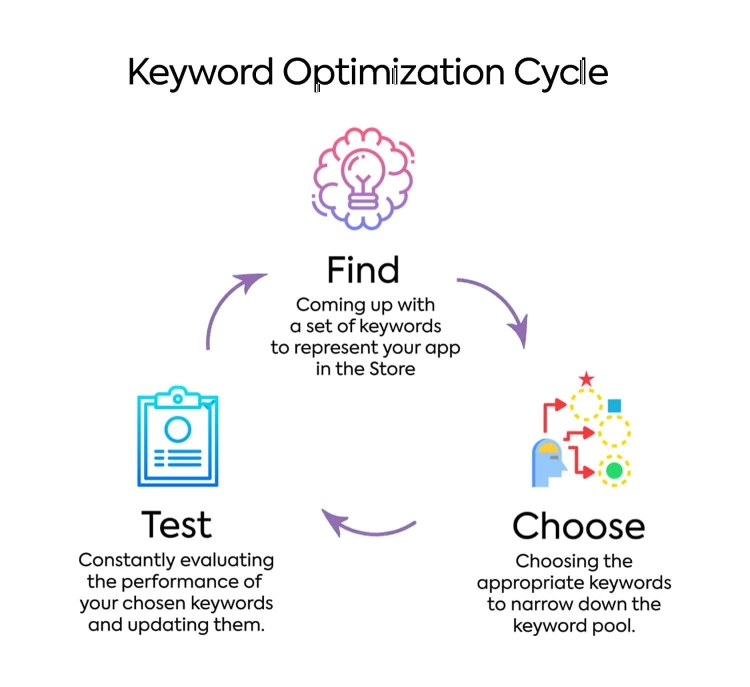
Keyword optimisation is the process of improving the usage of keywords on a website in a way that the website gets more visibility to search engines, AI chatbots and LLMs
That covers titles, headings, body content, image alt text and URLs. It’s different from keyword research, which is about finding and choosing terms in the first place. Optimisation is what you do with them once you’ve picked them.
The basic idea hasn’t changed since the early 2000s. What’s changed is how strict and literal you need to be about it, which is really the whole question this piece answers.
Is keyword optimisation actually dead in 2026?
Like we said at the start, nope. Previously, keywords used to be the main ranking signal. Now they’re one signal among several, alongside topic depth, entity coverage and how well your content actually answers the question.
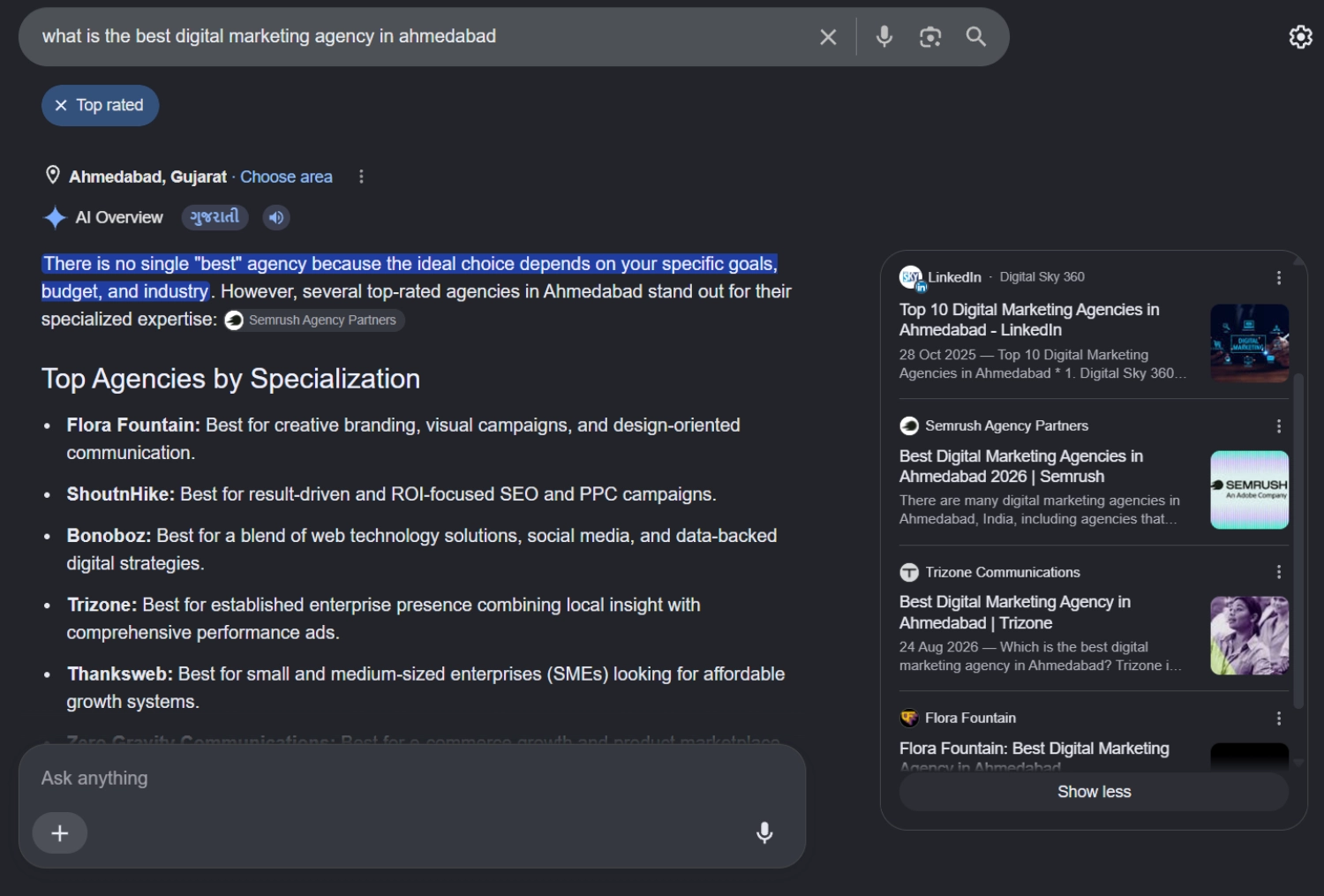
Think of it this way: a page can still rank without the exact phrase “best budget phones” anywhere on it, if it clearly and thoroughly answers that question. Google’s systems now understand intent well enough to make that connection. What no longer works is the old assumption that repeating a phrase enough times, in enough places, guarantees a ranking.
So “dead” is the wrong word. “Demoted” is more accurate; keywords went from being the strategy to being a starting point.
What data actually proves search behaviour has changed?
Search behaviour has genuinely shifted. 68% of US Google searches now end without a click, and AI Overviews cut clicks by roughly 60% on the queries where they appear.
This is the part most “is SEO dead” articles skip; actual numbers:
- SparkToro’s Datos clickstream research found 68.01% of US Google searches in the first four months of 2026 ended without any click to the open web, up 7.6 percentage points from 2024
- When an AI Overview appears above a search result, click-through on that query drops by close to 60%
- An estimated 15% of daily searches in 2026 are entirely new queries with no historical search volume data, meaning a keyword tool can’t even see them coming
None of this proves keywords don’t matter. It proves that ranking first no longer guarantees a visit, which is a different problem than the one keyword optimisation was originally built to solve.
Google began moving away from exact keyword matching over a decade ago, well before AI search existed. This isn’t a new problem; it’s an old one that’s finally impossible to ignore.
A short, useful timeline:
| Year | Update | What it did |
|---|---|---|
| 2012 | Knowledge Graph | Connected entities and facts, not just matching text strings. |
| 2013 | Hummingbird | Understood full sentences and query meaning, not isolated keywords. |
| 2015 | RankBrain | Used machine learning to interpret queries it had never seen before. |
| 2019 | BERT | Understood how words change meaning depending on context. |
By the time AI Overviews arrived, Google had already spent a decade training its systems to understand meaning over exact phrasing. AI search didn’t start this shift, it just made it impossible to keep ignoring.
What parts of keyword optimisation still work and what do not?
Keyword density targets, one-keyword-one-page mapping and exact-match anchor repetition are dead. Validating demand, understanding intent and covering a topic thoroughly still work.
| Dead | Still works |
|---|---|
| Keyword density targets | Validating real demand before writing |
| One-keyword-one-page mapping | Understanding search intent |
| Exact-match anchor text repetition | Comparison and modifier terms (“vs,” “best,” “alternatives”) |
| Chasing high search volume only | Natural keyword placement in titles and headings |
Keyword density never reflected how ranking actually works, and following it strictly makes writing worse. Splitting one topic across several thin pages for each phrase variant just divides your own authority instead of building it. Repeating the same keyword-rich anchor text everywhere now reads as manipulation rather than relevance. And treating monthly search volume as the only number that matters means missing genuinely useful, lower-volume questions real people ask.
On the other side, checking that people actually search for something before writing about it still saves budget. Knowing whether someone wants information, a comparison, or to buy something still shapes what a page should say. Comparison terms like “vs” or “best” still signal strong intent. And using your main terms naturally in titles and early paragraphs still helps readers and search engines understand a page quickly; it just can’t carry the whole strategy anymore.
How should you approach keyword optimisation in 2026?
Build content around topics and entities, not single phrases. Use keyword data to confirm a topic is worth covering, then write to genuinely answer it, not to hit a phrase count.
A practical approach:
- Cluster, don’t isolate: Group related search terms around one comprehensive page instead of splitting them across several thin ones
- Cover the entity, not just the phrase: If you’re writing about a topic, cover the related concepts, questions and terms a genuinely knowledgeable source would include
- Mine real questions, not just search volume: Customer support logs, Reddit threads and actual customer questions often surface zero-search-volume queries worth answering, even when a keyword tool shows nothing
- Structure for extraction: Clear headings, direct answers and FAQ sections help both traditional search and AI tools like ChatGPT and Perplexity lift your content into a cited answer
This shift, from single-keyword targeting to topic and entity depth, is exactly what a properly run Digital marketing agency should already be building into every brief, not treating as a separate, optional upgrade.
What keyword optimisation tools should you actually use?
Use a keyword tool to confirm demand and find related terms, not to dictate exactly how many times a phrase should appear on the page.
A good keyword optimisation tool in 2026 should help you with:
- Grouping related terms into clusters, rather than just listing individual phrases by volume
- Surfacing question-based and long-tail variations, since these increasingly reflect how people actually phrase searches to AI tools
- Checking search intent, so content matches what a searcher actually wants, not just the words they typed
Treat the tool’s output as a starting map, not a finished brief. A Technical SEO audit services engagement should sit alongside this, since even perfectly chosen keywords won’t help a page that’s technically broken or too slow to load.
Is keyword optimisation different for app store optimisation?
Yes, app store optimisation (ASO) still relies more heavily on exact keyword matching than web SEO does, because app store search algorithms are less advanced at understanding semantic meaning than Google’s are.
This is a genuinely important distinction, since app store optimisation keywords work differently from the rest of this piece. App stores like Google Play and the Apple App Store still weight exact keyword fields (app title, subtitle and a dedicated keyword field on iOS) heavily in their own ranking systems. This is closer to how web search worked before Hummingbird than how it works today. So while web content should move away from rigid keyword matching, an app listing’s metadata still benefits from careful, deliberate keyword placement in these specific fields.
In Conclusion
Keyword optimisation isn’t dead, but the version most people learned it as- one page per phrase, a target density, a pile of exact-match anchor text- is. What’s replaced it asks for more actual understanding of your audience, not less: what they’re really asking, what related questions they have, and whether your content genuinely answers all of it.
The businesses still winning in search right now aren’t the ones ignoring keywords. They’re the ones who stopped treating keyword data as the final answer and started treating it as the first question.
If you’re not sure whether your content strategy is stuck in 2015 or built for how search actually works now, Flora Fountain works as a Digital marketing agency for exactly this kind of audit. Drop us a line at hello@florafountain.com and let’s find out what your content is actually missing.
Frequently Asked Questions

The founder and partner of Flora Fountain, Shefali leads the Content and Technology divisions. A one-time engineer who started her career writing front-end code, she took a detour sometime during her 9 years in New York, studied journalism and started writing prose, poetry and sometimes jokes. She now has 15...