

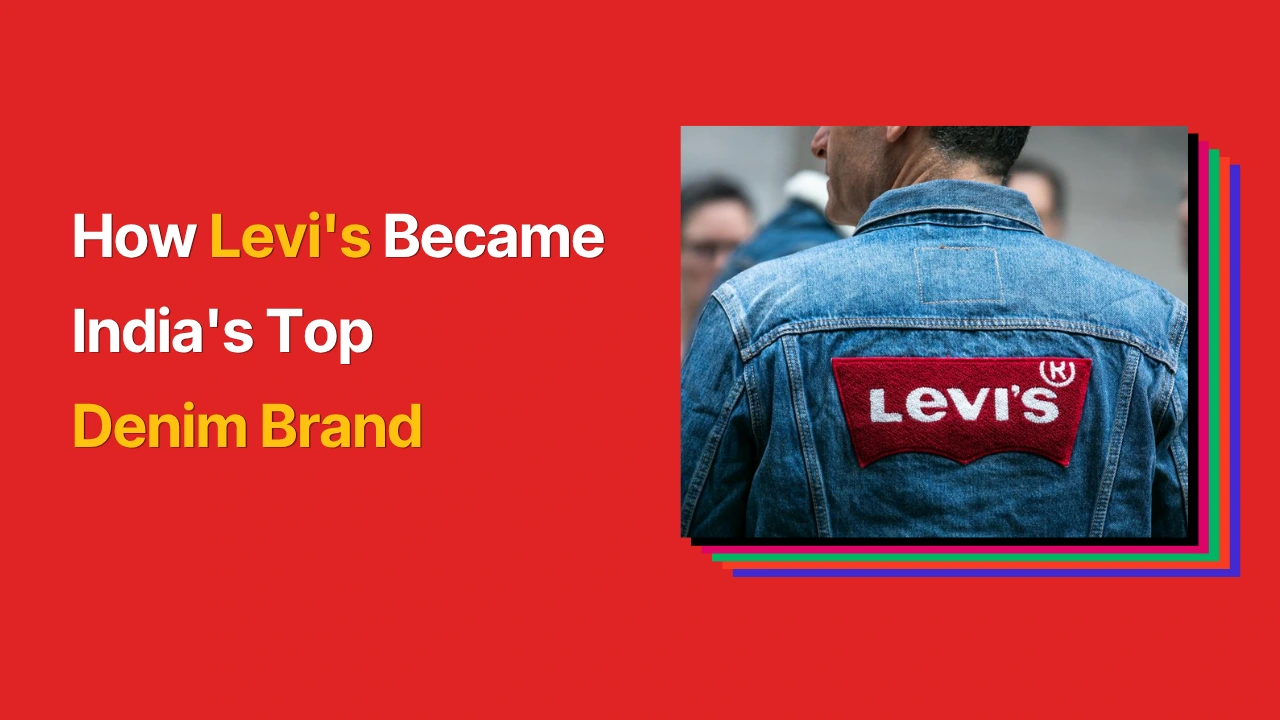
Levi’s Stadium in Santa Clara is wrapped in a giant white tarp right now. FIFA told every World Cup 2026 host venue to cover any sponsor branding it hadn’t approved and Levi’s wasn’t an official partner. So the stadium got a new, generic name, San Francisco Bay Area Stadium and Levi’s famous batwing logo disappeared under a sheet.
Most brands would have quietly accepted the loss. Levi’s did the opposite. It changed its Instagram profile picture to the covered-up logo, draped the same white sheet over storefronts in Paris, London and Hong Kong and let the internet ask the obvious question: what’s under there?
This happened because Levi’s identity is strong enough that people recognise it even when it’s hidden. You get it? That’s what years of consistent branding can do.
We’re Flora Fountain, a branding agency in Ahmedabad. We study brands like this one every day, not because we’re fans of denim, but because Levi’s is one of the clearest examples of what smart, patient, consistent branding actually looks like.
In this article, we look at what founders and marketers can learn from how Levi’s built that same recognition in India.
Table of Contents
- About Levi’s in India
- Levi’s Brand Positioning: Premium, Not Mass
- The Branding Strategy That Made Levi’s Iconic
- Marketing, Advertising and Digital Strategy
- Retail, Product and Customer Experience
- Partnerships and Purpose
- Three Creative Ideas Levi’s India Could Explore Next
- What Businesses Can Learn From Levi’s India Strategy
- Concluding It All For You
- FAQs
About Levi’s in India
Levi’s entered India in the mid-1990s, right after the country opened its doors to foreign investment. The brand set up Levi Strauss India as a wholly owned subsidiary in 1994, at a time when jeans were still seen as a Western, big-city idea in most of the country.
Three decades later, the numbers tell a different story. Levi’s now runs over 500 exclusive brand outlets across India and India is the largest market in Asia and its sixth largest globally. Michelle Gass, President and CEO of Levi Strauss & Co., has said India’s growth crossed pre-pandemic levels by nearly 50 per cent, with net sales in fiscal 2022 jumping 58 per cent to Rs 1,154 crore.
Levi’s grew into India carefully instead of rushing in. It relied mostly on a franchise model, partnering with local businesses who understood Indian retail, malls and shoppers better than a foreign head office ever could. Over the years, Levi’s also trimmed its franchise partner count sharply, working with around 25 partners today compared with more than 80 in earlier years. It chose to go deep with fewer, more committed partners instead of spreading itself thin and opened larger, fully owned stores in top malls to keep tighter control over how the brand feels in its biggest markets.
View this post on Instagram
There’s a Gujarat connection here too. Much of the denim fabric used in Levi’s products sold in India comes from Arvind Limited, headquartered in Ahmedabad. So while Levi’s is an American icon, a good part of its India story is quite literally woven at home.
This slow, structured approach to market entry is worth studying for any brand entering a new city or country. Fast expansion looks impressive on a slide deck. Controlled, partner-led growth is usually what actually builds a brand people trust.
Levi’s Brand Positioning: Premium, Not Mass
Every strong brand can answer one question clearly: What do you stand for? Levi’s answer hasn’t changed in its entire journey. It stands for real, durable, effortlessly cool denim. It doesn’t chase trends. It sets them.
In India, Levi’s chose to position itself as an aspirational brand, not a mass one. It didn’t try to compete on price with local denim makers. Instead, it leaned on its international heritage, its reputation as the inventor of the blue jean and a promise of quality that Indian shoppers were willing to pay a bit more for.
This is a lesson we repeat often with our clients at Flora Fountain. Brand positioning isn’t about being liked by everyone. It’s about being very clear on who your brand is for and staying comfortable that some people simply won’t be your audience. Levi’s never tried to be everything for everyone in India and that discipline is exactly why its identity stayed sharp.
The Branding Strategy That Made Levi’s Iconic
Levi’s branding strategy in India rests on a few simple ideas, repeated for thirty years.
One tagline that works everywhere
“Live in Levi’s” travels well because it’s about identity, not geography. It works just as easily in Ahmedabad as it does in Los Angeles.
Consistency over cleverness
The batwing logo, the two-horse leather patch, the red tab. None of it has changed much in decades. That consistency is probably the single biggest reason the brand still got recognised the moment FIFA covered its name.
Heritage as proof, not nostalgia
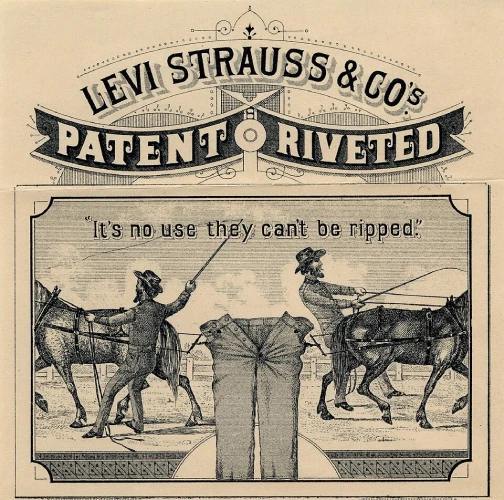
Levi’s constantly reminds people it invented the blue jean back in 1873. It still leans on one of its oldest lines to do this: “It’s no use, they can’t be ripped,” the tagline that ran under the original Two Horse trademark from 1886, an image of two horses pulling on a pair of jeans and failing to tear them apart. That’s not a nostalgic touch. It’s a smart way to build trust in a market full of copies
This is where branding becomes more powerful than marketing. Marketing gets attention for one campaign. Branding gets you recognised even when your name is hidden under a tarp.
Marketing, Advertising and Digital Strategy
Positioning only makes sense when it appears in what Levi’s sells, how it talks about itself and where people actually see that message. Everything below still ties back to the same “Live in Levi’s” idea.
Marketing Strategy
Levi’s marketing strategy in India blends its global brand voice, young, authentic and confident, with product decisions made for the local market. That means lighter denim fabrics suited to Indian weather, a wider range of fits and price points that run between roughly Rs 1,299 and Rs 7,000: high enough to feel aspirational, low enough to stay within reach.
The brand also created sub-brands like Levi’s Signature and Denizen to serve price-sensitive shoppers without hurting the main Levi’s name. If you have a value-conscious segment worth chasing, the smarter move is usually a separate brand for it, not discounts on your flagship.
Digital Marketing Strategy
Levi’s India has invested seriously in digital, especially SEO and content, to reach the growing number of Indian shoppers who research denim online before they ever walk into a store. The brand publishes styling guides and blog content built around both informational searches (“how to style baggy jeans”) and buying-intent searches (“buy men’s slim fit jeans online”), all linking back to product and category pages to strengthen the whole site’s authority with search engines.
This is exactly the kind of work we do every day as an SEO-led digital marketing agency in Ahmedabad. Good SEO isn’t keyword stuffing. It’s building content that answers the real questions your audience is typing into Google.
Advertising Strategy
Levi’s advertising campaigns lean on real emotion over a hard sell, telling small human stories that happen to involve denim rather than listing product features. The 2023 campaign “For Now, For A Lifetime,” featuring Deepika Padukone, is a good example. It opens not with a product shot, but with Padukone sneaking off set into an auto-rickshaw, chasing a spontaneous moment. That’s exactly what “Live in Levi’s” has always meant.
Levi’s has since brought on Alia Bhatt as its global brand ambassador and in 2026 she fronted the “Behind Every Original” campaign in India, which leans into curiosity, self-belief and individuality as Levi’s pushes further into women’s denim with relaxed and wide-leg silhouettes.
View this post on Instagram
The FIFA World Cup 2026 moment we opened with fits right here too. It’s real-time brand agility that turned a restriction into one of the tournament’s most talked-about moments, without Levi’s paying FIFA a single rupee in sponsorship.
Social Media Strategy
Levi’s social media strategy in India blends styling content, influencer partnerships and campaign amplification, working with fashion and lifestyle creators to reach Gen Z and millennial shoppers in Tier 1 and Tier 2 cities, where a friend’s recommendation often carries more weight than an advertisement.
View this post on Instagram
Campaigns like “Easy in Levi’s” reportedly pushed social engagement to around 1.53 per cent, a solid number in a crowded category. It’s the same instinct at work as the FIFA moment: react fast, stay in character and let the audience do the sharing.
Retail, Product and Customer Experience
None of this messaging means much if the experience on the ground doesn’t match it. Levi’s keeps that experience consistent across stores, service and the product itself.
Retail and Omnichannel Experience
Walking into a Levi’s store in India feels the same whether you’re in Ahmedabad, Mumbai or Bengaluru. Clean layouts, denim organised by fit and staff trained to help you find the right style rather than just push a sale. That consistency is deliberate and it protects the premium feel the brand has built.
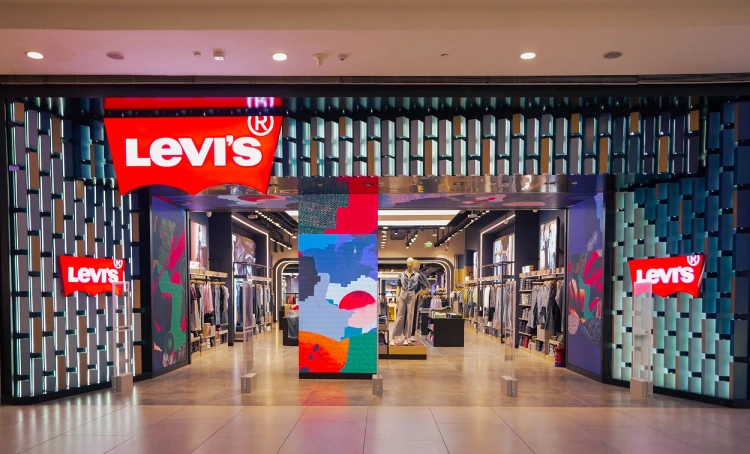
Source: Levi Strauss & Co.
Levi’s omnichannel strategy connects its own website, its exclusive stores and its presence on multi-brand retailers like Pantaloons and Shoppers Stop. A shopper can browse online, try on in-store or buy from a large-format retailer and the brand feels recognisably the same at every step. This is exactly the kind of thinking we help clients build as a full-service advertising and digital agency, where the online campaign and the offline experience need to feel like one brand.
Customer Experience and Loyalty
Levi’s customer experience strategy in India focuses on product trust more than discounting. Free alterations, straightforward returns and consistent sizing through its three-digit fit numbering system all reduce the friction that usually makes people hesitate before buying denim online or in an unfamiliar store.
Levi’s loyalty comes less from a points-based program and more from the product simply working, wash after wash, year after year. When customers believe a pair of jeans will last, they come back. That might be the simplest, most underrated loyalty strategy there is.
Product and Pricing Strategy
Levi’s premium branding in India works because the product genuinely backs it up. The brand kept denim as its core, then expanded carefully into shirts, jackets, dresses and accessories, without straying so far that the core identity got diluted.
Pricing stays in the same mid-to-premium band mentioned earlier, wide enough to include a first-time buyer and a loyal, higher-spending customer, but never low enough to feel ordinary. Fixed pricing, minimal haggling and rare deep discounts all protect that perception of quality.
Partnerships and Purpose
Who Levi’s works with and what it stands for beyond the product follow the same disciplined approach.
Collaborations and Partnerships
Levi’s picks its collaborators carefully instead of chasing every trending name. Diljit Dosanjh, Deepika Padukone and now Alia Bhatt are proof of that restraint. Globally, Levi’s also works with young activists and creators on its sustainability messaging, which we cover next.
View this post on Instagram
What we like here is the discipline behind it. Levi’s only partners with people whose values genuinely fit the brand story, which is exactly the thinking we brought into the collaborator and creator strategy we built for CarzSpa. Every creator we brought on already had real trust with the specific audience we wanted to reach, not just a large following.
Sustainability and Brand Purpose
In 2021, Levi’s launched its global “Buy Better, Wear Longer” campaign, encouraging people to buy fewer, better-made clothes and wear them for years instead of seasons. The campaign featured young changemakers like Emma Chamberlain and Jaden Smith and was later recognised by the United Nations Environment Programme as a case study in responsible sustainability communication.
What we appreciate about this campaign is that it doesn’t ask people to buy less Levi’s. It asks people to buy better and trusts that Levi’s quality will win that comparison. That’s a confident, product-backed way to talk about sustainability, instead of an empty promise stapled onto a marketing calendar.
Three Creative Ideas Levi’s India Could Explore Next
Levi’s has done a lot right. But even a strong strategy has room to grow. Here are three ideas we’d genuinely pitch if Levi’s India walked into our office tomorrow.
1. A “Denim Repair Bar” in flagship Indian stores
Instead of just alterations, Levi’s could build a visible, in-store repair and customisation counter: patchwork, embroidery, visible mending, where customers watch their old jeans get a second life. It would turn “Buy Better, Wear Longer” from a message into something people can actually watch happen and give design-curious Indian shoppers a reason to visit a physical store instead of just buying online.
2. Hyperlocal storytelling for Tier 2 and Tier 3 India
Levi’s India could do more outside the big metros. Instead of one national campaign, it could run smaller, city-specific films shot in places like Surat, Indore or Rajkot, using local dialects, landmarks and creators. It takes more production effort, but it would make the brand feel like it genuinely understands India beyond Mumbai and Delhi, instead of a global name simply dropped into local malls.
3. A “Second-Hand Levi’s” resale marketplace for India
Levi’s already runs a resale platform globally. India’s thrift and pre-loved fashion culture is growing fast on Instagram and it’s a genuinely underused opportunity here. A verified, India-specific Levi’s resale marketplace, perhaps in partnership with existing thrift platforms, would let the brand own the sustainability conversation locally too, while giving new customers an easier, lower-priced way in.
What Businesses Can Learn From Levi’s India Strategy
Strip away the denim and Levi’s India’s journey is really a masterclass in a few branding fundamentals.
- Positioning has to be a choice: Levi’s decided early it would be premium, not mass and stuck with it.
- Consistency beats novelty: The same logo, tagline and product promise, repeated for decades, is why a covered-up logo till got recognised instantly.
- Local adaptation shouldn’t dilute the core brand: Levi’s changed fits and fabrics for India but never touched what the brand actually stands for.
- Purpose needs a real product behind it: “Buy Better, Wear Longer” works because Levi’s jeans genuinely last.
- Speed matters: The FIFA moment worked because Levi’s reacted within hours, not weeks.
Concluding It All For You
Every brand people remember started with a clear, thoughtful strategy long before it became a household name. Nobody stumbles into being iconic. It’s built decision by decision, over years of staying consistent about who you are.
At Flora Fountain, we’re a creative branding agency in Ahmedabad that also works with businesses across India and internationally as a full-service digital marketing agency. We help founders and business owners figure out what their brand should stand for, then bring that to life through strategy, design, advertising and digital marketing that actually gets noticed and remembered.
If you’re building a brand and want it to feel this intentional, we’d genuinely love to talk. Schedule a 1:1 call with Team Flora Fountain today and let’s figure out what your brand’s version of “Live in Levi’s” could look like.
Frequently Asked Questions

Vasim Samadji is a partner at Flora Fountain, where he leads the Business and Marketing Strategy divisions. In a world where everyone is used to sugarcoating, his directness is often considered rude. But that shouldn't be a problem if you like the no-nonsense approach. Because he is a seasoned professional...