


Every few months, a new AI model drops and the internet collectively loses its mind.
This time, the headlines have a point.
Claude Opus 4.7, released on April 16, 2026, is Anthropic’s most capable generally available model to date. It handles complex, long-running tasks with rigour and consistency, pays precise attention to instructions, and devises ways to verify its own outputs before reporting back.
That last part will get every brand owner’s attention. An AI that checks its own work. That can run for hours without losing coherence. That produces higher-quality decks, documents, and creative outputs than anything that came before it.
As an experienced digital marketing agency, we know what’s going on in your head. “Do I still need an agency?” “Do I still pay for a monthly retainer, or can this magical tool that will cost me 20$ a month run the entire marketing department?”
We tested it. Thoroughly. Here is the honest answer.
Table of Contents
- What Is Claude Opus 4.7?
- What Can Claude Actually Do For Marketing
- Where Claude Opus 4.7 Is Genuinely Impressive
- Where It Falls Flat: The Honest Limitations
- The Verdict
- Conclusion
- FAQs
What Is Claude Opus 4.7?
Claude Opus 4.7 is not just another chatbot update. It represents a meaningful architectural shift in what AI can do autonomously.
Opus 4.7 is highly autonomous and performs exceptionally well on long-horizon agentic work, knowledge work, vision tasks, and memory tasks. It supports a 1 million token context window and 128,000 maximum output tokens. (Source)
To put that in plain language, it can read, process, and respond to the equivalent of a small novel in a single session, and it can produce outputs the length of a substantial report without losing the thread.
“It is also more tasteful and creative when completing professional tasks, producing higher-quality interfaces, slides, and documents than its predecessors”,
said Anthropic
A day after, Anthropic launched Claude Design, a new Anthropic Labs product that lets users collaborate with the model to create visual outputs, including designs, prototypes, slides, and one-pagers. This is not a feature buried in the API documentation. It is a direct play for the creative and marketing workflow.
For anyone running a brand or a startup, this combination of long-form reasoning, visual output, and autonomous task execution feels like an entire agency within a browser tab.
So the question is real. Not rhetorical.
What Can Claude Actually Do For Marketing
Let us be specific. Here is what Claude Opus 4.7 can genuinely handle for a marketing function today.
Content Creation at Scale
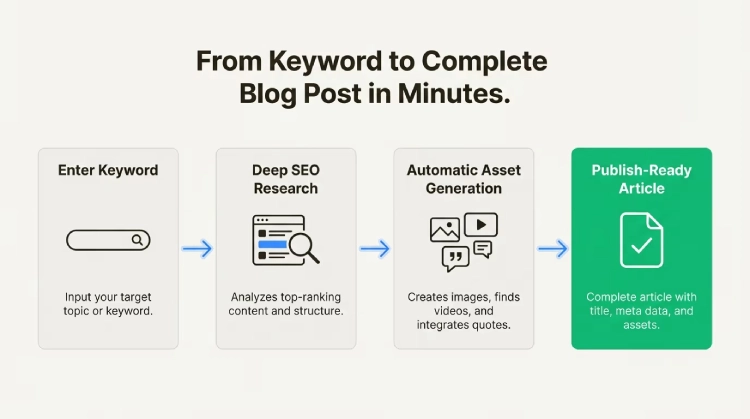
Feed it your brand guidelines, tone of voice document, target audience, and keyword brief.
Ask it to produce a month of blog posts, ten email sequences, or a full social media calendar.
It will deliver.
The output quality at this level of context is genuinely impressive. More consistent, more on-brand, and more structurally coherent than earlier models.
Competitive and Market Research
Opus 4.7 does better on knowledge work tasks like document creation, financial analysis, and multi-step research.
In practice, this means you can ask it to research five competitors, analyse their positioning, identify gaps, and produce a strategy brief, and it will do this in a single session without losing coherence between steps.
Presentation and Document Production
With the 1 million token context window and Claude Design now live alongside it, Opus 4.7 can take a research brief and turn it into a polished presentation. Specifically, improvements to .pptx editing and .docx redlining mean the model is better at producing and self-checking tracked changes and slide layouts. (Source)
This is not a chatbot producing rough notes anymore. This is something closer to a junior strategist who can also design.
SEO and Performance Content
Brief it properly and it will produce SEO-optimised articles, meta descriptions, schema markup suggestions, and internal linking strategies. It understands search intent at a level that makes it genuinely useful for content marketing workflows.
Where Claude Opus 4.7 Is Genuinely Impressive
Three things about Opus 4.7 genuinely surprised us during testing, and that any honest Claude review on the internet needs to acknowledge.
It Catches Its Own Mistakes
Opus 4.7 catches its own logical faults during the planning phase and accelerates execution, far beyond previous Claude models.
For marketing, this matters a lot because previous AI tools would confidently produce wrong information, wrong statistics, fabricated case studies and hallucinated brand names.
Opus 4.7 is measurably more cautious about this. It flags uncertainty rather than papering over it.
It Understands Visual Context
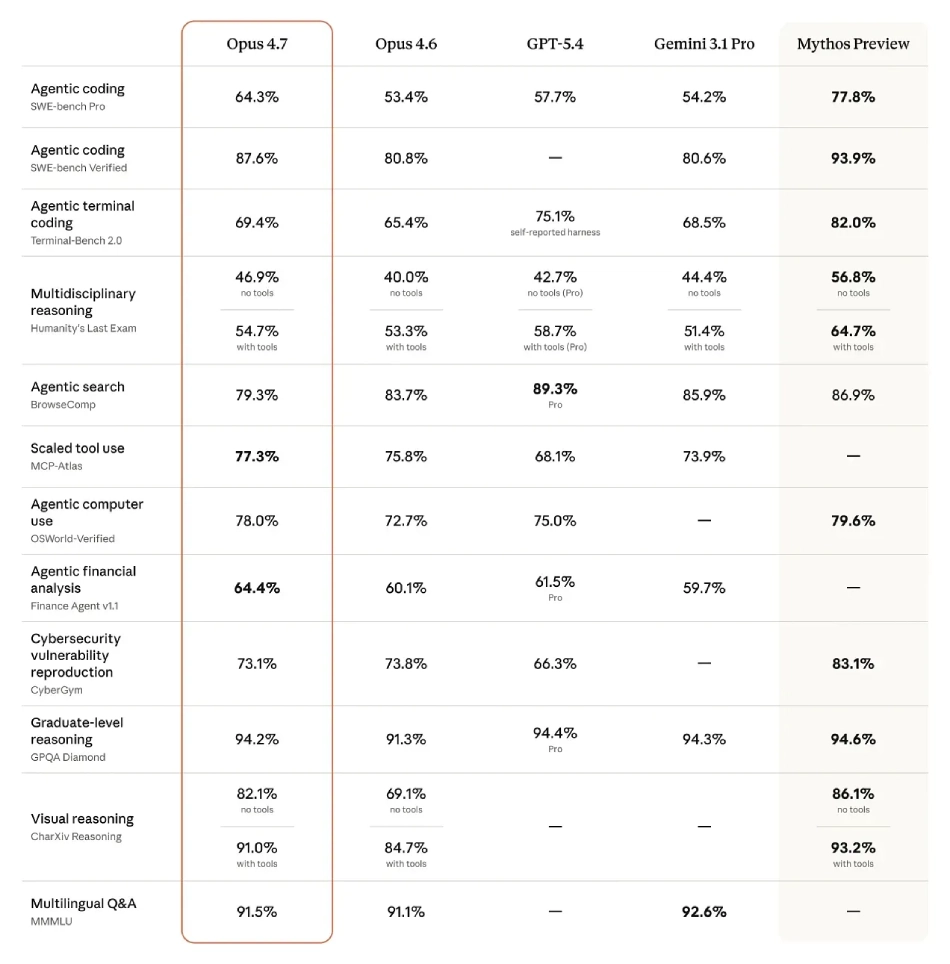
The jump in image resolution from 1.15 megapixels to 3.75 megapixels is not just a technical footnote. Opus 4.7 at full resolution scores 79.5% on visual navigation without tools versus 57.7% for Opus 4.6.
In practice, this means it can analyse competitor ads, read campaign screenshots, interpret charts and infographics, and give you genuine strategic feedback on visual content, not just text.
It Runs Long Jobs Autonomously
Opus 4.7 delivers stronger multi-step task performance and more reliable agentic execution, showing meaningful improvement in long-horizon reasoning and complex, tool-dependent workflows.
A campaign audit that would take a junior marketer two days can be completed in a single session. A full content strategy, briefed properly, can be produced in one run. This is not incremental. It is a genuine shift in the scope of what one person can accomplish with AI assistance.
Where It Falls Flat: The Honest Limitations
Here is where the blog that just wants to sell you something would stop. We are not stopping here.
It Has No Instinct
Claude Opus 4.7 can analyse what has worked. It cannot feel what will land. The difference between a campaign that is technically correct and one that becomes a cultural moment is not something any model at any benchmark score can manufacture.
It Does Not Know Your Business
Every output Opus 4.7 produces is only as good as the brief you write. It does not know your sales cycle, your customer service history, what your competitors said last quarter, how your sales team speaks on calls, or why your last campaign underperformed.
A proficient branding agency that has spent three months embedded in your business will produce work that reflects all of that invisible context. An AI produces work that reflects whatever you typed into the prompt.
It cannot Execute Across Real Systems
Opus 4.7 can write the social media strategy, it can even schedule content, analyse performance data, and adjust based on results, when connected with the right agentic AI.
To be honest, these are capabilities that would have been unthinkable from an AI model two years ago.
But it cannot negotiate with an influencer, get on a call with a vendor, read a room in a client meeting, or make the kind of judgment call that comes from years of category experience. Marketing is not just a series of tasks. It is a connected, human, organisational activity.
It Gets the Brief Wrong When the Brief Is Vague
The single biggest limitation that we think nobody is talking about is this: Claude Opus 4.7 requires an expert to prompt it. If your marketing brief is fuzzy, and most real-world marketing briefs are, the output will be fuzzy.
Getting the most from this model requires a level of strategic clarity that most businesses do not have before they sit down with an agency to develop it.
The Verdict
Claude is genuinely one of the most impressive things built in the last decade. That is not marketing language. The benchmarks are real, the capability jump is measurable, and the use cases for marketing are concrete and immediately applicable.
But here is the honest verdict: it is the most powerful tool a marketing team has ever had access to, not a replacement for one.
Claude is a very powerful teammate. It is not the team.
The distinction matters for a very practical reason. The brands that will win with AI are not the ones that hand everything to the model and walk away. They are the ones that put skilled humans, strategists, creatives, analysts, and community managers in the seat that is now augmented by an extraordinarily capable assistant.
The future is not about replacing your team. It is about supplementing them with capable AI teammates.
And this is precisely where a professional digital marketing agency becomes more valuable, not less, in an AI-powered world. Because the gap is no longer between brands that have AI access and brands that do not. Everyone has access. The gap is between brands that know how to use it and brands that do not.
- Building the right prompting architecture.
- Training the model on your brand voice.
- Structuring workflows that combine AI output with human judgment.
- Knowing when to trust the output and when to override it.
- Auditing for hallucinations before they go live.
- Understanding which tasks belong to AI and which require a human.
These are not simple operations. They are skills, and getting them wrong, at scale, with a model this capable, will cost you a lot more than the subscription fee.
The brands working with an experienced agency in 2026 are not doing so because they cannot afford AI. They are doing so because they understand that the intelligence layer, the strategy, the instinct, the cultural fluency, and the accountability is what makes AI useful rather than dangerous.
Conclusion
Every new AI model raises the same question: Is this the one that makes agencies obsolete?
Claude Opus 4.7 is the best argument yet for that question. It is Anthropic’s most capable generally available model, built for complex, long-running tasks with rigour and consistency.
And it still cannot replace the human being who knows your customer, understands your category, has the creative courage to take a risk, and can sit across a table from you and tell you the hard truth about why your last campaign did not work.
The future belongs to the brands that combine the terrifying speed of AI with the strategic brilliance of a human-led branding agency. If you are ready to stop playing with tools and start building a serious brand strategy, the human experts at Flora Fountain are ready to talk.
Frequently Asked Questions
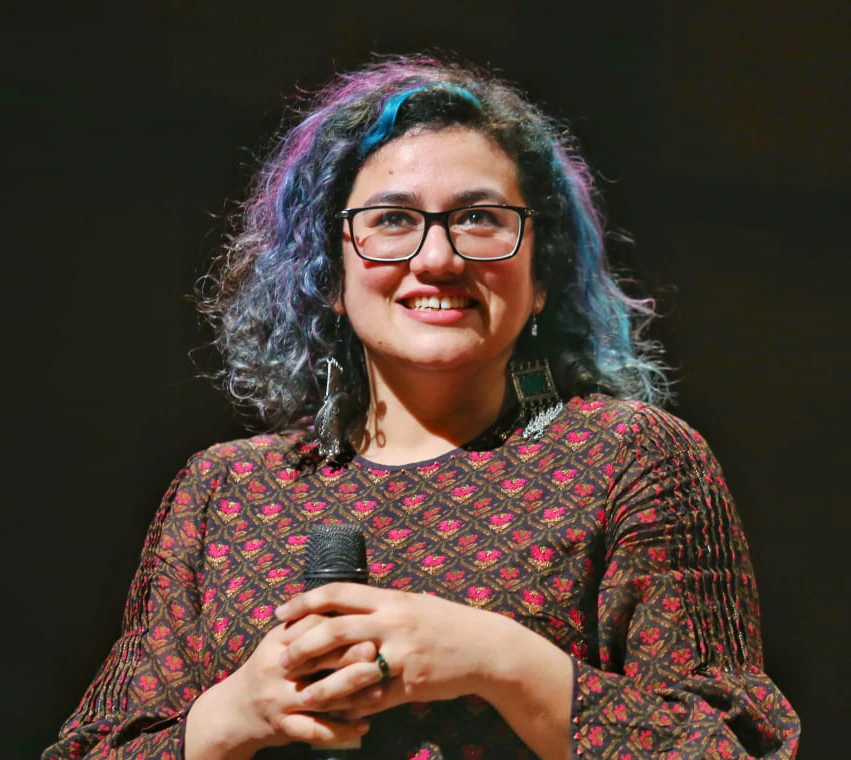
The founder and partner of Flora Fountain, Shefali leads the Content and Technology divisions. A one-time engineer who started her career writing front-end code, she took a detour sometime during her 9 years in New York, studied journalism and started writing prose, poetry and sometimes jokes. She now has 15...