


While the biggest names in fintech were busy burning hundreds of crores on Indian Premier League (IPL) television spots, massive billboard campaigns, and high-priced celebrity endorsements, one company quietly overtook them all.
Zerodha is India’s most profitable fintech, posting a staggering Rs 4,700 crore in profit.
Yet, they have never run a newspaper advert, never sponsored a cricket team, and never paid a Bollywood star to hold their application in front of a camera. By doing the exact opposite of everything the traditional startup playbook demanded, Zerodha became the undisputed king of Indian broking.
For modern brands that want to partner with a digital marketing agency, studying Zerodha should be the topmost priority.
It proves that when your product, transparency, and consumer education align perfectly, you do not need to buy your users. You can earn them.
Table of Contents
- The Bootstrap Origins of Zerodha
- Zerodha’s Pricing Model
- Varsity by Zerodha
- The Old Referral Programme of Zerodha
- The Founder-Led Branding of Zerodha
- Rainmatter & APIs: Building an Inescapable Ecosystem
- The Financial Scorecard
- Takeaways for Modern Marketers
- Conclusion
- Frequently Asked Questions (FAQs)
The Bootstrap Origins of Zerodha
Founded in 2010 by brothers Nithin and Nikhil Kamath, Zerodha started with a bootstrapped capital of Rs 1.7 crore. (Source)
Most startups view Venture Capital (VC) funding as the mandatory fuel for growth. Zerodha viewed it as a trap.
When a company accepts billions in VC funding, it is placed under immense pressure to show aggressive, month-on-month user growth. This forces companies to buy users through heavy discounting and massive advertising campaigns.
Any traditional digital marketing agency will tell you that a lack of advertising budget is a death sentence. Zerodha proved that a lack of advertising budget is the ultimate filter for product quality.
The Difference in Funded vs Bootstrapped Startups
| Strategic Element | Traditional VC-Funded Startup | The Zerodha Approach |
|---|---|---|
| Primary Goal | High-speed user acquisition | Sustainable, profitable growth |
| Marketing Spend | Massive television and digital advertising | Zero paid marketing |
| Customer Acquisition Cost (CAC) | Exceedingly high | Practically zero |
| Product Focus | Gamified to encourage frequent use | Minimalist, focused on core utility |
By avoiding external funding, Zerodha was never forced to chase vanity metrics. They could focus entirely on building a product that sold itself.
Zerodha’s Pricing Model
Zerodha’s most powerful marketing message was not a tagline. It was a revolutionary pricing model.
Before 2015, traditional brokers charged a percentage-based fee on trades. This meant the more you invested, the more the broker penalised you with fees.
Zerodha introduced the discount broking model to India. (Source: Zerodha)
They charge up to ₹20 per executed order for intraday/F&O, and ₹0 for long-term equity investing, keeping trading costs low.
(PS: As of April 2026, Zerodha has revised intraday F&O brokerage to ₹40 per order for clients without 50% cash collateral.)
They added a highly transparent “Brokerage Calculator” to their website, allowing traders to see exactly how much money they were saving. This simple digital tool went viral on early internet trading forums.
Furthermore, their trading platform, Kite, acted as a retention marketing tool.
View this post on Instagram
While legacy bank brokers had clunky, slow interfaces,
Kite was:
- Incredibly fast
- Minimalist
- Designed perfectly for mobile screens.
The exceptional User Interface (UI) became their strongest unique selling proposition.
Varsity by Zerodha
Stock market trading is incredibly complex and intimidating for beginners. Instead of running advertisements telling people to trade, Zerodha decided to teach them how to trade.
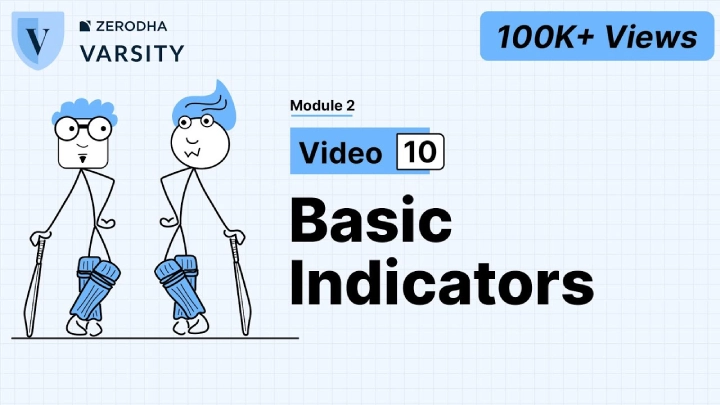
They launched Varsity, an open-source collection of stock market lessons.
Varsity is completely free, easily accessible, and entirely stripped of intimidating financial jargon. It is arguably the most brilliant content marketing initiative in Indian corporate history.
Varsity serves as an impenetrable part of Zerodha’s Search Engine Optimisation (SEO) strategy.
When millions of Indians search Google for basic queries like “what is a mutual fund”, “how to read a candlestick chart”, or “what is an IPO”, the first organic result is almost always a Zerodha Varsity chapter.
By capturing high-intent search traffic and providing immense value upfront, they trigger the psychological principle of reciprocity.
When a user spends three months learning about the stock market for free on Varsity, the first place they go to open a demat account is naturally Zerodha.
The Old Referral Programme of Zerodha
Historically, instead of paying Google and Meta for new users, Zerodha decided to pay its own customers. They built what became the most robust and lucrative affiliate programme in the Indian broking sector.
For years, if you referred a friend to Zerodha, you received 10% of the brokerage fees that your friend generated, for life.
Creators were highly motivated to make content praising Zerodha because the product was genuinely excellent and the referral link provided them with a massive passive income stream. Nearly 60% of Zerodha’s total user base was originally acquired through this organic engine. (Source)
The 2024 Regulatory Pivot
According to a market exchange circular implemented in August 2024, brokers are now prohibited from paying referral commissions to individuals who are not officially registered as Authorised Persons (AP).
Zerodha immediately complied with the new regulations, halting the famous 10% brokerage-sharing model for unregistered referrers on August 25, 2024.
Instead of abandoning the programme entirely, Zerodha pivoted to a utility-based reward system.
Today, clients receive 300 reward points for each successful referral. While it is no longer a direct cash pipeline, these points hold immense value within their digital ecosystem. Users can redeem these points to completely waive their Annual Maintenance Charge (AMC) or subscribe to premium paid partner products.
The Founder-Led Branding of Zerodha
A professional branding agency will confirm that corporate authenticity cannot be faked in a boardroom. In the modern digital landscape, consumers trust people far more than they trust corporate logos.
No Business Background
No Pedigree education across the team
No VC/PE
No Advertising spending
No Spamming customer@zerodhaonline is an example that a successful business can be built by not following the norm, by average folks with common sense wanting to solve a problem. pic.twitter.com/lM9PA50n9a
— Nithin Kamath (@Nithin0dha) April 28, 2023
Nithin Kamath’s public persona on platforms like X and LinkedIn serves as a core pillar of their brand equity. He practises radical transparency, which is incredibly rare in the financial sector.
The “Anti-Marketing” Trust Builders:
- Admitting Faults: When Zerodha faces a technical glitch, Nithin publicly apologises and explains the engineering failure rather than hiding behind a PR team.
- Warning Customers: Nithin frequently warns his own users about the extreme financial risks of futures and options (F&O) trading.
- The “Nudge” Feature: Zerodha actively introduced a feature on their app that interrupts a user if they attempt to buy a risky penny stock, warning them of the danger.
Telling users not to trade recklessly goes directly against their revenue model. However, this “anti-marketing” stance builds an impenetrable layer of brand trust that competitors simply cannot replicate with advertising.
Rainmatter & APIs: Building an Inescapable Ecosystem
Great marketing ensures a customer signs up. A great ecosystem ensures a customer never leaves.
View this post on Instagram
Zerodha took its profits and created Rainmatter, an incubator and investment fund for other fintech startups. Rather than spending money on billboards, they invested capital into innovative financial tools like Sensibull (options trading), Ditto (insurance), and smallcase (thematic investing).
They then used their Kite Connect API to allow these startups to integrate seamlessly with the Zerodha platform. Users stay with Zerodha not just for the low fees, but because it connects them to the best financial infrastructure in the entire country. They built a powerful technological moat rather than a superficial advertising moat.
The Financial Scorecard
The true testament to this strategy is found in the balance sheet. When you compare Zerodha’s financial health to its most heavily advertised competitors, the power of organic marketing becomes undeniable.
| Brand | Marketing Strategy | FY23 Revenue (Approx) | FY23 Profit/Loss (Approx) |
|---|---|---|---|
| Zerodha | Organic SEO, Referrals, Education | Rs 6,875 Crore | Rs 2,900 Crore (Profit) |
| Upstox | Heavy IPL Sponsorships, Celebrity Ads | Rs 1,000 Crore | Rs 144 Crore (Profit / Post-Loss Recovery) |
| Groww | Aggressive YouTube Ads, Digital Ads | Rs 1,277 Crore | Rs 73 Crore (Profit) |
Note: Zerodha’s profit has subsequently scaled to over Rs 4,700 crore in the most recent fiscal reports, maintaining its massive lead.
Takeaways for Modern Marketers
You do not need to be a stockbroker to apply the Zerodha playbook. Here are the core strategic lessons for any brand looking to scale sustainably:
- Product is the Best Marketing: Make your pricing or feature set so disruptive that people have a genuine reason to talk about it.
- Invest in True Education: Content marketing should not just be a disguised sales pitch. Teach your customers how to succeed. An educated customer is a loyal customer.
- Embrace Founder Transparency: Stop hiding behind generic corporate press releases. Speak directly and honestly to your users, especially when things go wrong.
- Build an Ecosystem, Not a Campaign: Look for ways to integrate with other helpful tools in your industry to increase your user retention.
Conclusion: The Enduring Power of Trust
Zerodha did not become the largest broker in India by shouting the loudest. They won by being the most consistently useful.
They proved that if a brand focuses entirely on solving the customer’s problem, providing high-quality free education, and maintaining absolute transparency, it can completely bypass the traditional marketing funnel.
The Zerodha story is a powerful reminder that the best marketing strategy in the world is simply building a product that people genuinely want to share.
Frequently Asked Questions

Vasim Samadji is a partner at Flora Fountain, where he leads the Business and Marketing Strategy divisions. In a world where everyone is used to sugarcoating, his directness is often considered rude. But that shouldn't be a problem if you like the no-nonsense approach. Because he is a seasoned professional...