



Over the years, Indian fashion brands have made their place in the global fashion industry. Designers have put their heart and soul into creating independent labels that produce clothing rooted in Indian heritage and craftsmanship. However, somewhere along the way, Indian fashion marketing decided that the safest way to look “premium” was to look… pale. Beige became culture. Pastels became personality.
Minimalism became morality. Every brand suddenly wanted to feel boho, global, tasteful, and suspiciously detached from where it actually came from. Walls turned white. Stories turned vague. Culture became an accessory, something you add at the end, like jhumkas with a Western dress. And then there’s Torani, doing none of this.
Instead of chasing what looks good on a Pinterest board, Torani chose to look inward. Toward memory. Toward mythology. Toward colour, texture, and stories that don’t translate neatly into one aesthetic word. As a branding agency in Ahmedabad working for the fashion industry, it is important to understand that being contemporarily relevant doesn’t need to be bereft of Indian personality.
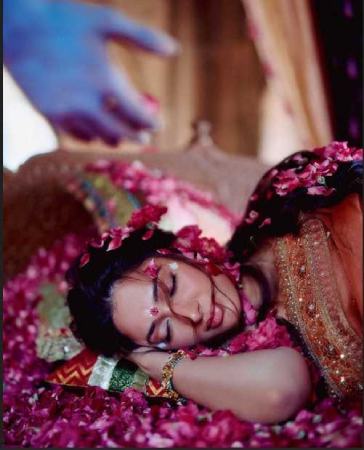
Table of Contents
- When Fashion Stops Performing and Starts Remembering
- Indian Culture Without Aesthetic Dilution
- A Visual Rebellion in a Pastel Economy
- ToraniTalkies: Digital Storytelling as Brand Building
- The quiet power move
- Final Thoughts
- FAQs
When Fashion Stops Performing and Starts Remembering
Torani doesn’t behave like a brand in a hurry. Torani feeds on nostalgia as a slow-eating parasite that sustains itself on memories that feel personal and familiar. Even the brand describes itself as a house of nostalgia, where the founder, Karan Torani, digs into fables and stories from his memories with his grandmother. Torani, therefore, does not indulge in seasonal trends but instead taps into that one thing of the human psyche that gives meaning to most experiences: memory. Nostalgia marketing works because it taps into emotional memory rather than immediate consumption. When a brand references familiar cultural experiences, rituals, or stories from the past, audiences don’t just see the campaign; they feel a sense of recognition.
For Torani, nostalgia becomes a powerful brand-building tool in several ways.
There’s no loud selling, no aggressive “drop culture,” and no constant need to remind you why you should buy something right now. Their campaigns feel less like launches and more like chapters, fragments of stories that existed long before Instagram and will probably exist long after.
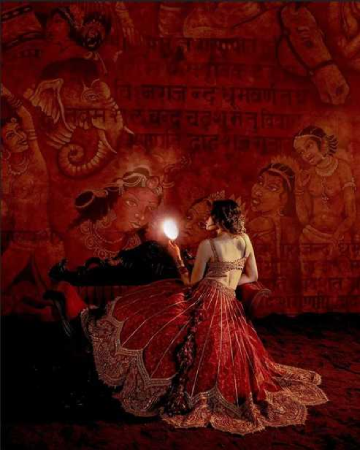
The clothes are rarely the hero. The story always is. Women waiting, wandering, celebrating, and grieving. Themes of devotion, longing, inheritance, and ritual. Not mythology retold, but mythology experienced.
This is fashion that assumes its audience has a memory, not just the ability to ‘shop.’
Indian Culture Without Aesthetic Dilution
What makes Torani’s storytelling powerful is not that it’s “Indian,” but how it is Indian. There’s no frantic attempt to make culture palatable or export-friendly. No over-polishing. No translating everything into safe, globally digestible metaphors. Torani doesn’t reference Indian culture; it speaks in it. Their campaigns draw from folklore, feminine archetypes, and regional histories in a way that feels lived-in, not curated. You’re not told what to feel or what it means.
You’re simply placed inside the moment and trusted to sit with it. But the question remains: why are people invested in a brand that does not outrightly sell its product and even creates borderline confusion with the type of storytelling they do? And the answer is curiosity. Torani rarely explains the story entirely, which leaves audiences wanting to know more about the reference, the emotion, or the cultural moment being depicted. Instead of pushing the product forward, the brand invites viewers to decode the narrative first. In many ways, Torani replaces product curiosity with story curiosity, and that curiosity becomes the entry point to the brand.
In a world where culture is often reduced to motifs and mood boards, Torani treats it like a language; layered, emotional, and sometimes intentionally unresolved.
A Visual Rebellion in a Pastel Economy
Visually, Torani does something radical by today’s standards: it embraces excess. Deep colours.
Heavy textures. Shadowed frames. Silence where there could’ve been noise. While most feeds are designed to be skimmed, Torani’s visuals ask you to pause. They don’t scream for attention; they hold it.
View this post on Instagram
In a digital ecosystem obsessed with “clean aesthetics,” Torani leans into visual density. It understands something many brands forget: Indian culture has never been minimal. It has always been layered, dramatic, emotional, and unapologetically full.
Why dilute that now?
ToraniTalkies: Digital Storytelling as Brand Building
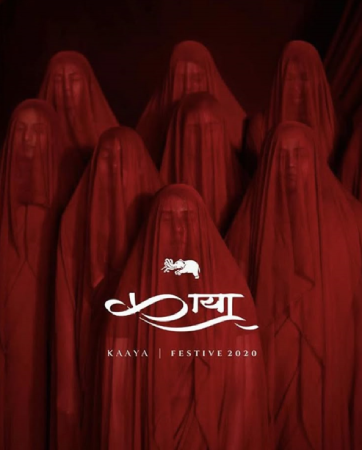
If Torani’s main page is the gallery, ToraniTalkies is the inner monologue. This is where the brand moves even further away from selling and closer to storytelling, cinematic reels, poetic visuals, and fragments of thought. No urgency. No product push. No explanation. It feels less like a marketing channel and more like a creative archive. Interestingly, Torani has built much of this universe almost entirely through digital platforms. Instead of relying heavily on traditional fashion marketing channels, the brand has allowed Instagram and digital storytelling to become its primary stage. Campaigns unfold through cinematic reels, editorial visuals, and collaborations with familiar cultural faces: influencers and celebrities who blend into the narrative rather than dominate it.
View this post on Instagram
This naturally introduces the digital-first strategy.
Strategically, it’s a bold move. Emotionally, it’s a smart one. Because Torani understands that people don’t fall in love with products; they fall in love with worlds.
The quiet power move
Torani’s biggest strength isn’t just its craft or its visuals. It’s restraint. They don’t chase virality.
They don’t over-communicate. They don’t try to look “international” to be taken seriously. Most brands have a brand face dedicated to promotion and advertising, but in the case of Torani, it’s safe to say that the concept or the story embodies the face of the brand. They are not trying to attract people with a hero but a story that happens to have a hero or a heroine in it. Every collection begins with an idea: a memory, a cultural reference, or a story, and the clothing becomes an extension of that narrative. In most fashion marketing, the product leads the campaign. Torani reverses the order: the story comes first, and the product quietly follows.
Instead, they trust that Indian stories, when told honestly, are enough.
In a market where everyone is trying to belong everywhere, Torani chooses to belong somewhere. And that specificity is what gives the brand its confidence.
Final Thoughts
For marketers, from the perspective of a leading digital marketing agency in Ahmedabad, observing evolving luxury branding, Torani offers a powerful reminder: storytelling can often sell better than selling.
Torani is proof that marketing doesn’t always need to shout. For luxury labels with large budgets and even emerging homegrown brands, there’s an important lesson here. High production value alone cannot build cultural relevance. What Torani demonstrates is that storytelling, when rooted in authentic cultural memory, can become the strongest brand strategy. It’s a reminder that the most powerful campaigns are not always product-driven; they’re concept-driven. Sometimes, it can sit quietly, wrapped in colour, soaked in memory, and still leave an impact.
It reminds us that culture, when treated with respect, does half the selling for you. Because when a brand remembers where it comes from, it doesn’t need to ask for attention. The story does the work.
Frequently Asked Questions

The founder and partner of Flora Fountain, Shefali leads the Content and Technology divisions. A one-time engineer who started her career writing front-end code, she took a detour sometime during her 9 years in New York, studied journalism and started writing prose, poetry and sometimes jokes. She now has 15...