


In the golden age of advertising (the “Mad Men” era), targeting was simple. If you sold razors, you bought a billboard near a barbershop. If you sold toys, you bought a TV spot during cartoons. It was broad, it was messy, and it was, by modern standards, incredibly inefficient.
Fast forward to 2026. The average consumer is exposed to 10,000 ads per day. Their brain has developed a sophisticated filter known as “Banner Blindness.” They don’t just ignore irrelevant ads; they actively despise them. If you show a dog food ad to a cat owner today, you haven’t just wasted an impression; you have damaged your brand equity.
This is the “Relevance Crisis.” And the only way to solve it is with Artificial Intelligence. A Modern advertising agency is no longer just a creative shop; they are a data processing centre. We don’t just buy media space; we buy moments of intent.
This guide explores the mechanics of AI advertising, revealing exactly how agencies use machine learning to deliver the right message to the right person at the exact millisecond they are ready to buy.
Table of Contents
- Why Old Advertising Agencies Are Becoming Irrelevant?
- What Is AI-Driven Ad Targeting? (The Mechanics)
- How Advertising Agencies Use AI to Target You?
- Surviving the Cookie-less Future: AI as the New Tracker
- How An Advertising Agency Builds an Ad Campaign
- Local Context: AI Targeting in India
- Conclusion
- FAQs
Why Old Advertising Agencies Are Becoming Irrelevant?
For the last decade, digital marketing relied on “Demographic Targeting.” An advertiser would log into Facebook and say: “Show my ad to Males, aged 25-40, living in Mumbai, interested in Cricket.”
This sounds logical, but it is fundamentally flawed. Why? Because “Demographics” do not equal “Intent.”
- Person A: A 30-year-old male in Mumbai who loves cricket but is broke and hates your product category.
- Person B: A 30-year-old male in Mumbai who loves cricket and is actively searching for your product right now.
To a traditional ad platform, these two men look identical. You pay the same amount to reach both. But to an AI-powered advertising agency, they are worlds apart.
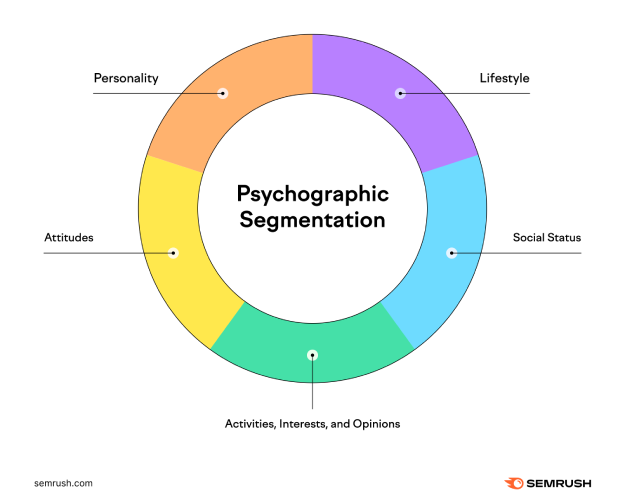
Source: Semrush
The method of blasting ads to a broad demographic bucket is burning the budget. The future belongs to Psychographic Targeting, targeting based on behaviour, context, and probability, not just identity.
What Is AI-Driven Ad Targeting? (The Mechanics)
Source: Semrush
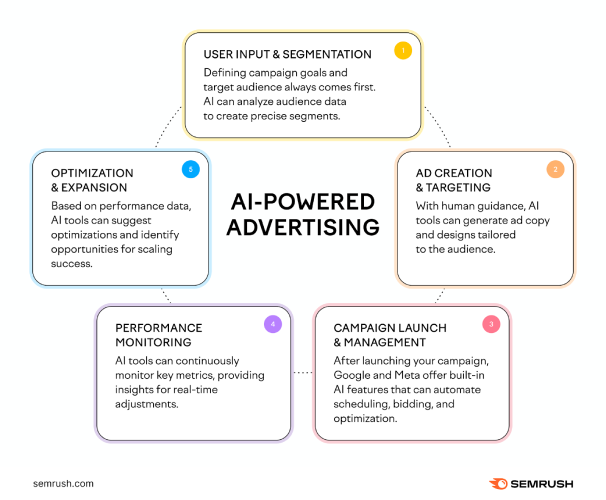
AI advertising is the use of machine learning algorithms to analyse vast datasets (user behaviour, purchase history, contextual signals) to predict future actions.
It moves the question from “Who are they?” to “What will they do next?”
From Rules-Based to Predictive
- The Old Way (Rules-Based): “If a user visits my pricing page, retarget them with an ad.” (Reactive).
- The New Way (Predictive AI): “The user hasn’t visited the pricing page yet, but they read three blog posts about ‘enterprise security’ and follow our competitor on LinkedIn. The AI predicts a 75% probability of purchase intent and serves an ad before they even search.” (Proactive).
This is achieved through Neural Networks that process millions of signals in real-time.
- Time of Day: Does this user convert better at 8 AM or 8 PM?
- Device Usage: Are they on a high-end iPhone (signalling disposable income) or a budget Android?
- Scroll Velocity: Are they skimming or reading deeply?
An agency uses these signals to build a “Propensity Model”, a score tailored to every single user in the ecosystem. If the score is low, we don’t bid. If the score is high, we bid aggressively.
View this post on Instagram
How Advertising Agencies Use AI to Target You?
So, how does an agency actually execute this? An experienced advertising agency would rely on three core AI engines that work in harmony.
<H3> Engine 1: Predictive Segmentation (Finding the Invisible Buyer)
Traditional segmentation is static. You put a user in a “bucket,” and they stay there. Predictive Audience Segmentation is fluid.
View this post on Instagram
Agencies use AI tools (like Google’s Performance Max or Meta’s Advantage+) to analyse your First-Party Data (your existing customer list). The AI looks at your best customers, not just the ones who bought, but the ones with the highest Lifetime Value (LTV). It then scans the entire web to find “Lookalikes” who share those same invisible traits.
The “Invisible” Pattern: A human media buyer might think your best customer is a “CIO in Tech.” The AI might discover that your best customers are actually “People who read Reddit threads about Python at 2 AM and buy premium coffee online.” No human would ever guess that correlation. The AI finds it instantly and scales it.
Engine 2: Dynamic Creative Optimisation (DCO)
Targeting the right person is only half the battle. You must show them the right image. In the past, an agency would design 5 static banners. In 2026, we use Dynamic Creative Optimisation (DCO). (Source: Wikipedia)
How DCO Works:
- The Assets: We upload 50 headlines, 50 images, 10 videos, and 5 CTA buttons into the AI “Asset Library.”
- The Mix: The AI mixes and matches these elements in real-time to generate thousands of unique ad variations.
- The Personalisation:
- User A (Price Sensitive): Sees an image of the product with a “10% Off” badge and a headline about “Value.”
- User B (Quality Focused): Sees a video of the craftsmanship with a headline about “Durability.”
- User C (Impulse Buyer): Sees a “Limited Time Offer” countdown.
This is Hyper-Personalisation Campaigns at scale. The agency doesn’t make the ad; the agency builds the system that makes the ad.
Engine 3: Real-Time Bidding (The Sniper Strategy)
This is where the money is saved. Ad inventory is sold in auctions that happen in milliseconds (Real-Time Bidding). Without AI, you set a flat bid (e.g., “$2.00 per click”). You pay $2.00 for a junk lead, and you pay $2.00 for a CEO.
With AI Bidding Strategies (like Target ROAS or Maximise Conversions), the algorithm adjusts the bid for every single impression.
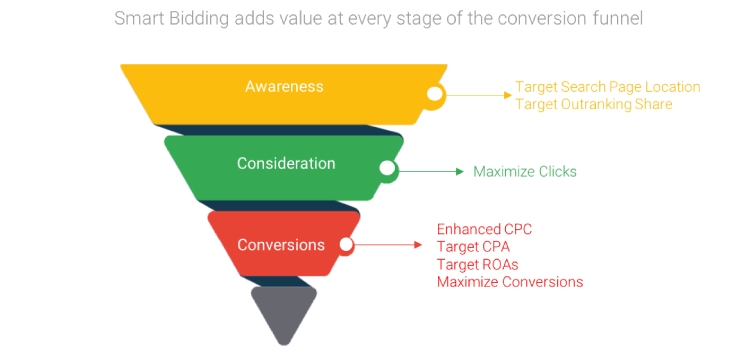
- Scenario: The AI sees a user who fits your profile perfectly. It knows this user converts on Tuesdays. It bids $10.00 to ensure we win the slot.
- Scenario: The AI sees a user who fits the demographic but has “low intent” signals (bouncing rapidly). It bids $0.10.
This “Sniper Approach” ensures that your budget is concentrated solely on the users most likely to generate revenue.
Surviving the Cookie-less Future: AI as the New Tracker
For years, digital advertising relied on “Cookies”, little tracking codes that followed users around the web. In 2026, with privacy laws (GDPR, DPDP in India) and browser blocks, cookies are crumbling.
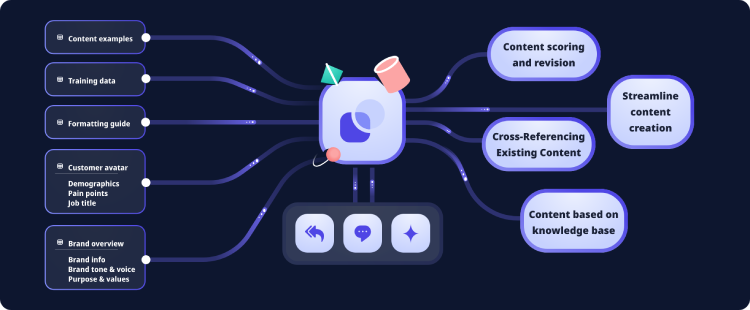
How do personalised ads agency specialists track users now? Contextual AI.
If we can’t track the user, we track the content. AI analyses the text, sentiment, and images of the webpage the user is currently reading.
- Old Cookie Way: Retargeting a user because they visited a shoe site 2 weeks ago.
- New Contextual Way: The AI reads that the user is currently on a blog article titled “Best Marathon Training Schedules.” It infers intent (they are running a marathon) and serves as an ad for performance running shoes in that moment.
This is privacy-safe, non-intrusive, and highly effective. It brings advertising back to “Right Place, Right Time.”
How An Advertising Agency Builds an Ad Campaign
What does this look like inside an agency like Flora Fountain? Here is the “Under the Hood” workflow for a personalised ads agency campaign.
Phase 1: Data Ingestion & Training
We don’t just turn the ads on. First, we feed the beast. We connect the AI to the client’s CRM (Salesforce, HubSpot) and offline sales data. We tell the AI: “These are the high-value leads. Ignore the low-value ones.” This is called Conversion Value Import.
Phase 2: The “Creative Matrix” Design
Our creative team doesn’t design “ads”; they design “components.” They create a matrix of visual hooks, emotional headlines, and logical proofs. We tag these assets with metadata so the AI understands what they are (e.g., “Tag: Lifestyle Image,” “Tag: Technical Spec”).
Phase 3: The “Learning Phase”
We launch the campaign with broad targeting. For the first 7-14 days, the AI is in “Exploration Mode.” It tests thousands of combinations of audiences and creatives.
- Agency Role: We monitor the “burn rate” and ensure the AI isn’t going off the rails. We guide it by excluding irrelevant search terms or placements.
Phase 4: Scaling & Optimisation
Once the AI identifies the winning patterns (e.g., “Video B + Headline A works best for CFOs in Bangalore”), we unlock the budget. We move from “Exploration” to “Exploitation”, ruthlessly scaling the winners.
Local Context: AI Targeting in India
When we talk about how advertising agencies use AI targeting in India, we must address the unique complexity of the Indian market. India is not one audience; it is 50 nations in one.
- Programmatic Advertising & Real-Time Bidding (RTB)
Agencies now automate nearly 40% of India’s ad spend through programmatic platforms.
- Real-Time Optimisation: AI algorithms analyse user data (location, browsing history, device type) in milliseconds to determine the best ad to show and the optimal bid price for each impression.
- Platforms Used: Major Indian agencies utilise global tools like Google DV360 and The Trade Desk, alongside homegrown solutions like Amagi AI.
- Hyper-Personalisation and Dynamic Creative Optimisation (DCO)
Instead of one ad for all, AI allows agencies to create thousands of variations tailored to individual user behaviours.
- Behavioural Triggers: Ads change based on real-time signals. For instance, food delivery platforms like Zomato use AI to trigger “Biryani” promotions in specific Bengaluru neighbourhoods on Friday nights when demand patterns peak.
- Cultural & Regional Customisation: AI helps agencies like FCB Kinnect and WATConsult localise content. A single campaign can have different visuals and taglines in Hindi, Tamil, or “Hinglish” based on the viewer’s region.
- Predictive Analytics for Audience Insights
Agencies use machine learning to forecast future consumer needs rather than just reacting to past actions.
- Lookalike Modelling: Identifying new potential customers who share traits with existing high-value users.
- Demand Forecasting: E-commerce giants like BigBasket use predictive models to anticipate demand spikes with up to 90% accuracy, allowing agencies to time their campaigns perfectly.
- Specialised Use Cases in India
- Vernacular Targeting: With India’s diverse linguistic landscape, agencies use AI tools like Writesonic to generate ad copy in regional languages like Marathi or Bengali.
- Conversational Marketing: Brands like JioMart and HDFC Bank use AI chatbots (often via WhatsApp) to engage and retarget customers directly through chat, which has become a major sales channel in India
For an advertising agency in Ahmedabad, AI is the bridge that connects a local brand to a global-quality audience.
Conclusion
The era of traditional Advertising agencies is over. We are now in the era of the “Math Men.” But this does not mean creativity is dead. In fact, creativity is more important than ever. AI can find the user. AI can optimise the bid. But AI cannot move the human heart. That still requires a story.
The role of the modern advertising agency is to be the conductor of this orchestra, blending the cold precision of machine learning ads with the warm empathy of human storytelling. If your current agency isn’t using predictive modelling or dynamic creative optimisation, you aren’t just missing out on tech; you are missing out on revenue.
Ready to upgrade your ad stack? Partner with an agency that speaks the language of the future.
Frequently Asked Questions
The founder and partner of Flora Fountain, Shefali leads the Content and Technology divisions. A one-time engineer who started her career writing front-end code, she took a detour sometime during her 9 years in New York, studied journalism and started writing prose, poetry and sometimes jokes. She now has 15...