



Most people remember the first time they realised films meant more than entertainment. A movie watched alone on a laptop. A late-night screening that stayed in the mind for days. A phase where everything felt better after watching the same comfort film again.
For a long time, there was no good place to hold these moments. Reviews belonged to critics. Ratings belonged to databases. Conversations happened in fragments across social platforms, often rushed and easily forgotten.
Letterboxd entered this landscape, offering something simpler. A place to log films. A place to remember when you watched them and what you felt. It did not frame itself as a network or a media company. It behaved like a personal habit.
Over time, that habit spread. What began as a private record slowly became a shared language among people who cared about cinema. For a premier digital marketing agency preaching platform-led growth, this shift is instructive. This Letterboxd marketing case study explores how that evolution happened and why it offers rare lessons for brands, platforms, and agencies trying to build lasting relevance instead of short-term attention
Table of Contents
- The Gap Letterboxd Stepped Into
- How the Product Became the Marketing
- Building Community Without Chasing Reach
- Films, Taste and Personal Identity
- Monetisation That Feels Earned
- What Marketers and Agencies Can Learn
- Conclusion
- Frequently Asked Questions
The Gap Letterboxd Stepped Into
Before Letterboxd, talking about films often felt incomplete. IMDb reduced opinion to a number. Twitter rewarded speed and sharp reactions rather than thought. Blogs spoke from a distance, often polished and authoritative, but rarely inviting conversation.
- A Place for Personal Response: Not reviews written to convince others, but notes written to remember.
- Films as Moments: The platform treated films less like products and more like moments in life, watched in a certain mood or at a certain point.
- Documenting Experiences: Early users were documenting a late-night watch or a film that hit harder than expected.
Over time, these personal records began to intersect. Friends followed each other. Lists were shared. Patterns of taste slowly emerged, not through algorithms, but through observation. Adoption felt natural rather than designed.
How the Product Became the Marketing
Letterboxd does very little to announce itself. No loud campaigns are trying to explain what it is. Yet its presence across the internet is steady and recognisable.
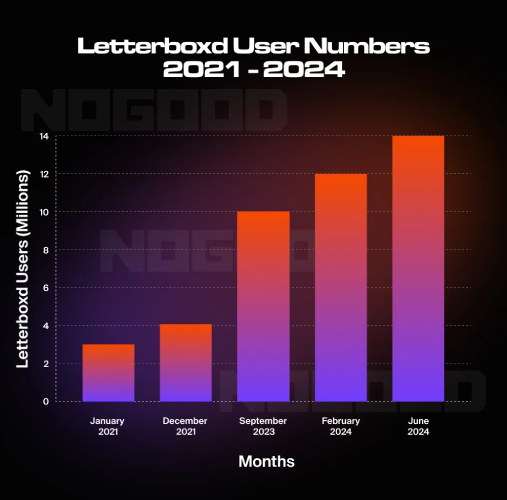
Why the Word Spreads:
- Visual Appeal: Reviews are easy to screenshot; lists are clean and readable.
- Personal Endorsements: A diary recap or a one-line review functions as an advertisement without being one.
- Zero Pressure: There are no constant reminders to post or urgency built into the experience.
For a Social media marketing agency, this is a powerful lesson. Distribution does not always come from pushing content. It often comes from giving users something they feel proud to attach their name to.
Design does the persuasion here. Marketing becomes a layer on top, not the foundation. Letterboxd shows that when a product respects attention, attention returns willingly.
Building Community Without Chasing Reach
View this post on Instagram
Many platforms focus on scale early. Letterboxd focused on atmosphere.
In its early years, the platform attracted people deeply invested in film culture. Students, critics, festival goers, and people who watched films not as background noise but as a habit.
These early users shaped the tone. Reviews were reflective. Humour was dry. Conversations felt thoughtful rather than reactive.
As the platform grew, these norms stayed intact. New users adapted to the space instead of reshaping it. That is rare online.
Letterboxd also avoided making popularity the centre of the experience. Follower counts exist, but they are not dominant. There is no visible race for attention. Numbers do not override substance.
Even well-known filmmakers appear as participants rather than authorities. Their presence adds depth without shifting the balance of the space.
This creates comfort. People feel safe writing half-formed thoughts. They return not to impress, but to record.
For a digital marketing agency, the takeaway is simple. Platforms that grow more slowly often grow stronger. Trust compounds in spaces where users feel seen rather than measured.
Films, Taste and Personal Identity
Letterboxd understands that films are rarely just films. They are tied to memory, taste and identity.
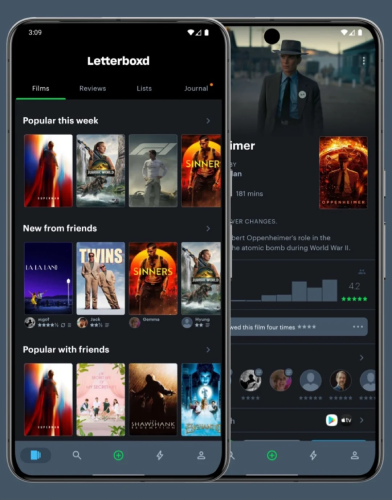
A profile tells a story over time. Not in an obvious way, but subtly. A stretch of romantic comedies during a difficult year. A sudden interest in documentaries. A return to childhood favourites.
- Lists as Collections: Shared to explain “this is what shaped me” rather than to impress.
- Neutrality: The platform does not rank taste, which encourages honesty.
- Attachment: When a product becomes a personal archive, leaving it feels like losing a part of your own history.
From a marketing perspective, this creates deep attachment. When a product becomes a personal archive, leaving it feels like losing a part of your own history.
No campaign can create that level of loyalty. It comes from design choices that prioritise expression over validation.
This is where Letterboxd’s marketing truly stands apart. The brand grows because it becomes part of how users understand themselves.
Monetisation That Feels Earned
- When platforms introduce monetisation, trust is often tested. Letterboxd handled this with care.
- Paid tiers add depth, not access. Advanced statistics, visual customisation and deeper insights are offered, but the core experience remains intact for everyone.
- Payment feels optional. Like supporting something you already value.
- Advertising is minimal and handled thoughtfully. Streaming availability feels helpful rather than intrusive. The platform stays focused on discovery and reflection.
- This aligns with how users already behave. Letterboxd is not something people scroll through passively. It is something they maintain.
- Monetisation follows value instead of forcing it. That order matters.
- For brands, this reinforces an old but often ignored truth. People are willing to pay when they trust the intent behind a product.
What Marketers and Agencies Can Learn
- Letterboxd did not rely on tactics. It relied on understanding behaviour.
- It gave users space. It avoided urgency. It was trusted that if the experience felt right, people would return.
- For a Social media marketing agency, this challenges the idea that engagement must always be engineered. Sometimes the strongest strategy is restraint.
- Culture cannot be rushed. It grows when people feel ownership, not when they are targeted.
Conclusion
Letterboxd did not become influential by trying to be everywhere. It became influential by being meaningful to the people who used it. By focusing on personal habits rather than public performance, it created a space where film lovers felt understood. Growth followed because the product fit into real lives.
For brands and marketers, the lesson is simple. Build something people want to return to. Respect their time. Let meaning come before scale. When people feel seen, they carry the story forward themselves. If you are ready to build a brand that resonates on this cultural level, it is time to consult with an expert Social media marketing agency to find your version of trust-led growth.
Frequently Asked Questions

Vasim Samadji is a partner at Flora Fountain, where he leads the Business and Marketing Strategy divisions. In a world where everyone is used to sugarcoating, his directness is often considered rude. But that shouldn't be a problem if you like the no-nonsense approach. Because he is a seasoned professional...