


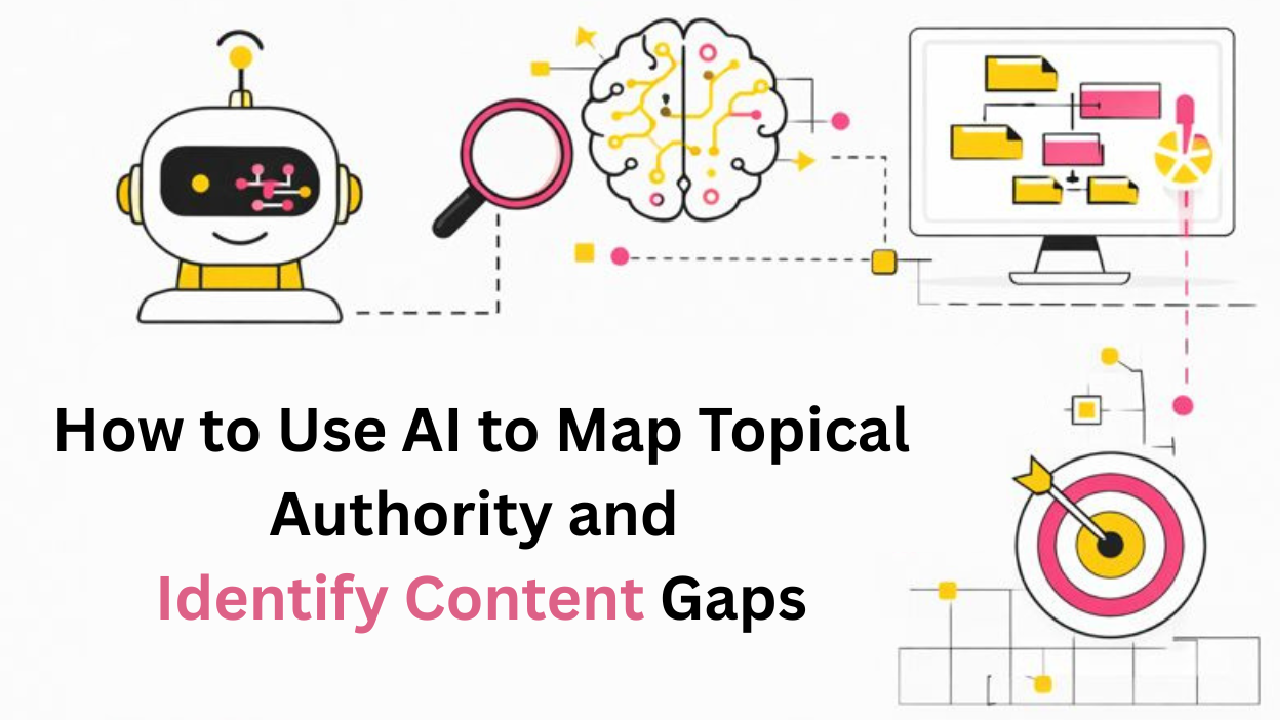
In 2026, the traditional search landscape has reached a turning point. With Google’s AI Overviews now appearing for a significant portion of informational queries, the metric for success has shifted from merely “ranking” to becoming a primary “source of truth.” If your content lacks the depth required to satisfy an LLM’s retrieval process, you are no longer just losing rank; you are suffering from information loss.
Recent data reveals that Google’s AI Overviews now surface for 21% of keywords, with informational queries serving as the primary engine for this shift. The impact is significant: when these AI summaries appear, traditional organic click-through rates do not merely dip, they frequently vanish entirely, as users find the answers they need without ever leaving the search results page
As a leading digital marketing agency, we recognise that visibility in this new era is driven by topical authority SEO. By using AI to map your topical ecosystem and bridge these content gaps, you ensure your brand isn’t just a participant in the search results, but the definitive authority that AI engines must cite to complete their answers.
Table of Contents
- What is Topical Authority and Content Gaps?
- How Can AI Help in Mapping Topical Authority
- How AI Identifies the “Unseen” Content Gaps
- The Step-by-Step Blueprint: Mapping Authority with AI
- Strategic Refinement: The “Human-in-the-Loop” Edge
- Conclusion
- FAQs
What is Topical Authority and Content Gaps?
Topical Authority:
Topical authority is the measure of a website’s depth of expertise across a specific subject area. In 2026, this is the “Domain Dominance” model. It moves beyond matching keywords to “owning entities.” When you have high topical authority, search engines trust your brand as a “go-to” source, making it significantly easier to rank for new, related terms without needing a massive backlink profile for every post.
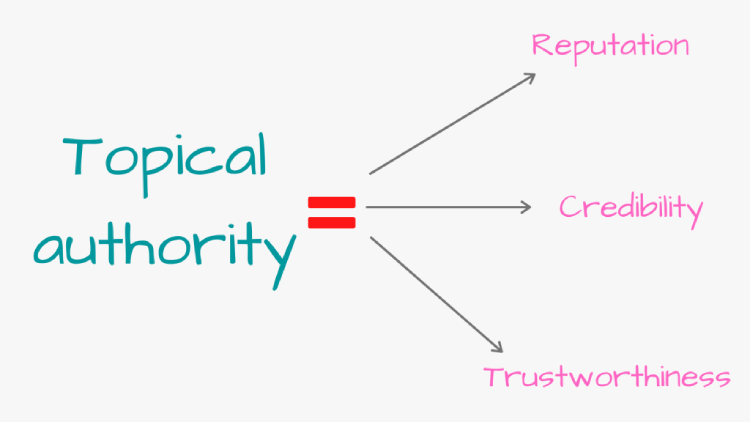
Key aspects of topical authority:
Deep Expertise: Publishing thorough, interconnected content across related subtopics (e.g., a site on ‘protein powder’ covering types, benefits, recipes, etc.).
E-E-A-T Signals: Aligns with Google’s Experience, Expertise, Authoritativeness, and Trustworthiness guidelines by demonstrating real knowledge and reliability.
Better Rankings: Higher topical authority means better rankings for a wide range of keywords within that topic, not just one.
User & Search Engine Trust: Signals to both users and algorithms that your site is a reliable source, earning trust and faster indexing.
Content Gaps:
Content gaps are the “Information Voids” within your digital ecosystem. These are the specific questions, subtopics, or intent stages that your website currently ignores but your audience (and AI search engines) requires. Identifying these gaps is no longer just about seeing what a competitor wrote; it is about identifying what information AI Overviews need to complete a full answer that your site is failing to provide.
Key aspects of content gaps:
Missing Topics: Your site lacks content on a subject your audience cares about (e.g., an SEO site missing AI SEO tips).
Keyword Gaps: Competitors rank for keywords you don’t, or you miss terms your audience searches for.
User Intent Gaps: Existing content doesn’t fully satisfy a user’s query, leading to bounces.
Outdated Content: Information is present but old and needs updating to be relevant.
View this post on Instagram
How Can AI Help in Mapping Topical Authority
The Manual Era: Keywords and Spreadsheets
Traditionally, mapping authority was a labour-intensive process of mimicking competitors. An SEO company would manually scrape competitor keywords, export them into massive spreadsheets, and look for “missing” terms. This method was reactive: it only showed you what others had already done. It often resulted in “copycat content” that added zero information gain to the index.
The AI Era: Entity Graphs and Predictive Analysis
In 2026, AI mapping is proactive and topological. Instead of looking at a list of words, AI analyses the “Semantic Relationships” between concepts.
- Intent Clustering: AI can group thousands of queries by the user’s underlying goal (e.g., “how-to” vs. “buy now”) in seconds.
- Knowledge Graph Alignment: AI identifies the foundational “nouns” and “entities” that define a topic, ensuring your content map aligns with how LLMs actually retrieve data.
- Predictive Mapping: AI identifies “Emerging Gaps”—topics that are trending in real-time but have not yet been saturated by competitors.
How AI Identifies the “Unseen” Content Gaps
Detecting “Information Loss” in AI Overviews
One of the most powerful uses of AI in 2026 is performing an AI Overview Gap Analysis. When Google generates a summary, it often pulls data from three or four different sources to create a complete answer. If your article is cited for the first half of the answer but a competitor is cited for the second half, the AI has identified an “Information Loss” in your content. AI tools can now scan these overviews to tell you exactly what sentence or data point you are missing to become the “sole source” of that answer.
Beyond Competitors: Mapping the AI Knowledge Graph
AI does not just look at what your rivals are doing: it looks at what the “Global Knowledge Graph” expects. By analysing millions of data points across the web, AI identifies sub-niches that no one in your industry has covered yet. This allows a premier digital marketing agency to build a content map that is “future-proof,” filling gaps before the competition even realises they exist.
The Step-by-Step Blueprint: Mapping Authority with AI
Step 1: Semantic Seed Extraction
Start by feeding your core service or “Pillar Topic” into an AI engine. Ask it to extract the “Foundational Entities” that a decision-maker must understand to be successful in this niche. This goes beyond keywords and identifies the conceptual pillars of your map.
Step 2: Automated Intent Mapping
Use AI to cluster your identified subtopics by “Task Completeness.” Ensure your map covers the entire journey:
- Awareness: “What is [Entity]?”
- Consideration: “How does [Entity] compare to [Alternative]?”
- Action: “Step-by-step implementation of [Entity].” AI ensures that no stage of the hero’s journey is left unaddressed.
Step 3: Generating the Topological Map
Finally, use a visualisation tool to create a “Node and Network” model. Each node is a piece of content, and the lines between them are your internal links. AI can suggest the “connective tissue”—the specific anchor text needed to prove to search engines that these pages are semantically related.
Strategic Refinement: The “Human-in-the-Loop” Edge
While AI provides the map, humans must still provide the “Information Gain.” Google’s 2026 updates are designed to filter out “AI-Frankenstein” content that simply rehashes what is already online. This is where the role of an expert SEO company becomes vital. We use AI to identify the structure, but we use human expertise to fill those gaps with proprietary data, case studies, and original insights.
In 2026, the map is the science, but the content is the art. By combining AI’s “X-ray vision” for content gaps with a human-led narrative, you create an unshakeable trust moat around your brand.
Conclusion
The transition from a “keyword-first” to an “authority-first” model is the most significant shift in digital strategy as we navigate 2026.
Building topical authority in SEO is not a one-time task or a lucky accident of high-volume publishing; it is a meticulously architected ecosystem. By leveraging AI to map your niche and identify the hidden content gaps that trigger information loss, you move from being a mere participant in the search results to being the definitive authority that search engines and AI models trust above all others.
When you architect your content with technical precision and human-led insight, you create a trust moat that algorithm updates cannot breach. If you are ready to stop guessing and start dominating your industry graph, partnering with a forward-thinking SEO company is the next step, which specialises in turning these complex AI data points into a high-growth roadmap for your brand. Let us help you bridge the gaps and secure your place as the leading voice in your field.
Frequently Asked Questions

The founder and partner of Flora Fountain, Shefali leads the Content and Technology divisions. A one-time engineer who started her career writing front-end code, she took a detour sometime during her 9 years in New York, studied journalism and started writing prose, poetry and sometimes jokes. She now has 15...