


In the hyper-connected landscape of 2026, the global data analytics market has surged past the $307.52 billion mark, fundamentally shifting how businesses communicate with their audiences. For modern brands, data is no longer just a collection of numbers in a spreadsheet; it is the ink with which successful narratives are written. The era of shouting at the masses is officially over, replaced by the precision of data-driven marketing that speaks directly to the individual’s needs, desires, and psychological triggers.
Using analytics to shape stories is not about stripping the soul out of branding; it is about providing a factual foundation for human empathy. A brand that relies on guesswork in 2026 is a brand that risks irrelevance. Today, 73% of consumers feel that companies treat them as individuals, a massive leap driven by the ability of a specialised branding agency to decode complex datasets into relatable human experiences. By transforming raw signals into a structured narrative arc, companies can move beyond mere visibility and achieve a state of lasting brand recall.
Table of Contents:
- The Transformation of Raw Data into Human Truth
- Identifying the Narrative Gaps with Predictive Analytics
- The Role of E-E-A-T in Evidence-Based Stories
- Personalisation at Scale: The Conversational Pivot
- Technical Foundations for Data Storytelling
- Conclusion
- FAQs
The Transformation of Raw Data into Human Truth
The biggest mistake a brand can make is treating data and storytelling as opposing forces. In reality, data is the why behind the what. Every click, scroll, and purchase is a piece of dialogue from your customer. When a branding agency looks at high bounce rates on a specific landing page, they are not just looking at a technical failure; they are identifying a conflict in the user’s story where the brand’s promise failed to meet the customer’s expectation.
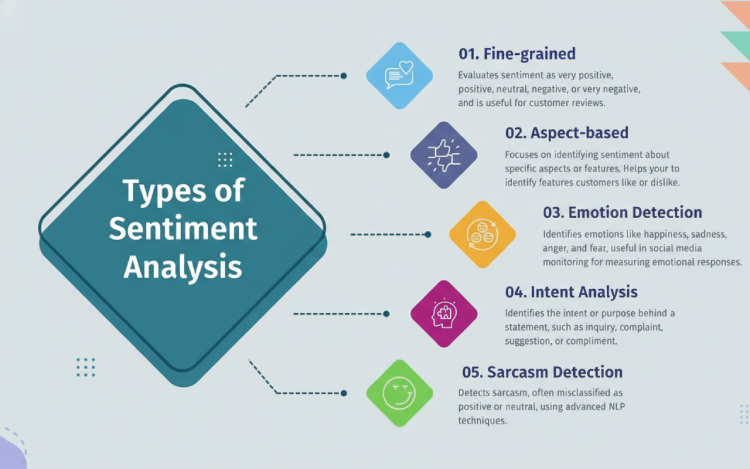
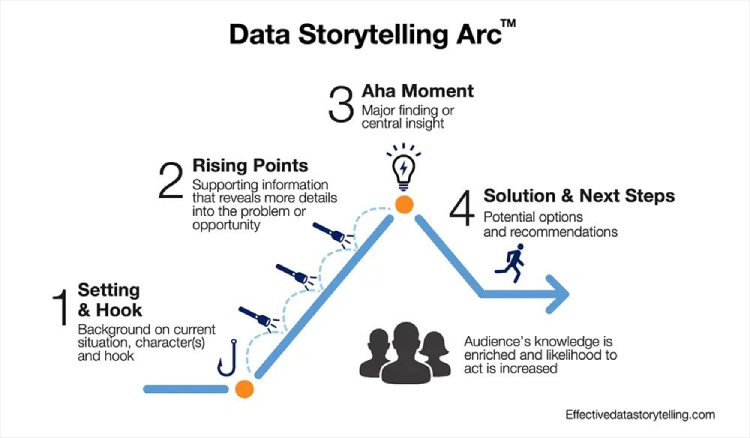
By the time we reached 2026, leading brands began using Sentiment Mapping to track the emotional journey of their customers across every touchpoint. This involves more than just monitoring likes; it involves using Natural Language Processing (NLP) to understand the tone of social comments and support tickets. This data allows a digital marketing agency like us to craft a narrative that resolves the customer’s specific pain points in real-time. Instead of a generic success story, you provide a Transformation Arc that shows a character (the customer) overcoming a challenge using your brand as the enabler.
Establishing this truth requires a deep dive into qualitative and quantitative metrics. For instance, data might show that users spend five minutes on a tutorial page but never click through to the product. A narrative-led analysis might reveal that the story being told is too educational and lacks the “climactic” call to action needed to transition the user from a student to a buyer.
Identifying the Narrative Gaps with Predictive Analytics
Traditional storytelling is reactive; you tell a story and hope it resonates. Data-driven marketing in 2026 is predictive. By utilising historical datasets and AI-driven simulations, brands can forecast which narratives will trend before they even hit the mainstream. This allows a brand to lead the conversation rather than just joining it. Predictive models can highlight emerging micro-moments, the exact seconds where a viewer is most likely to turn into a consumer.
| Strategic Element | Traditional Storytelling | Data-Driven Narrative (2026) |
|---|---|---|
| Audience Insight | Broad Demographics | Individual Psychographics |
| Timing | Campaign-Based | Real-Time / Predictive |
| Content Goal | Mass Awareness | Personalised Resonance |
| Success Metric | Reach & Frequency | Story Completion & Sentiment |
These are visual and narrative identities that shift based on the context of the user. For instance, a hesitant visitor might receive a story focused on reliability and case studies, while a loyal customer is shown inspiring, purpose-driven content. This level of sophistication ensures that the narrative always feels fresh, relevant, and deeply personal. Predictive analytics essentially provides a crystal ball, allowing your digital marketing agency to allocate resources to stories that have a mathematically higher probability of success.
The Role of E-E-A-T in Evidence-Based Stories
In an era saturated with AI-generated noise, Information Gain and Provenance are the new currency of trust. The December 2025 Google core update made it clear that content without original data or human expertise would be deprioritised. This is where data-driven marketing serves as your brand’s shield of credibility. When you weave proprietary research, internal surveys, or unique customer data into your stories, you are providing the Experience and Expertise that search engines and humans both crave.
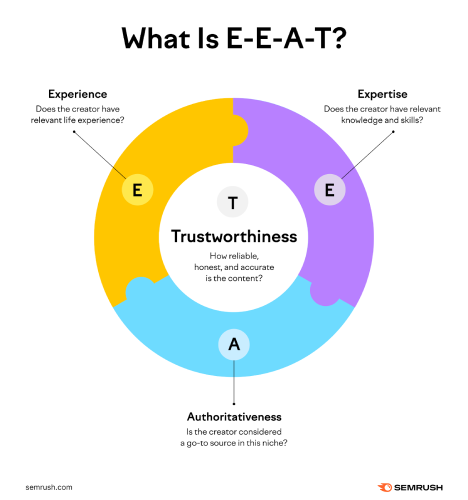
Source: Semrush
A digital marketing agency focused on long-term authority will prioritise Primary Data Narratives. Instead of quoting industry averages, you publish your own findings. This not only builds trust but also turns your brand into a Citation Magnet. When other sites link to your data, your authority grows. By 2026, the most resilient brands are those that have transitioned from being content creators to being data-literate thought leaders. They do not just tell stories; they prove them with evidence-based insights that are machine-readable and human-verifiable. This evidentiary approach ensures that your brand story is not dismissed as marketing fluff but is instead embraced as a definitive resource.
Personalisation at Scale: The Conversational Pivot
The ultimate goal of using analytics to shape stories is to achieve “Personalisation at Scale.” By 2026, this has evolved beyond simply inserting a first name into an email subject line; it has become “Intent-Based Orchestration.” Research shows that personalised interactions can increase margins by up to 3%; a significant figure when applied across millions of users. In this landscape, the website is no longer a static brochure; it is a conversational advisor. Analytics tools allow a digital marketing agency to orchestrate “Headless Experiences” where a single core message is automatically adapted into hundreds of different narrative paths based on the visitor’s unique digital footprint.
This pivot relies on three critical analytical layers:
- Real-Time Behavioural Triggers: Stories that change dynamically based on the specific sequence of pages a user viewed in the last 60 seconds, addressing “Micro-Hesitations” before they lead to a bounce.
- Predictive Psychographics: Using machine learning to categorise users into “Narrative Archetypes”, such as the “Efficiency Seeker” or the “Value-Driven Optimist” and adjusting the brand’s vocabulary to match their psychological profile.
- Environmental Contextualisation: Narratives that shift based on external datasets like the user’s local weather, current stock market trends, or regional events, making the brand feel physically present in the user’s world.
This conversational approach transforms the brand from a distant entity into a helpful colleague. This is a level of psychological attachment that ensures customers choose your brand even when a cheaper alternative is available. Data is the key to this empathy, allowing you to have a personal, high-stakes conversation with 100,000 customers simultaneously without ever losing the human touch or the brand’s essence.
Technical Foundations for Data Storytelling
To tell a great data story, your technical house must be in order. Data Silos, where marketing, sales, and service data live in unconnected systems, are the primary enemy of narrative consistency. In 2026, a premier digital marketing agency will insist on a Unified Customer Profile as the foundation for any campaign. This involves using a Customer Data Platform (CDP) to consolidate every touchpoint into a single source of truth.
Furthermore, your stories must be Machine-Connectable. This involves:
- Semantic Tagging: Ensuring AI crawlers understand the entities within your story.
- Schema Markup: Providing structured data that validates your claims and citations.
- Real-Time Instrumentation: Measuring sentiment and engagement quality, not just volume.
A specialised digital marketing agency will use these technical signals to create feedback loops. If the data shows that users are dropping off at a specific point in a video or article, the narrative structure is adjusted immediately. This constant state of beta-testing ensures that your brand story is always evolving to meet the rising expectations of a data-literate audience. Without this technical rigour, even the most beautiful story will fail to find its audience or sustain its impact in a fragmented digital world.
Conclusion
In 2026, the line between data scientist and storyteller has blurred. The brands that win are those that view analytics not as a cold set of metrics, but as a vibrant map of the human experience. By embracing data-driven marketing, you move from a trial-and-error approach to a model of Predictive Excellence, where every story told is one that your audience is already waiting to hear.
The power of narrative lies in its ability to connect, but the power of data lies in its ability to target. When these two forces work in harmony, your brand becomes unforgettable. If your current strategy feels like shouting into a void, it is likely time to partner with an expert branding agency to audit your data signals and start writing the next great chapter of your brand’s history.
Frequently Asked Questions

The founder and partner of Flora Fountain, Shefali leads the Content and Technology divisions. A one-time engineer who started her career writing front-end code, she took a detour sometime during her 9 years in New York, studied journalism and started writing prose, poetry and sometimes jokes. She now has 15...