


Most SEO strategies are designed for a search engine that no longer exists. They focus on “blue links” and keyword density, while the world has moved on to a synthesised, AI-led reality. In 2026, SEO is no longer about just being “indexed”; it is about being “retrieved” and “cited” by the machines that guide consumer discovery.
In 2026, the Brands that win won’t be the ones chasing tactics. They’ll be the ones building clarity, authority, and relevance across every place people look for answers.
As a premier digital marketing agency, we have built this guide to replicate the high-impact, step-by-step frameworks used by industry leaders. This isn’t just a list of tips; it is a comprehensive system to help your brand move from visibility to authority. If you want to stop chasing algorithms and start dominating the “Discovery Engine,” this is the only roadmap you need.
Table of Contents
- How Has SEO Changed In 2026?
- Step #1: Define SEO Goals that Drive Revenue
- Step #2: The “Seen and Trusted” Audience Research
- Step #3: Creating High-Signal, “RAG-Ready” Content
- Step #4: Building Entity Authority (The Modern Backlink)
- Step #5: Monitoring the “Answer Inclusion Rate” (AIR)
- Conclusion
- FAQs
How Has SEO Changed In 2026?
To understand where we are going, we have to look at how much the rules have changed. Before 2026, SEO was a game of “interception.” You found the keywords your customers were typing and you built pages to catch that traffic. Success was measured by how many people clicked your link and landed on your website.
In 2026, SEO has become a game of “retrieval.”2 Because AI engines like Google Overviews and ChatGPT now provide the answer directly on the search page, the “click” has become a secondary goal.3
| Feature | SEO Before 2026 | SEO in 2026 |
|---|---|---|
| Primary Goal | Website Traffic | AI Citations and Brand Mentions |
| Main Metric | Keyword Ranking | Answer Inclusion Rate (AIR) |
| Content Style | Long-form for “depth” | Atomic Claims for “retrieval” |
| User Path | Search → Click → Buy | Ask → Synthesis → Decide |
As a leading SEO company, we tell our clients that the old way was about being a destination. The new way is about being the source.
Step #1: Define SEO Goals that Drive Revenue
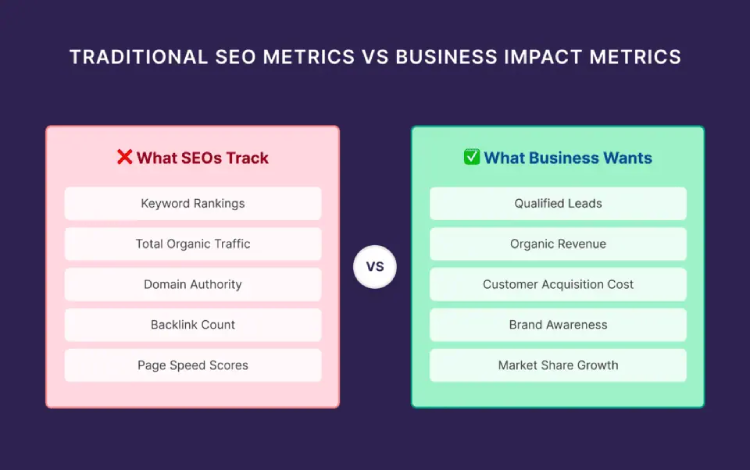
The biggest mistake brands make is chasing “vanity metrics” like total keyword rankings or raw traffic. In 2026, traffic to a blog post that doesn’t convert is a waste of resources. Your SEO strategy must start with business outcomes.
A strong SEO goal answers three questions clearly:
What commercial action should this content influence?
At what stage of decision-making does search appear?
How will success be measured beyond traffic?
As a strategic SEO company, we help our clients pivot from “Rank #1” to “Business Impact.” Ask yourself: What would make SEO a clear win for your business this year?
- For SaaS: 200 qualified demo requests from bottom-funnel comparison keywords.
- For E-commerce: A 30% increase in organic revenue through AI-optimised product descriptions.
- For Service Brands: Becoming the primary cited source for industry-specific “How-to” queries.
Stop optimising for clicks; start optimising for conversions. If your content doesn’t lead to a transaction or a lead, it isn’t “optimised.”
Step #2: The “Seen and Trusted” Audience Research
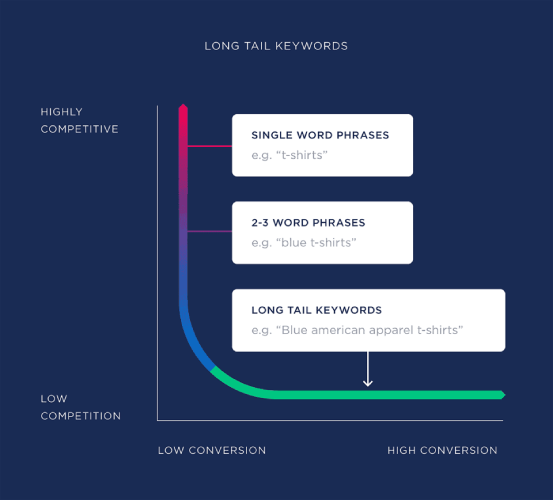
Before you open a keyword tool, you must understand the language your customers use when they talk to AI. People no longer type fragmented keywords; they ask complex, natural language questions. In SEO, we call them Long Tail Keywords.
Now, Audience research must answer how people explain their problems to machines, not just what they type into search bars.
High-quality research combines three layers.
First, behavioural language.
Support tickets, sales calls, and reviews reveal how customers naturally describe confusion, hesitation, and dissatisfaction. These phrases often surface directly in AI-generated summaries.
Second, community truth.
Platforms like Reddit and niche forums expose objections and misconceptions that never appear in polished blog content. These are critical trust gaps that AI systems struggle to resolve without authoritative sources.
Third, AI perception testing.
Running structured prompts through systems such as Gemini reveals how your category is currently framed and where information is incomplete, outdated, or generic.
Step #3: Creating High-Signal, “RAG-Ready” Content
AI search engines use Retrieval-Augmented Generation (RAG) to build their answers. They don’t want a 3,000-word “ultimate guide” filled with fluff. They want high-density, modular facts they can extract in milliseconds.
- Information Gain: Every piece of content must offer something new. Original data, a unique case study, or a proprietary framework. If it’s a rewrite of a Wikipedia page, the AI won’t cite it.
- The “Answer-First” Hook: Research shows that content providing a direct answer in the first 50 words is cited 67% more often.
- Atomic Claims: Break your content into independent blocks of meaning. Use clear H2/H3 headers so the AI knows exactly where one “chunk” of information ends and another begins.
Step #4: Building Entity Authority (The Modern Backlink)
In 2026, a link is just one type of “citation.” AI engines look for “Entity Authority”—proof that your brand is a recognised expert across the wider web. This requires a shift from “Link Building” to “Citation Building.”
- The Authority Flywheel: AI models don’t treat all websites equally. They prioritise brands that frequently update their content and are mentioned alongside competitors in authoritative industry reports.
- Digital PR as SEO: Land mentions in industry-leading publications and news sites. Every mention is a trust signal that boosts your entity’s reputation in the Knowledge Graph.
- Expert Commentary: Be the brand that journalists and AI models quote. Use platforms like Featured or HARO to export your expertise to high-trust news outlets.
- Community Validation: Actively participate in high-trust environments like Reddit or niche industry forums. When the AI sees real humans recommending your brand, its “confidence score” in your content skyrockets.
Step #5: Monitoring the “Answer Inclusion Rate” (AIR)
Traditional rank tracking is a legacy metric. In a zero-click world, you need to know how often you are the “hero” of an AI summary. We call this the Answer Inclusion Rate (AIR).
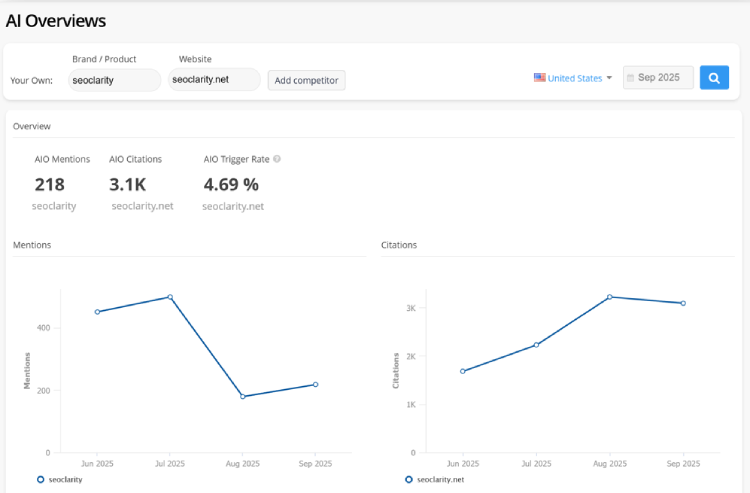
- Share of Voice in AIO: Track how often your brand appears in Google’s AI Overviews for your target topics. Unlike traditional SERPs, these answers are probabilistic and can change with every prompt.
- Citation Frequency: Monitor which pages are being used as sources by LLMs like ChatGPT, Perplexity, and Claude. Tools like Otterly.ai or Semrush’s AI Visibility Overview are now essential for this.
- Sentiment and Attribution: It’s not enough to be mentioned. Is the AI positioning your brand as a “best-in-class” leader or just another option? Tracking the sentiment of AI outputs is the new “Reputation Management.”
- Branded Search Growth: As your authority grows, more people will search for your brand directly. This is the ultimate signal of SEO success in 2026.
A sophisticated digital marketing agency uses these metrics to perform a “GEO Gap Analysis,” identifying exactly where your competitors are being cited so you can take their spot.
Conclusion
The 2026 SEO strategy is a move from destination to source. The brands that dominate this year are those that provide high-signal, “RAG-ready” content while building undeniable entity authority across the web.
If you are ready to stop chasing “blue links” and start winning the citation war, it is time to pivot. Working with a premier SEO company will help you build a strategy that isn’t just about traffic, but about becoming the primary solution in the “Discovery Engine” era.
Frequently Asked Questions
The founder and partner of Flora Fountain, Shefali leads the Content and Technology divisions. A one-time engineer who started her career writing front-end code, she took a detour sometime during her 9 years in New York, studied journalism and started writing prose, poetry and sometimes jokes. She now has 15...