


Most e-commerce businesses approach SEO as a top-of-funnel luxury. They spend months obsessing over "how-to-guides" and high-volume category terms, only to leave their product pages looking like a digital graveyard of technical specifications and manufacturer-provided copy. They drive the traffic, they capture the interest, and then they lose the sale at the most critical moment because the product page fails to satisfy both the search engine and the human shopper.
The problem is not the product. The issue is treating a product page as a static inventory listing rather than a high-performance sales asset. In the 2026 search landscape, Google’s AI models are not just looking for keywords; they are looking for "helpful content" that proves a product's utility and credibility. From the perspective of a premier Digital Marketing Agency, product page SEO is a matter of make or break for your brand. It is the point where technical precision meets psychological persuasion. If you are not optimising for both, you are simply subsidising your competitor's market share.
Table of Contents:
- Why Does SEO Matter For Your Product Page
- Which products deserve your SEO budget?
- Why is copy-pasting descriptions killing your sales?
- How does Google see your price and reviews?
- Can your images talk to an AI search engine?
- Is your website speed pushing customers away?
- What happens when your stock runs out?
- Quick fixes for your brand to boost SEO today
- Conclusion
- FAQs
Why Does SEO Matter For Your Product Page
Most brands treat product page SEO as a digital filing system. They assume that as long as the product exists, the right customer will find it. This is a costly misconception. In a saturated market, your product page is not just a listing; it is a competitive battleground. If you are not visible on the first half of the search results, you are effectively invisible to the market.
From the perspective of an experienced SEO agency, the real power of SEO lies in “Relevance Engineering.” Google does not rank products; it ranks solutions to searcher intent. When your product page is meticulously optimized with the specific technical data and contextual information that search engines crave, you are no longer just “appearing” in search, you are being endorsed as the most relevant answer.
When you align your on-site technical structure with off-site authority signals, you create a systemic advantage that your competitors cannot easily buy with ad spend. In the high-stakes world of e-commerce, proper optimization is the difference between a page that simply exists and a page that generates consistent, scalable sales.
Which products deserve your SEO budget?
Most brands treat all product pages equally. They apply a global template and hope for the best. However, a strategic SEO agency will tell you that the Pareto Principle applies ruthlessly to e-commerce: 20% of your products will likely drive 80% of your organic revenue.
View this post on Instagram
Strategic resource allocation means identifying your “Hero Products”, the ones with high search volume, healthy margins, and low return rates and giving them a “Bespoke SEO” treatment. This involves custom copywriting, unique video content, and deep internal linking. For the remaining 80%, you rely on robust programmatic SEO templates to maintain a “baseline” of visibility. By 2026, the winners in the e-commerce space are those who understand that “scaling” does not mean “standardising” everything into mediocrity. It means knowing where to invest the human touch and where to let the systems take over.
Why is copy-pasting descriptions killing your sales?
If you are copy-pasting the description provided by your supplier, you are telling Google that your page has zero unique value. Duplicate content is the silent killer of e-commerce rankings. When ten different retailers use the same “300-word product overview,” Google will almost always prioritise the one with the highest Domain Authority, which is rarely the smaller brand.
As a Digital Marketing Agency who has been in the E-Commerce industry for a good amount of time now, we advocate for “Customer-Centric Copywriting.” Instead of listing features, you must describe outcomes.
- Standard Copy: “This waterproof jacket has a 10,000mm rating and a breathable membrane.”
- SEO-Optimised Copy: “Stay dry during heavy downpours without overheating on your morning hike. Our breathable membrane technology ensures you don’t feel ‘clammy’ while navigating the trail.”
This shift does two things. First, it naturally incorporates “long-tail” keywords that real people actually type into Google. Second, it keeps the user on the page longer, which is a massive “Freshness and Relevancy” signal to search engines.
How does Google see your price and reviews?
Structured Data (Schema Markup) is the language that allows you to talk directly to Google’s database. In a crowded SERP, your product page needs to stand out before the user even clicks. This is where “Enriched Results” come into play.
| Schema Element | Why it Matters for Revenue |
|---|---|
| Average Rating | High star ratings increase Click-Through Rate (CTR) by up to 30%. |
| Price & Currency | Filters out shoppers whose budget doesn’t match, improving “qualified traffic.” |
| Availability | “In Stock” signals encourage immediate clicks over competitors who are sold out. |
| Pros & Cons | A new 2026 requirement that helps AI Overviews summarise your product. |
By working with a specialist SEO agency, you ensure that your Product Schema is not just present, but perfectly validated. A single error in your JSON-LD code can cause your rich snippets to vanish, leading to an immediate drop in organic traffic and sales.
Can your images talk to an AI search engine?
By 2026, visual search through tools like Google Lens has become a primary shopping behaviour. If your product images are just named “IMG_001.jpg,” you are invisible to the modern consumer. Visual SEO is about making your products “crawlable” for AI eyes, ensuring that when a user snaps a photo of a product they like, your store is the one that appears as the top purchase option.
- Contextual Alt-Text: Instead of “Blue running shoes,” use “Men’s lightweight blue running shoes for marathon training on asphalt.”
- Image Dimensions: Providing multiple aspect ratios (1:1, 4:3) helps Google feature your product in different “Shopping” layouts.
- Video Integration: Product pages with video have a significantly higher conversion rate. More importantly, video thumbnails in the SERPs are high-visibility real estate that most brands ignore.
As a high-performance SEO agency, we recognise that Visual SEO has evolved into a sophisticated game of “Multi-modal Information.” It is no longer enough to just have a clear picture; you must provide “Visual Context.” This means including lifestyle images that show the product in use, which allows Google’s Vision AI to categorise your product within a specific environment or “vibe.” When Google understands that your “minimalist desk lamp” belongs in a “Scandi-style home office” query, you capture high-intent traffic that text-based keywords might miss entirely.
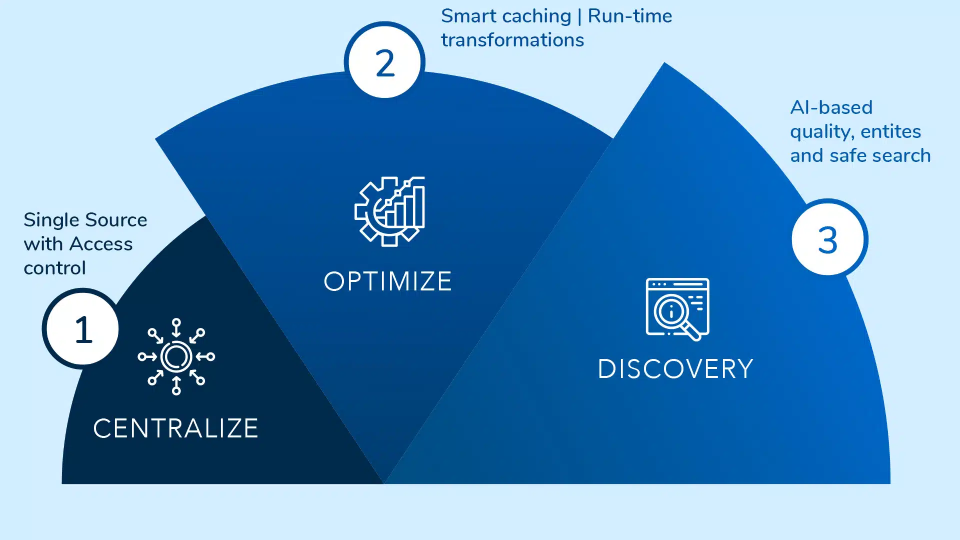
Brands should focus on “Image Sitemap” optimisation and how your visual assets contribute to the “Topical Authority” of the entire category. They should ensure that the images are not just decorative, but are high-utility data points that help search engines match products to the increasingly visual way the world shops.
Is your website speed pushing customers away?
Google’s Core Web Vitals are no longer just technical suggestions; they are the baseline for e-commerce survival. If your product page takes four seconds to load because of unoptimised scripts or bulky assets, your bounce rate will skyrocket. High bounce rates send a clear signal to Google that your page is not a “helpful” result, which can lead to a steady decline in your rankings.
Frictionless UX includes:
- Mobile-First Design: Approximately 70% of e-commerce searches now occur on mobile devices. If your “Add to Cart” button is below the fold or difficult to interact with, your ranking and conversions will eventually suffer.
- Clear Breadcrumbs: Using structures like “Home > Men’s Shoes > Running” helps both the user and search engine bots understand the hierarchy and relationship between your products.
- Speed is Revenue: Data shows that every 100ms of latency can cost an e-commerce brand 1% in total sales.
When you partner with a high-performance SEO agency, they don’t just look at keywords; they audit your “Time to Interactive” (TTI) and “Largest Contentful Paint” (LCP). They understand that a slow page will never rank on page one, regardless of how good the content is.
What happens when your stock runs out?
One of the most destructive mistakes brand managers make is “404ing” a product page the moment an item goes out of stock. This effectively deletes all the “SEO Equity” and backlink authority that page has built over months or years. From the perspective of a premier Digital Marketing Agency, an out-of-stock page is not a dead end; it is a strategic pivot point for customer retention.
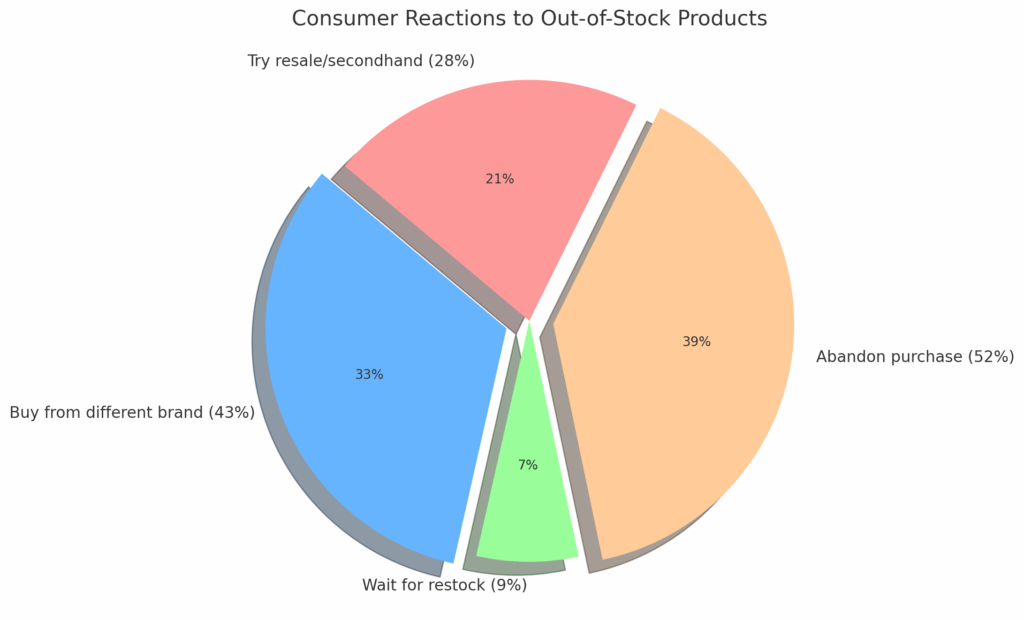
Instead of letting your rankings vanish, a strategic SEO agency will implement one of these proven recovery frameworks:
- The “Back Soon” Strategy: Keep the page live but replace the “Buy” button with a “Notify Me” email capture. This keeps the URL active in search results while building a high-intent marketing list for the restock date.
- The “Value-Add” Carousel: Use the out-of-stock status as an opportunity to cross-sell. Display a prominent “You might also like” section featuring similar items that are currently in stock to prevent the user from bouncing back to the SERP.
- The Permanent Redirect (301): If the product is discontinued and will never return, redirect the URL to the most relevant parent category or the direct successor of that product. This ensures the “link juice” stays within your domain rather than evaporating into a 404 error.
- The “Legacy” Archive: For iconic or high-traffic products that are no longer for sale, keep the content live as an informational resource but disable the checkout. This allows you to continue capturing “top-of-funnel” traffic while funneling those users toward newer collections.
Conclusion-based Insight: In the 2026 e-commerce landscape, Google prioritises “availability” signals in its Merchant Center feeds. However, the human cost of a “page not found” error is far higher than a “sold out” notice. By managing your stock-outs with technical precision, you maintain your competitive moat even when your warehouse is empty.
Quick fixes for your brand to boost SEO today
You don’t always need a year-long roadmap to see results. Here are the immediate levers you can pull to boost your product page performance:
- Optimise Meta Titles: Move the primary keyword to the beginning of the title and include a “benefit” or “USP” (e.g., “Waterproof Hiking Boots | Free Shipping”).
- Update Old Reviews: Fresh content is a ranking signal; reach out to recent customers to push new reviews to your top-selling pages.
- Fix Broken Internal Links: Use a crawler to find links pointing to 404 pages and update them to live Hero Products.
- Add “Pros & Cons” Schema: This is a low-hanging fruit for 2026 that can instantly improve your visibility in AI-generated search summaries.
- Compress Hero Images: Use WebP formats to shave seconds off your Largest Contentful Paint (LCP) without losing quality.
Conclusion
Product page SEO in 2026 is no longer about “gaming the system.” It is about providing the most comprehensive, trustworthy, and frictionless shopping experience possible. By moving beyond manufacturer descriptions and investing in high-quality Schema, visual assets, and UX, you build a “Conversion Moat” that competitors cannot easily cross.
Partnering with an expert SEO agency allows you to navigate these technical complexities while keeping your focus on what matters: growing your brand and increasing your bottom line. The businesses that win are those that treat every product page as a “mini-homepage,” optimised for the machine and built for the human.
FAQs

The founder and partner of Flora Fountain, Shefali leads the Content and Technology divisions. A one-time engineer who started her career writing front-end code, she took a detour sometime during her 9 years in New York, studied journalism and started writing prose, poetry and sometimes jokes. She now has 15...