


In the saturated digital landscape of 2026, information is a commodity, but meaning is a luxury. Consumers are no longer just buying products; they are buying into the worldviews those products represent. This fundamental shift has moved narrative marketing from the periphery of “creative branding” to the absolute centre of commercial strategy.
When a brand fails to convert, it is rarely due to a lack of technical features. It is almost always a failure of narrative architecture. Without a story to anchor the facts, your product is just a line item on a spreadsheet, easily replaced by a cheaper competitor. However, when a brand masters the art of narrative, it creates an “Emotional Moat” that protects margins and drives long-term loyalty. This guide explores how a modern branding agency constructs these narratives to drive measurable revenue.
Table of Contents:
- The Psychology behind Narrative Building’s Positive Impact
- The “Hero’s Journey” for Brands
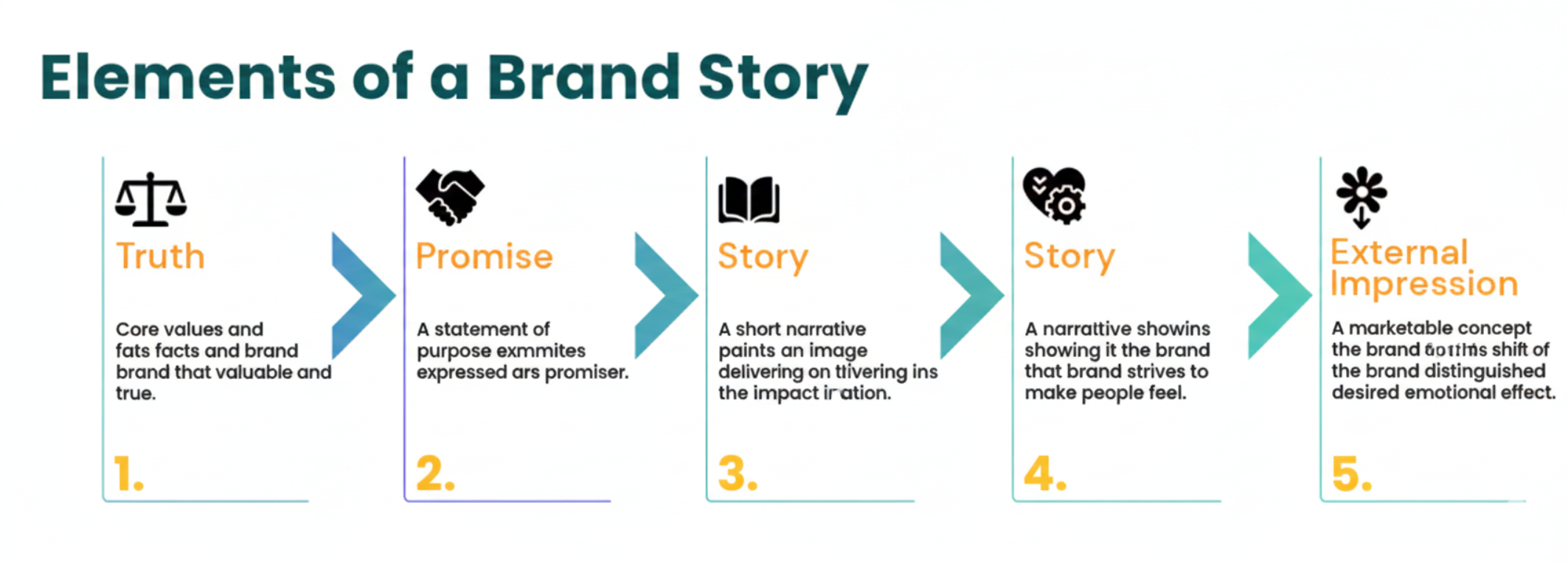
- The Five Core Pillars of Narrative Building
- Which Platforms to Use for Narrative Building
- KPI’s for Narrative Building
- Conclusion
- FAQs
The Psychology behind Narrative Building’s Positive Impact
Neuroscience has consistently proven that the human brain is not wired for logic; it is wired for survival through story. When we hear facts, only the language-processing parts of the brain (Broca’s and Wernicke’s areas) are activated. However, when we engage with narrative marketing, the brain undergoes “neural coupling.”
The listener’s brain begins to mirror the storyteller’s brain, releasing oxytocin, the “trust hormone.” In a sales context, this is critical. Trust is the lubricant of commerce. By using stories to frame your value proposition, you bypass the consumer’s natural “sales resistance” and embed your brand into their long-term memory. A leading digital marketing company uses this psychological edge to ensure that even a 15-second social ad leaves a lasting imprint.
Cognitive Efficiency
Beyond chemistry, stories also provide cognitive efficiency. The brain is constantly filtering information to conserve energy, and raw data is expensive to process. Narrative, on the other hand, packages information into familiar cause-and-effect patterns that the mind can absorb quickly and retain longer. This is why a single customer journey story can outperform a spreadsheet of features. When brands communicate through story, they reduce mental friction, making it easier for audiences to understand, remember and act.
The Emotional Bridge to Logic
Logic makes people think, but emotion makes them act. The most successful sales narratives follow a specific sequence: they lead with an emotional hook, bridge to a rational justification, and close with a clear call to action. In 2026, consumers are hyper-aware of “fake authenticity.” If your story feels like a focus-group-tested script, the bridge collapses. True narrative authority comes from consistency between what you say and what you actually do.
The “Hero’s Journey” for Brands
The Brand is Not the Hero
The single most common mistake in narrative marketing is the brand positioning itself as the hero. “We are the best,” “We have 50 years of experience,” “We won this award.” This creates a narrative disconnect. In your customer’s story, they are the hero.
Your brand must play the role of the Guide (the “Obi-Wan Kenobi” or “Gandalf”). A true guide does not compete for attention; they provide clarity at the exact moment of confusion. In narrative psychology, the guide exists to remove uncertainty, not to claim the spotlight. Their value lies in translating chaos into direction, risk into reassurance and effort into inevitability. Brands that understand this role stop trying to impress and start trying to stabilise the customer’s world.
The Narrative Mapping Framework:
The Hero
The hero is your customer, but not as a data point or persona slide. They are defined by a felt tension, a gap between where they are and where they believe they should be. This tension is usually articulated internally as frustration, doubt or stalled momentum rather than a clear problem statement. Effective brands resist the urge to over-describe themselves here. The more precisely you articulate the hero’s internal state, the more instantly they recognise themselves in the story.
The Problem
The problem is rarely just functional. What stops people from acting is not lack of information, but emotional friction: uncertainty, fear of making the wrong choice, or previous disappointment. Functional issues are symptoms. The real problem is the psychological drag that keeps the hero stuck. When brands address only surface-level pain points, they sound interchangeable. When they name the deeper friction, they sound perceptive and trustworthy.
The Guide
The guide is not the hero’s replacement, but their stabiliser. This role is earned by demonstrating empathy before expertise. Authority without empathy feels arrogant; empathy without authority feels weak. The guide signals, “I understand your struggle, and I’ve helped others through it.” Brands that position themselves this way remove ego from the equation and replace persuasion with reassurance.
The Plan
The plan exists to reduce cognitive load. Faced with too many options, the brain defaults to inaction. A strong plan reframes complexity into a small number of clear, sequential steps that make success feel achievable. It does not overwhelm with features or frameworks. It answers the unspoken question: “What happens after I say yes?” Clarity here is what converts confidence into action.
The Success
Success is not the product outcome; it is the emotional resolution. The hero emerges with restored control, renewed confidence or forward momentum. This transformed state is what the customer is actually buying. When brands articulate success correctly, customers project themselves into that future state and the decision feels self-affirming rather than risky.
By shifting this perspective, a branding agency helps its clients transform a sales pitch into an act of service. When the customer sees themselves in your story, the sale becomes the natural conclusion of the narrative.
The Five Core Pillars of Narrative Building
1. The Origin Story (The Foundation of Trust)
Why do you exist? If the answer is “to make money,” you don’t have a narrative. Your origin story should highlight the “inciting incident”—the moment you realised the status quo wasn’t good enough. This builds the foundational trust required for high-ticket sales.
2. The Conflict (The Hook of Relevance)
Without conflict, there is no story. In narrative marketing, conflict is the gap between where your customer is and where they want to be. You must articulate their pain better than they can themselves. This creates an immediate “Me too” moment that captures attention in a crowded feed.
3. The Transformation (The Proof of Value)
Show, don’t tell. Instead of listing features, show the transformation. This is where case studies become powerful narratives. A digital marketing company doesn’t just post a testimonial; they tell the story of a client’s journey from frustration to triumph.
4. The Consistency (The Guardrail of Brand)
A narrative is only as strong as its weakest link. If your social media tone is edgy but your customer service is robotic, the narrative breaks. Consistency across every touchpoint is what turns a one-time buyer into a brand advocate.
5. The Call to Adventure (The Path to Sale)
Every great story has a turning point. In marketing, this is your CTA. It must be clear, urgent, and positioned as the “first step” in the hero’s new journey.
Which Platforms to Use for Narrative Building
Short-Form Narrative (Reels and Shorts)
In 2026, the 3-second hook is the “once upon a time” of the digital age. Short-form narrative marketing relies on visual storytelling and immediate payoff. You must establish the conflict within the first frame and provide the “Guide’s Solution” within fifteen seconds.
Professional Narrative (LinkedIn)
On LinkedIn, narrative is built through “Thought Leadership.” This is where you tell the “Behind-the-Scenes” story of your business. People don’t connect with logos; they connect with the humans behind them. A professional branding agency will focus on narratives of failure, learning, and strategic pivots to build authority.
Long-Form Narrative (Blogs & Whitepapers)
This is where you build depth. Long-form content allows you to explore the “world-building” of your brand. It provides the rational justification that the hero needs to support their emotional decision to buy.
KPI’s for Narrative Building
Traditional marketing measures clicks. Narrative marketing measures “Resonance” and “Recall.” While clicks are important, they don’t always equal sales.
Key Performance Indicators for Narrative:
- Brand Recall: Can customers describe your brand’s “why” after seeing your content?
- Average Order Value (AOV): Strong narratives typically support higher price points.
- Customer Lifetime Value (CLV): Stories build loyalty that transcends price fluctuations.
- Organic Share Rate: Does your content provide enough narrative value that people want to share it?
By tracking these, a branding agency can prove that a well-told story is the most cost-effective way to acquire and retain customers in 2026.
Conclusion
The transition from product-first to narrative-first marketing is not a passing trend. It is a fundamental shift in how humans choose which brands to trust. In an AI-saturated world where content is infinite and attention is scarce, the only true differentiator left is a brand’s ability to tell its story with clarity, consistency and emotional truth.
Transforming stories into measurable growth requires more than creativity. It demands a digital marketing agency that understands narrative architecture, respects the customer’s psychological journey and knows how to scale authenticity using data, not dilute it. When brands stop pushing products and start guiding people through meaningful stories, the outcome changes. You don’t just earn a conversion. You build belief. And belief is what turns customers into long-term advocates.
Frequently Asked Questions

Vasim Samadji is a partner at Flora Fountain, where he leads the Business and Marketing Strategy divisions. In a world where everyone is used to sugarcoating, his directness is often considered rude. But that shouldn't be a problem if you like the no-nonsense approach. Because he is a seasoned professional...