


Most multi-location brands treat local SEO as a scaling problem. Open five locations, duplicate the same page five times, change the city name, job done. Then they wonder why none of them rank, why Google shows the wrong location to the wrong audience, or why their brand presence feels fragmented rather than authoritative.
The issue isn’t effort. It’s understanding. Local SEO for multiple locations isn’t about volume. It’s about coherence. Each location needs to exist as a distinct entity in Google’s knowledge, whilst maintaining brand consistency across the network. That tension, between local specificity and brand unity, is where most strategies collapse.
From the perspective of a technical SEO company in Ahmedabad, this isn’t a technical challenge. It’s a positioning one. The question isn’t how to rank multiple locations. It’s about making each location credible, relevant, and findable without cannibalising the others or diluting the brand.
Table of Contents:
- Why Multi-Location SEO Fails Before It Starts
- Building Location Pages That Function as Assets
- Google Business Profile as Your Primary Local Signal
- Citation Consistency as the Foundation of Trust
- Local Content That Demonstrates Market Understanding
- Building Local Authority Through Strategic Links
- Review Management as Ongoing Dialogue
- Actionable Changes Brands Can Make
- Conclusion
- FAQs
Why Multi-Location SEO Fails Before It Starts
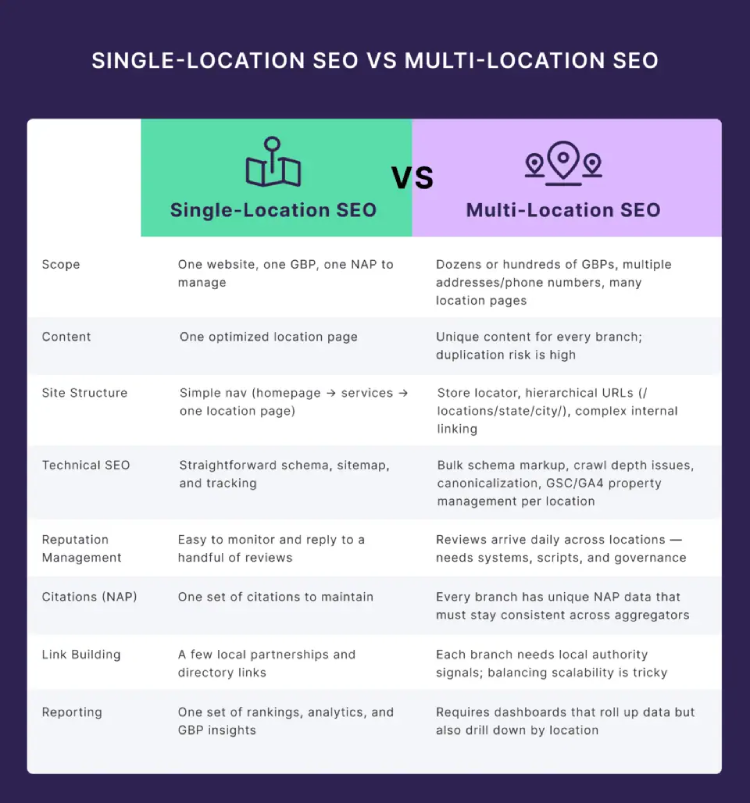
The fundamental error is approaching local SEO as a duplication exercise. Brands create a template, swap out addresses and phone numbers, and expect Google to treat each page as unique. It doesn’t work because it isn’t unique.
Search engines evaluate relevance based on content depth, user intent and external validation. A page that exists solely to hold an address has none of those signals. It signals that the location itself has no substance, no community presence, no reason to exist beyond operational necessity. That might be true for some franchises, but it’s a weak foundation for organic visibility.
Consider how Google evaluates local intent. When someone searches for a service in a specific city, the algorithm isn’t just matching keywords to locations. It’s evaluating which business has the strongest connection to that place. That connection is built through content, citations, reviews, backlinks and user behaviour. A thin location page with recycled content has none of those markers.
A credible Digital marketing agency will also tell you the same thing. The brands that dominate local search aren’t the ones with the most locations. They’re the ones where each location feels like it belongs there. That’s not a creative brief. That’s a structural requirement.
Building Location Pages That Function as Assets
A location page should answer one question clearly: why does this location matter to someone in this area? Not why your brand matters. Why this specific branch, in this specific place, is relevant.
That requires content that speaks to local context. Not manufactured references to landmarks or forced mentions of the city name. Genuine signals that demonstrate you understand the area and serve it specifically.
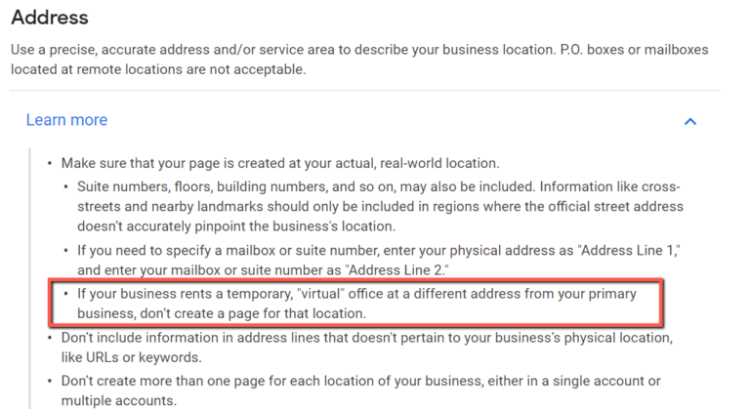
Start with the foundational elements. Full address with proper schema markup. Local phone number with the correct area code. Accurate opening hours that account for location-specific variations. Clear directions that reference actual routes people use, not generic GPS instructions. These aren’t SEO tactics. They’re usability basics. But they’re also trust signals.
Then layer in substantive content. Introduce the team at that location. Showcase work done for clients in that area. Discuss local market dynamics that affect your service delivery. Reference participation in community initiatives or industry events. The goal isn’t keyword density. It’s demonstrating that this location has depth.
Avoid duplicate content at all costs. If your only differentiator between locations is the city name, you’re building pages for search engines, not for humans. Google recognises that pattern. More importantly, users do. When someone lands on a generic page that could describe any location, they leave. That behaviour signals irrelevance, which compounds the ranking issue.
Google Business Profile as Your Primary Local Signal
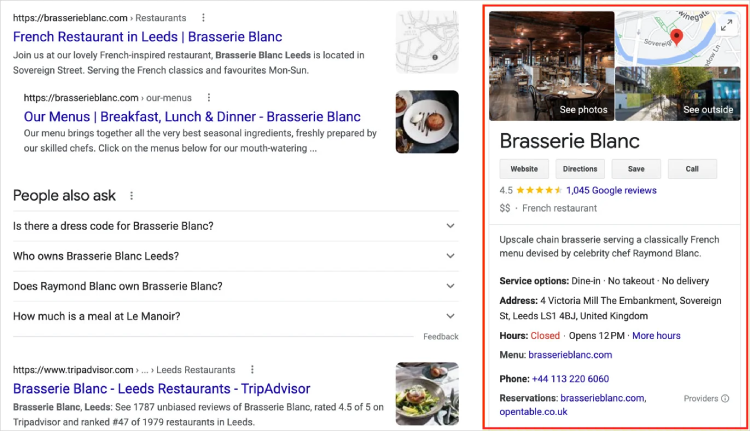
Your Google Business Profile isn’t supplementary. For local search, it’s often the primary asset. When someone searches for your service in a specific area, your profile competes directly in the local pack. The quality and completeness of that profile determine whether you appear at all.
Each location needs its own verified profile. Use consistent naming conventions. If you’re Flora Digital, every profile should follow the same format: Flora Digital – [City]. Choose the most specific business category available. Broad categories create ambiguous signals. Specific ones clarify your offering and improve relevance for targeted searches.
Complete every available field. Add high-quality images regularly. Exterior shots, interior views, team photos, work examples. These aren’t decorative. They’re ranking factors. Google prioritises complete, active profiles over sparse, neglected ones.
Respond to every review. Positive reviews deserve acknowledgement. Negative reviews deserve resolution. The speed and quality of your responses signal active management. That matters to potential customers, but it also matters to Google’s evaluation of profile quality.
Post regular updates through Google Posts. Location-specific offers, event announcements, and content highlights. These keep your profile active and provide additional keyword targeting opportunities. They also give you another touchpoint with users who discover you through Maps or local search.
The profiles aren’t set-and-forget assets. They’re ongoing channels that require the same attention as your website. Any digital marketing agency operating at scale understands this. Local visibility is earned through consistent activity, not one-time optimisation.
Citation Consistency as the Foundation of Trust
NAP consistency, name, address and phone number, sounds trivial until it breaks. When your business information differs across directories, Google can’t confidently determine which version is correct. That uncertainty damages rankings or prevents them entirely.
For multi-location brands, this complexity multiplies. Each location needs consistent NAP data across every citation source. That means maintaining a master reference document and auditing every listing against it.
Start with major directories. Google Business Profile, Bing Places, Apple Maps, Facebook, Yelp. Then move to industry-specific platforms and local directories for each city where you operate. The goal isn’t volume. It’s accuracy and consistency.
Use identical formatting everywhere. If your address includes a suite number, include it everywhere. If you abbreviate Street as St., do it consistently. These details seem minor, but inconsistency creates conflicting signals that search engines interpret as unreliability.
Citation management at scale requires systematic processes. Manual updates across dozens of locations and hundreds of directories become unsustainable. Consider tools that centralise citation management and flag inconsistencies automatically. This isn’t about convenience. It’s about maintaining the data integrity that local rankings depend on.
Local Content That Demonstrates Market Understanding
Content strategy for multi-location brands shouldn’t be centralised, then localised. It should be built from local insights upward. That inverts the typical approach, but it produces content that actually resonates with local audiences rather than content that feels imported.
Each location should generate content that addresses its specific market. Local case studies, area-specific service variations, market condition analysis, community involvement. This content demonstrates you’re embedded in the area, not just operating there.
For an SEO company in Ahmedabad, that might mean content about how local businesses can leverage regional festivals for digital visibility, or analysis of competitive dynamics in Ahmedabad’s growing tech sector. For other markets, the topics differ. That’s the point. Local content should feel locally relevant, not like a template with city names swapped in.
Extend beyond text. Video content featuring local teams, image galleries from local projects, event coverage from community participation. Varied content formats serve different user preferences, but they also create multiple ranking opportunities across different search features.
This content shouldn’t exist solely on location pages. It should flow through your main blog, social channels and email communications. The goal is to build a content ecosystem where each location contributes its own perspective whilst reinforcing the broader brand narrative.
Building Local Authority Through Strategic Links
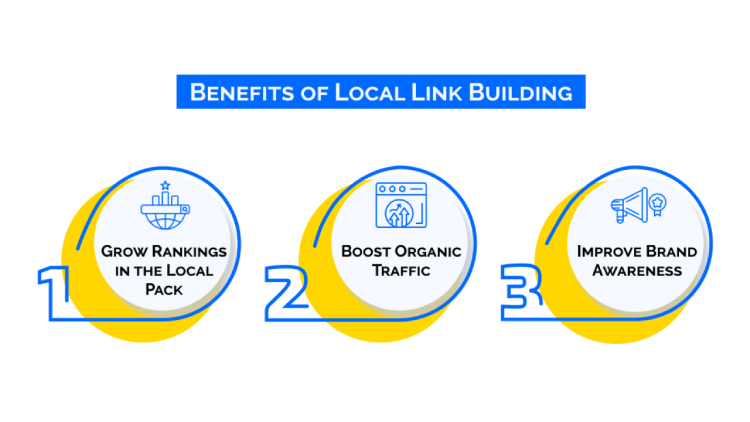
- Link building for multiple locations requires a fundamentally local approach. You’re not building domain authority and distributing it downward. You’re building location-specific authority that demonstrates each branch has its own credibility within its community.
- Identify genuinely local opportunities. Local news publications, business associations, chambers of commerce, educational institutions, and community organisations. These aren’t backlink targets. They’re relationship opportunities that happen to produce links.
- Engage authentically. Sponsor local events, contribute expert commentary to local journalists, provide resources to community initiatives, and participate in local business networks. The links that result carry weight because they emerge from genuine community presence, not outreach campaigns.
- Monitor competitor link profiles to identify patterns. If other businesses in your sector are linked from specific local sources, those sources are likely receptive to similar businesses. This isn’t about copying tactics. It’s about understanding which local entities actively support or cover your industry.
- Guest content on local platforms can work, but only if it provides real value. A digital marketing agency might contribute analysis to a local business publication about digital transformation trends affecting that region’s economy. The link is secondary to the positioning value of being recognised as a local authority.
- Local link building is slower than broad outreach, but it’s more sustainable. These relationships compound over time, creating a network of local signals that reinforce each location’s credibility.
Review Management as Ongoing Dialogue
Online reviews function as social proof, ranking signals and direct conversion factors simultaneously. For multi-location brands, review management needs to operate at the location level whilst maintaining brand-level consistency in response quality.
Build systematic processes for requesting reviews at each location. Post-purchase emails, in-store prompts, and staff training on appropriate ways to request feedback. The goal is consistent review generation across all locations, not sporadic spikes at individual branches.
Direct reviews to the correct location’s Google Business Profile. Location-specific reviews strengthen that branch’s local rankings. Generic brand reviews help overall reputation but don’t contribute to individual location visibility.
Respond to every review promptly. Positive reviews deserve acknowledgement. Negative reviews require professional, constructive responses. Generic thank-you messages signal automation. Personalised responses that reference specific details signal genuine engagement.
Response speed matters. Research from BrightLocal indicates that 53% of customers expect businesses to respond to negative reviews within a week. Faster responses demonstrate attentiveness, which influences both potential customers and search algorithms evaluating profile activity.
Monitor reviews across all platforms continuously. Set up alerts for new reviews. Aggregate them into a single dashboard if you’re managing multiple locations. This visibility lets you spot patterns, whether positive trends to amplify or recurring issues to address systematically.
Actionable Changes Brands Can Make
- Multi-location SEO generates complex data across numerous touchpoints. The challenge isn’t collecting data. It’s identifying which metrics actually indicate performance and which just create noise.
- Start with location-specific KPIs. Local pack rankings for priority keywords. Organic traffic to individual location pages. Click-through rates from local search results. Conversion rates from local visitors. Review volume and sentiment by location. Google Business Profile insights showing search queries and user actions.
- Use Google Analytics with proper UTM parameters and location segments. This lets you track how users from different areas interact with your site and which traffic sources drive the most valuable local visitors.
- Google Search Console provides query-level data showing which searches drive traffic to each location page. This reveals actual search behaviour, not assumed keywords. Use this data to refine content and identify opportunities.
- Implement call tracking with local numbers. For service businesses, phone calls often represent the highest-intent conversions. Tracking these calls back to specific traffic sources shows which local SEO tactics drive offline results.
- Compare performance across locations regularly. Identify high performers and analyse why they succeed. Apply those learnings to underperforming locations. Look for patterns in competition levels, content depth, review velocity or local link quality that correlate with ranking differences.
- The data should inform continuous optimisation, not just periodic reports. Multi-location SEO isn’t a launch process. It’s an operational discipline that requires ongoing attention and adjustment based on performance signals.
Conclusion
Local SEO for multiple locations isn’t a multiplication exercise. It’s an architectural challenge. Each location needs to function as a distinct entity whilst maintaining connection to the broader brand. That requires consistent infrastructure, location-specific content and ongoing management at both levels simultaneously.
Brands that succeed at this understand it’s not about gaming algorithms. It’s about building genuine local presence in every market you serve. The SEO tactics are just the mechanism for making that presence visible.
The alternative is fragmented visibility, where your brand appears sporadically across markets without clear authority anywhere. That’s the default outcome of template-based approaches that prioritise efficiency over effectiveness.
From the perspective of a leading SEO Company, the investment in proper multi-location SEO isn’t about ranking for more keywords. It’s about ensuring your brand infrastructure supports the scale you’re trying to operate at. Without that foundation, growth creates complexity without creating value.
Frequently Asked Questions

The founder and partner of Flora Fountain, Shefali leads the Content and Technology divisions. A one-time engineer who started her career writing front-end code, she took a detour sometime during her 9 years in New York, studied journalism and started writing prose, poetry and sometimes jokes. She now has 15...