


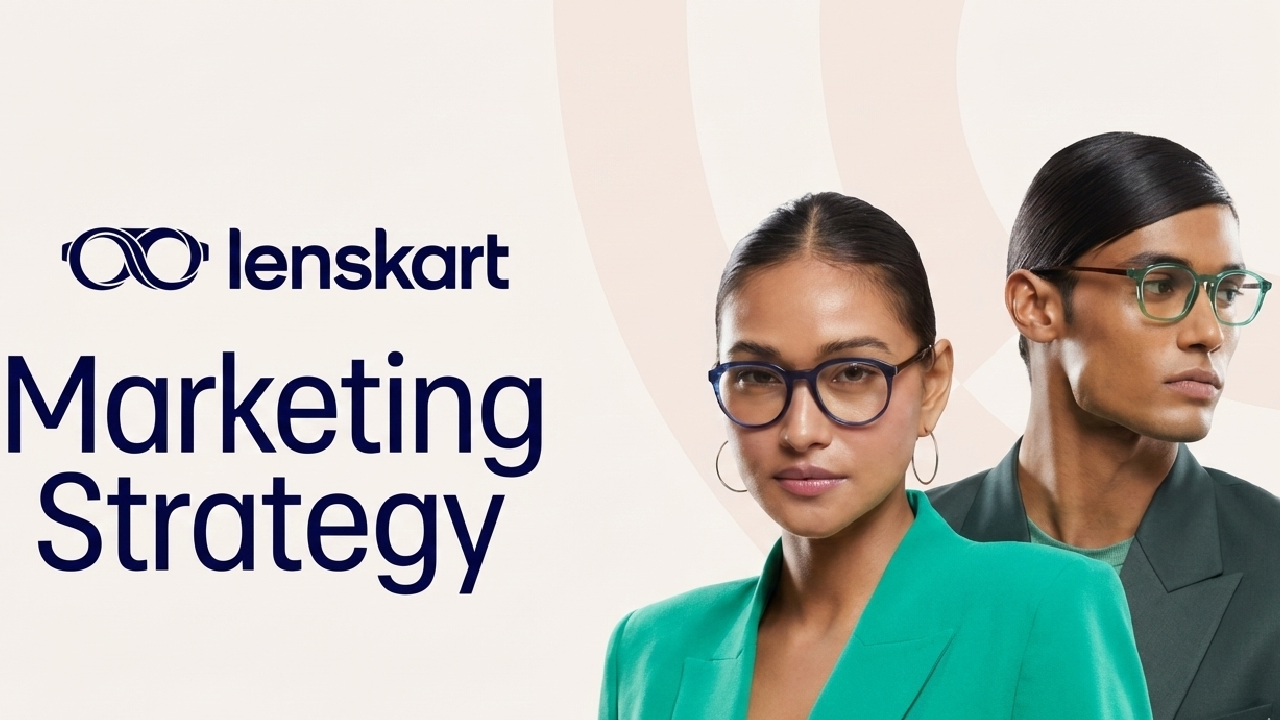
For decades, buying glasses in India remained a clinical chore, tucked away in uninspiring optician shops where frames sat behind glass cases. Eyewear functioned as a medical necessity, a functional tool rather than a style choice. Then Lenskart executed one of the most significant “category flips” in Indian retail history. By blending aggressive omnichannel branding with cutting-edge technology, they transformed a boring medical product into a high-fashion accessory.
Today, a Lenskart box represents a style statement. This transition from “functional” to “fashionable” serves as the cornerstone of their multi-billion dollar valuation. By removing clinical friction and prioritising a tech-driven, style-first approach, Lenskart expanded the market entirely. They moved beyond merely correcting vision; they convinced an entire generation to own multiple pairs for every occasion. For any social media marketing agency, the Lenskart model provides the ultimate blueprint: use digital storytelling to turn a utility into a lifestyle.
Table of Contents:
- Using AI & AR to Solve “Style Anxiety”
- The Phygital Edge: Why Physical Stores Matter
- Founder Branding: Humanising Peyush Bansal
- Precision Engineering: The “Made by Robots” Trust
- Lenskart Gold: A Masterclass in Customer Loyalty
- Conclusion
- Frequently Asked Questions
Using AI & AR to Solve “Style Anxiety”
In the early days of e-commerce, Lenskart faced a primary hurdle: “Style Anxiety.” Customers hesitated to buy frames online, unable to visualise how the product would look on their faces. Lenskart neutralised this friction by deploying a digital strategy rooted in AI and AR, effectively replicating the physical “mirror experience” at home.
3D Virtual Try-On (AR)
Using “Ditto” technology, Lenskart allows users to record a brief video to map thousands of facial data points, creating a precise 3D avatar. Customers “try on” any of the 5,000+ frames with 99% accuracy regarding size and fit. This innovation dismantles the mental barriers to purchase and slashes return rates—a significant metric for any digital marketing agency focused on e-commerce profitability.
AI Face Shape Analysis
Beyond just “trying on” glasses, Lenskart’s app uses AI to analyse the user’s face shape—oval, round, square, or heart and suggests specific frame styles that complement their features. This personalised recommendation engine acts as a digital stylist, moving the customer from “browsing” to “buying” much faster by narrowing down overwhelming choices.
“B by Lenskart”: The 2025 AI Leap
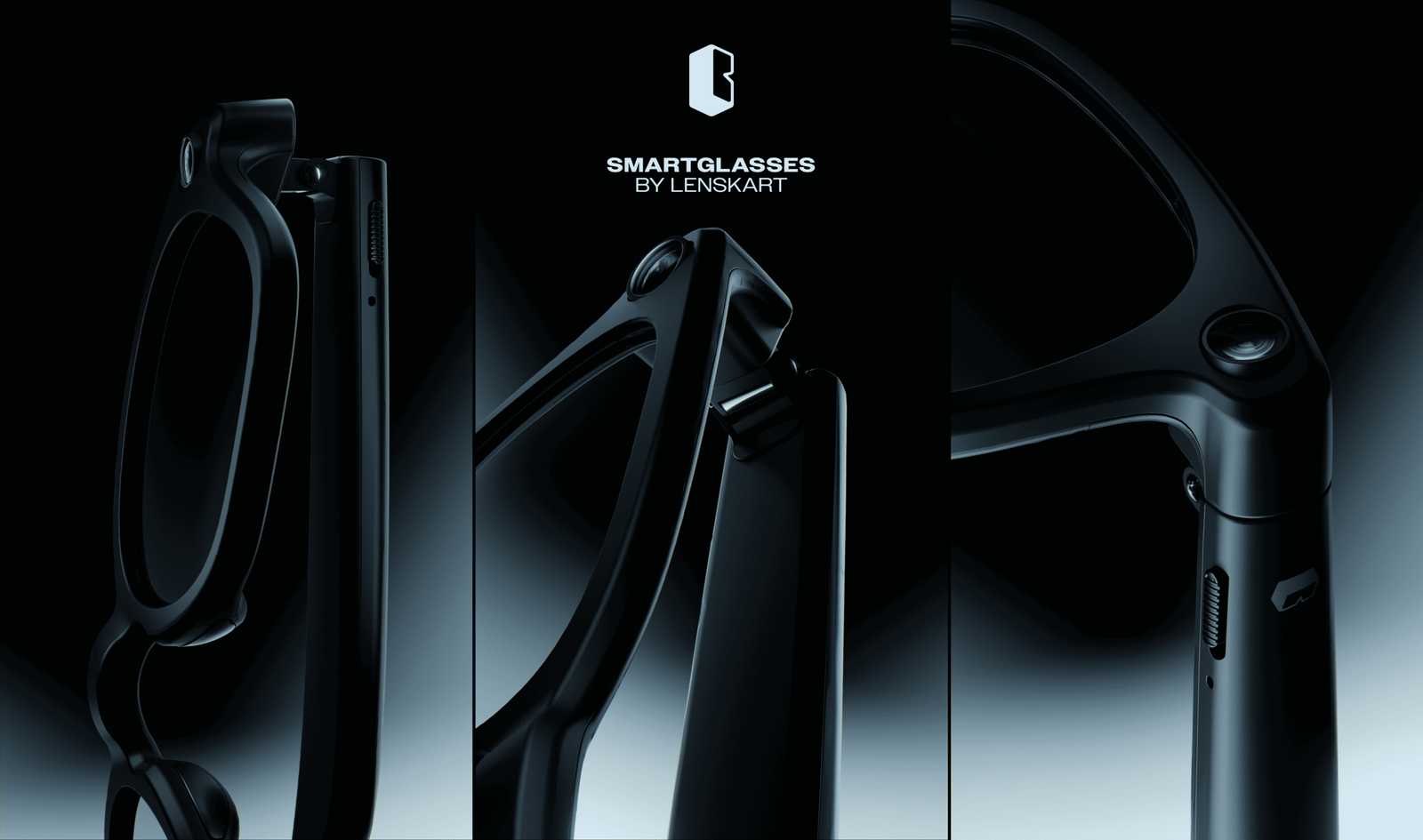
As of late 2025, Lenskart has taken this a step further with the launch of their “B by Lenskart” smartglasses. These aren’t just for vision; they incorporate wearable AI that interprets surroundings, translates speech in real-time, and even handles hands-free UPI payments. By integrating AI into the physical product itself, Lenskart has moved from being an eyewear retailer to a genuine “deep tech” lifestyle brand.
This tech integration serves a dual purpose: it builds “innovation trust” and provides the brand with massive amounts of data on consumer style preferences. When you know exactly what your customers are looking at—and how they look in it, your social media marketing becomes surgical. You aren’t just showing ads; you are showing the exact frame that fits the customer’s mapped 3D face.
The Phygital Edge: Why Physical Stores Matter
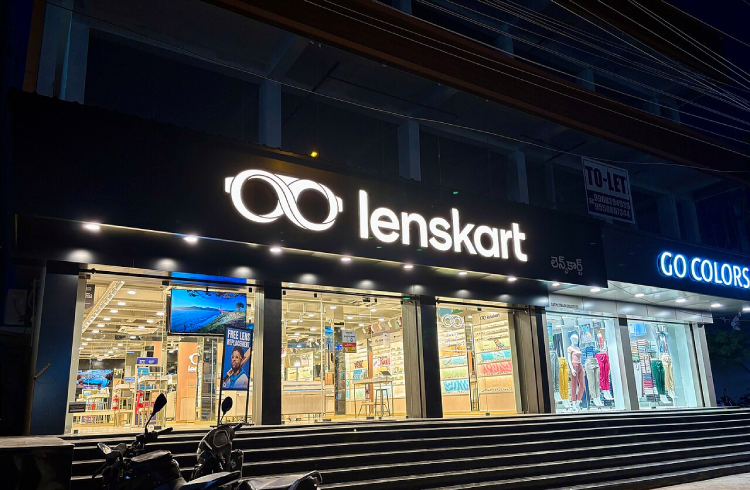
While most e-commerce startups in the early 2010s were obsessed with staying “asset-light,” Lenskart took a counter-intuitive path: they went heavy on physical retail. As of late 2025, with over 2,700 stores across India, Southeast Asia, and the Middle East, Lenskart has mastered the “Phygital” (Physical + Digital) model.
Why 2,700 Stores Beat One Website
In the eyewear industry, a website is a discovery platform, but a store is a trust-building hub. Lenskart realised that while people are happy to browse 5,000 frames on an app, they are often hesitant to finalise a medical prescription without a professional’s touch.
- The “Free Eye Test” Magnet: Every Lenskart store offers free, high-quality eye checkups. This is a brilliant “top-of-funnel” marketing tactic. By solving a health problem for free, they earn the right to sell the solution (the glasses).
- Instant Gratification & Service: Buying online often involves a 3–5 day wait. Physical stores allow for “Express Delivery” in many locations, where lenses are fitted and delivered in under 24 hours. Furthermore, stores act as service centres for free frame adjustments and nose-pad replacements, creating a localised brand presence that no pure-play digital marketing agency could replicate through screen ads alone.
- The Endless Aisle: Lenskart stores don’t need to stock every single frame. If a customer likes a style but wants it in a different colour, the store manager uses an in-store tablet to order it from the central warehouse. The boundaries between “online” and “offline” are completely blurred.
The Impact on Social Media Marketing
Lenskart’s physical footprint serves as a massive billboard. Each store is strategically located in high-traffic malls or high streets. This physical visibility reduces their “Customer Acquisition Cost” (CAC). When a customer sees a Lenskart store every day on their way to work, the social media marketing ads they see later that evening on Instagram become twice as effective because the brand is already “real” in their minds.
Founder Branding: Humanising Peyush Bansal
In the age of corporate scepticism, people don’t buy from companies; they buy from people. Peyush Bansal, the founder of Lenskart, has become one of India’s most recognisable business faces, primarily due to his stint on Shark Tank India.
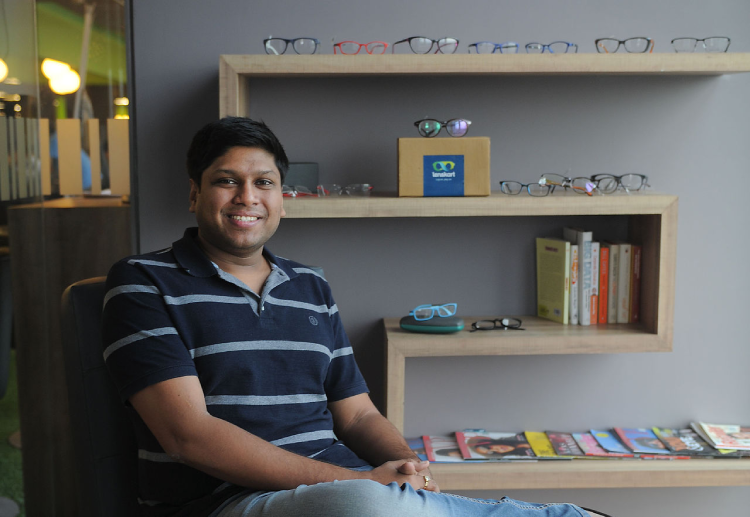
Humanising the Giant
Bansal’s persona is built on three pillars: Clarity, Mission and Empathy.
The Mission: He doesn’t talk about selling “spectacles”; he talks about “Revolutionising Vision.” His stated goal of “Vision for All” gives the brand a moral north star.
The Accessibility: On Shark Tank, his focus on tech-led solutions and his willingness to support grassroots entrepreneurs made him a “Relatable Visionary.”
For a digital marketing agency, this is “Founder-Led Content” at its finest. By positioning the founder as a thought leader, Lenskart gains “earned media” worth millions. Every time Peyush posts about a new robotic facility or an AI breakthrough, it carries more weight than a traditional corporate press release. This transparency builds a “Trust Halo” around the brand. If the founder is honest and driven, the product must be good
Precision Engineering: The “Made by Robots” Trust
One of the biggest pain points in traditional eyewear was human error. A 0.25-degree mistake in lens grinding can lead to headaches and blurred vision. Lenskart addressed this by removing the human element from the most critical part of the process.
Vertical Integration: From Sand to Spectacles
Unlike competitors who source frames and lenses from third-party vendors, Lenskart is vertically integrated. Their mega-factory in Bhiwadi, Rajasthan (and their newer global facilities), is a marvel of automation.
- German Robotic Tech: Lenskart heavily markets its “German Robotics.” These machines glaze and cut lenses with a precision of up to three decimal places.
- The Marketing of Precision: They don’t just use robots; they tell you they use robots. This is a strategic move to build “Technical Trust.” By claiming their products are “Untouched by Human Hands,” they position themselves as a superior, hygienic, and precise alternative to the local optician who might be manually fitting lenses in a dusty backroom.
- Cost Leadership: By owning the manufacturing, Lenskart eliminates the “middleman margin.” This allows them to offer premium-quality Italian designs (via their brand Vincent Chase) and high-tech lenses (via John Jacobs) at prices that seem impossibly low to the average consumer.
This control over the supply chain is a dream for any social media marketing agency. It allows them to run “Behind the Scenes” campaigns that showcase the scale and sophistication of the brand, moving the narrative away from “cheap glasses” to “high-tech vision solutions.”
Lenskart Gold: A Masterclass in Customer Loyalty
Acquiring a customer is expensive; keeping one is where the profit lies. Lenskart’s “Gold Membership” is a masterclass in behavioral economics and loyalty.
The Psychology of Lenskart Gold
The Gold Membership offers a “Buy One Get One” (BOGO) deal on almost all products for a small annual fee. While it looks like a massive discount, it’s actually a brilliant retention tool:
- Sunk Cost Fallacy: Once a customer pays for a membership, they feel obligated to shop at Lenskart to “get their money’s worth.”
- The “Spare Pair” Logic: By offering BOGO, Lenskart encourages people to buy two pairs, perhaps one for the office and one for home, or one clear pair and one pair of power-sunglasses. This doubles the “Brand Share of Closet.”
- Community Building: Gold members get early access to new collections and exclusive collaborations (like the Lenskart x Marvel or Lenskart x Star Wars series). This transforms a transaction into a “club membership.”
Data-Driven Personalisation
Because Lenskart has your prescription data, your style preferences, and your “Gold” status, their email and SMS marketing are incredibly precise. They know exactly when your prescription is likely to change (usually every 12-18 months) and will send a “Time for a checkup” reminder coupled with a Gold-exclusive offer. This level of lifecycle marketing is what keeps their repeat-purchase rate among the highest in the retail industry.
Conclusion
Lenskart’s success isn’t down to a single “viral” ad or a lucky break. It is the result of a meticulously executed omnichannel branding strategy that bridges the gap between high-tech AI and high-touch physical retail. By turning a medical necessity into a fashion-forward accessory, humanising the brand through founder-led storytelling, and doubling down on robotic precision, they have built a moat that is incredibly hard to breach.
For any brand or digital marketing agency looking to scale, the Lenskart lesson is clear: Use technology to remove friction, use physical stores to build trust, and use a membership model to turn customers into advocates. As we move further into 2026, Lenskart isn’t just selling glasses; they are defining how we see the world—and how the world sees us.
Frequently Asked Questions

The founder and partner of Flora Fountain, Shefali leads the Content and Technology divisions. A one-time engineer who started her career writing front-end code, she took a detour sometime during her 9 years in New York, studied journalism and started writing prose, poetry and sometimes jokes. She now has 15...