


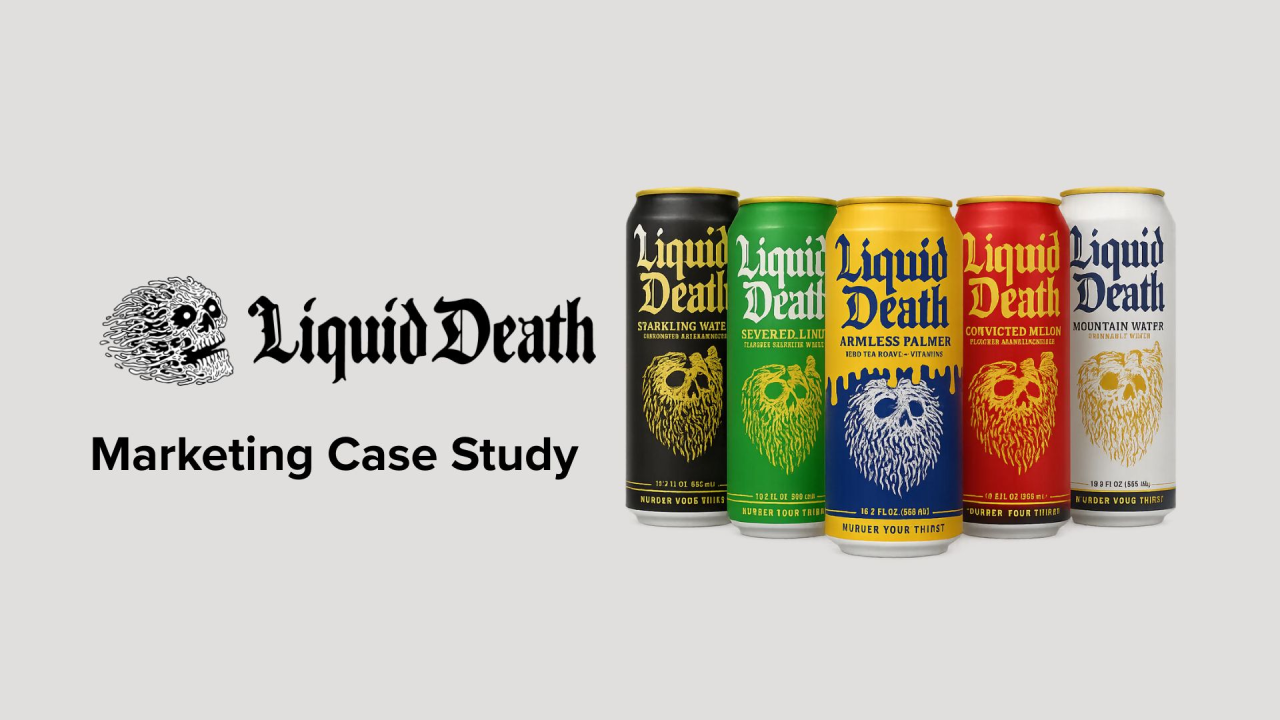
Imagine if water had a personality and it was punk rock. That is exactly what Liquid Death set out to create. In a category known for being boring and interchangeable, Liquid Death turned canned water into a cultural statement.
Since launching in January 2019, the brand has grown rapidly, reaching over $333 million in retail sales in 2024. What makes this growth impressive is not the product itself, but the marketing behind it. From a branding agency’s perspective, Liquid Death is a masterclass in positioning. By pairing metal aesthetics with spring water, the brand proved that perception can matter more than the product itself.
In this marketing case study, we break down how Liquid Death built a cult following, the strategies that fueled its success, and what brands can learn from the way it made water cool.
Table of Contents:
- What Is Liquid Death?
- Why Liquid Death Stood Out in a Boring Category
- Liquid Death’s “Murder Your Thirst” Brand Positioning Strategy
- Liquid Death’s Unconventional Social Media Marketing Approach
- Unique Packaging as a Marketing Tool
- Results and Success Metrics
- Key Marketing Lessons from Liquid Death
- Conclusion
- FAQS
What Is Liquid Death?
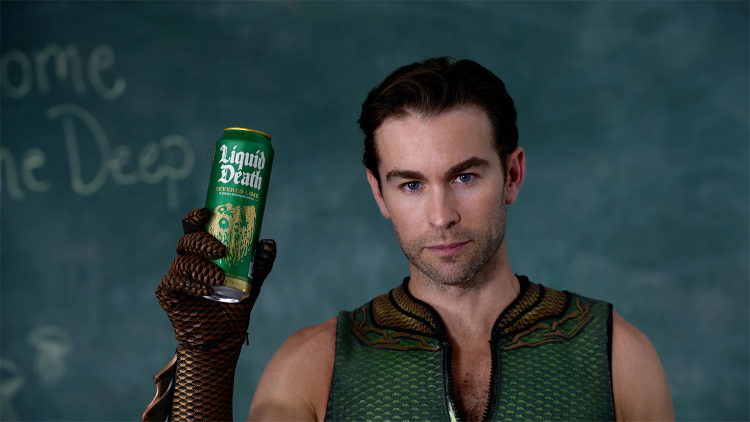
Liquid Death was launched in January 2019 by founder Mike Cessario, a former creative director at Netflix, who noticed something interesting at music festivals. While energy drinks like Monster were everywhere, water was still marketed in a plain, forgettable way. His idea was simple: what if water were marketed with the same intensity as an energy drink?
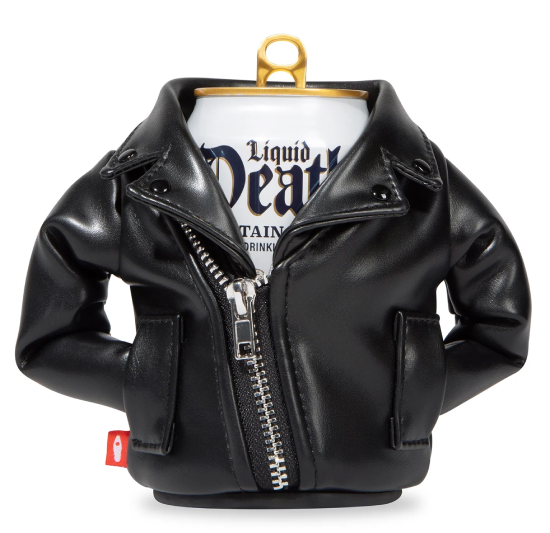
At its core, Liquid Death sells canned water. The brand started with mountain water and later expanded into sparkling water, flavoured options, and iced tea. Beyond beverages, Liquid Death built a strong merchandise ecosystem, selling metal-inspired apparel, bottles, and other lifestyle products that reinforce its brand identity. And yes, COOL. CAN. COOLERS.
What looks like a water company on the surface is actually a branding-first business built around culture, attitude, and entertainment.
Why Liquid Death Stood Out in a Boring Category
Water is one of the most interchangeable products in the world. Most brands compete on purity claims, mountain imagery, or sustainability badges, and after a point, they all blur together. Liquid Death did the opposite. Instead of trying to look calm, clean, or premium, it chose to be loud, aggressive, and entertaining.
The brand treated water like an energy drink. From the name to the packaging to the tone of voice, everything borrowed from metal culture and high-energy branding. This instantly broke category expectations. People did not just notice Liquid Death, they remembered it.
What makes this strategy especially clever is that Liquid Death is not trying to compete within the energy drink category. It is using the energy drink playbook to mock and disrupt the water category. The aggressive visuals feel almost absurd when paired with something as basic as water, and that contrast is exactly the point.
From a branding agency perspective, this is a textbook example of differentiation. Liquid Death did not win by adding features or flavours. It won by choosing a personality no one else in the category was willing to adopt. In a market full of safe branding, it became the one that felt dangerous, ironic, and fun.
The result was not just awareness, but cultural relevance. Liquid Death became something people wanted to be seen with, not because of what was inside the can, but because of what the brand stood for.
Liquid Death’s “Murder Your Thirst” Brand Positioning Strategy
“Murder Your Thirst” tagline is the core of Liquid Death’s brand positioning. Everything the brand does, from packaging to ads to merchandise, flows from this single idea.
Most water brands position themselves around health, purity, or nature. But Not Liquid Death. Their language is violent, exaggerated, and intentionally over the top. That contrast makes the message impossible to ignore, especially in a category where brands are usually afraid to stand out.
Liquid Death uses its slogan everywhere. It built an entire brand universe around it. The name, skull imagery, dark humor, and metal-inspired visuals all reinforce the same idea. There is no confusion about what the brand stands for.
From a branding agency perspective, this is a clear lesson in consistency. Strong positioning is not about clever copy. It is about choosing a point of view and repeating it everywhere until the brand becomes unmistakable.
By leaning fully into “Murder Your Thirst,” Liquid Death turned a basic functional benefit into an identity. People do not just buy the product to stay hydrated. They buy into the attitude that comes with it.
Liquid Death’s Unconventional Social Media Marketing Approach
Liquid Death does not use social media the way most consumer brands do. Instead of promoting features, benefits, or discounts, the brand treats its channels like an entertainment platform. The goal is not to sell in every post, but to make the brand impossible to ignore.
This approach flips traditional social media marketing on its head. Liquid Death rarely asks people to buy water. It gives them something to watch, laugh at, or share, and the product comes second.
This works because attention comes before conversion. If people enjoy the content, they will forgive the marketing.
Viral TikTok and Instagram Strategy
On platforms like TikTok and Instagram, Liquid Death leans heavily into absurd humour, self-awareness, and shock value. The content often feels unpolished on purpose, which makes it blend naturally into users’ feeds instead of looking like an ad.
Many of the brand’s viral moments come from short-form videos that feel more like skits than campaigns. They play with internet culture, trends, and inside jokes, often without showing the product at all. When the product does appear, it feels earned rather than forced.
The result is consistent organic reach. People share Liquid Death content because it is entertaining, not because they were targeted.
Why Liquid Death Rarely Runs Traditional Ads
Liquid Death does run ads, but it does not rely on traditional performance marketing the way most brands do. Instead of pushing polished commercials or repetitive sales messages, the brand invests in big, weird ideas that feel more like content than advertising.
By focusing on earned media, virality, and word-of-mouth, Liquid Death reduces its dependence on constant ad spend. The brand’s personality does the heavy lifting. When ads are used, they often look like jokes first and promotions second.
For a digital marketing agency, this reinforces a simple idea: when branding is strong enough, marketing does not have to feel like marketing.
Unique Packaging as a Marketing Tool
Packaging is one of the brand’s strongest marketing assets. In a category dominated by clear plastic bottles and soft, natural visuals, Liquid Death’s tall cans immediately stand out on the shelf. Many have pointed out that the cans resemble beer, and that resemblance is intentional. It is not misleading, just a smart way to grab attention and signal attitude.
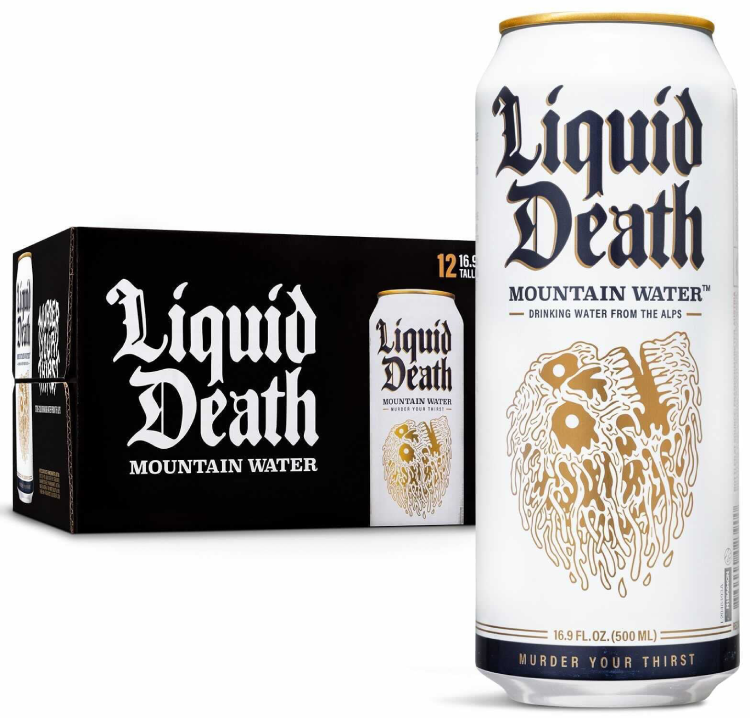
The decision to use aluminium cans instead of plastic bottles was intentional. Cans are associated with beer and energy drinks, not water. That visual confusion works in the brand’s favour. People pick up the can out of curiosity, and that moment of pause is often enough to start a conversation. Plus, Liquid Death calls their cans “infinitely recyclable, a subtle jab at plastic recycling being largely a myth. We love it when brands take a stand while staying on-brand.
The design itself reinforces the brand’s metal identity. Dark colours, bold typography, skull imagery, and aggressive naming make the packaging feel more like merchandise than packaging. It does not whisper hydration. It shouts attitude
From a branding agency perspective, this is packaging doing the job of advertising. Without saying a word, Liquid Death communicates who it is, who it is for, and why it is different. The can becomes a billboard that people are happy to carry around.
And yes, it also makes water feel cooler to drink. Literally and culturally.
Results and Success Metrics
Revenue Growth and Retail Presence
Liquid Death’s rapid growth is a testament to the power of bold branding and unconventional marketing. Since launching in 2019, the brand has achieved remarkable milestones.
| Year | Revenue | Number of Stores |
|---|---|---|
| 2019 | $3M | 0 |
| 2020 | $10M | 200 |
| 2021 | $45M | 16,000 |
| 2022 | $110M | 60,000 |
| 2023 | $263M | 90,000 |
| 2024 | $333M | 133,000 |
Consumer Demographics
- Gen Z: 42%
- Younger Millennials: 38%
- Adults 35+: 7%
Over 16% of Americans have tried a Liquid Death beverage, showing strong resonance with younger audiences.
Marketing Impact: What Each Campaign Achieved
- $1,500 Commercial → 3M Views
This low-budget ad relied on shock value and humour rather than production quality. Its satirical tone made it highly shareable, delivering massive awareness at minimal cost and establishing Liquid Death’s bold brand voice early on.
- Turning Hate Comments Into a Song ($12,000)
Instead of ignoring criticism, Liquid Death transformed real hate comments into a country song. This flipped negativity into engagement, increased brand likability, and earned strong organic reach and press coverage.
- “The Biggest Ad Ever” Auction ($500,114)
By selling ad space as a product, Liquid Death turned marketing into a revenue stream. The stunt generated direct income, widespread media attention, and reinforced the brand’s reputation for unconventional thinking.
Key Takeaway
Liquid Death proves that high-impact marketing comes from creativity and attention, not large ad budgets. Bold ideas created awareness, conversation, and long-term brand recall.
Key Marketing Lessons from Liquid Death
Liquid Death is a fun case studyfor marketers to understand differentiation and commitment. Here are the key takeaways brands can apply, whether you are selling water, software, or socks.
- Differentiation Beats Features Every Time: Why did Liquid Death win? By having a better story rather than just competing for shelf space. In a market where every brand was fighting over purity claims, Liquid Death chose to compete on personality instead. When everyone in your category looks the same, the brand that dares to be different wins attention by default.
- Commitment to Identity Creates Recognition: “Murder Your Thirst” is the foundation of everything Liquid Death does. The name, the visuals, the tone, all of it flows from one clear idea. Too many brands try to appeal to everyone and end up standing for nothing. Liquid Death picked a lane and stayed in it. The takeaway? Choose your positioning and commit to it relentlessly.
- Packaging Is Your Always-On Billboard: The tall boy can grab attention, spark curiosity, and communicate the brand’s attitude before a single word is spoken. In a world where people scroll past ads, packaging is one of the few touchpoints you still control. Make it count.
- Entertainment Drives Engagement More Than Promotion: Liquid Death treated social media like an entertainment channel instead of a sales funnel. Virality replaced ad spend. Shareability replaced targeting. The lesson? Stop asking “how do we sell more?” and start asking “how do we make people care?”
- Low Budget, High Creativity Wins: Their first commercial cost $1,500 and got 3 million views. Their vinyl record made from hate comments cost $12,000 and generated massive PR. You do not need a Super Bowl budget to make an impact. You need ideas bold enough to make people talk.
- Culture Beats Category: Liquid Death built a cultural brand that happened to sell water. By aligning with metal culture and rebellious energy, the brand became something people wanted to associate with, not just consume. Stop trying to be the best in your category. Start trying to be the most interesting brand in culture.
Conclusion
Liquid Death did not reinvent water. It reinvented how people think about water. And that is the entire point.
In a category where every brand was playing it safe, Liquid Death chose chaos. Instead of competing on features no one cared about, it built a personality people actually wanted to be around. The result? A $700M+ valuation, a cult following, and proof that even the most boring products can become culturally relevant with the right branding.
The biggest lesson from Liquid Death is simple: bold brands win. Not because they have better products, but because they have better stories. They commit to an identity, stay consistent, and make people feel something beyond the transaction.
Whether you are launching a new brand or trying to breathe life into an existing one, the playbook is clear. Stop trying to fit in. Start standing out. And if you are not sure where to begin, that is exactly what a digital marketing agency like ours is built for, helping brands find their edge and turn it into growth.
Now go murder some thirst.
FAQS

The founder and partner of Flora Fountain, Shefali leads the Content and Technology divisions. A one-time engineer who started her career writing front-end code, she took a detour sometime during her 9 years in New York, studied journalism and started writing prose, poetry and sometimes jokes. She now has 15...