


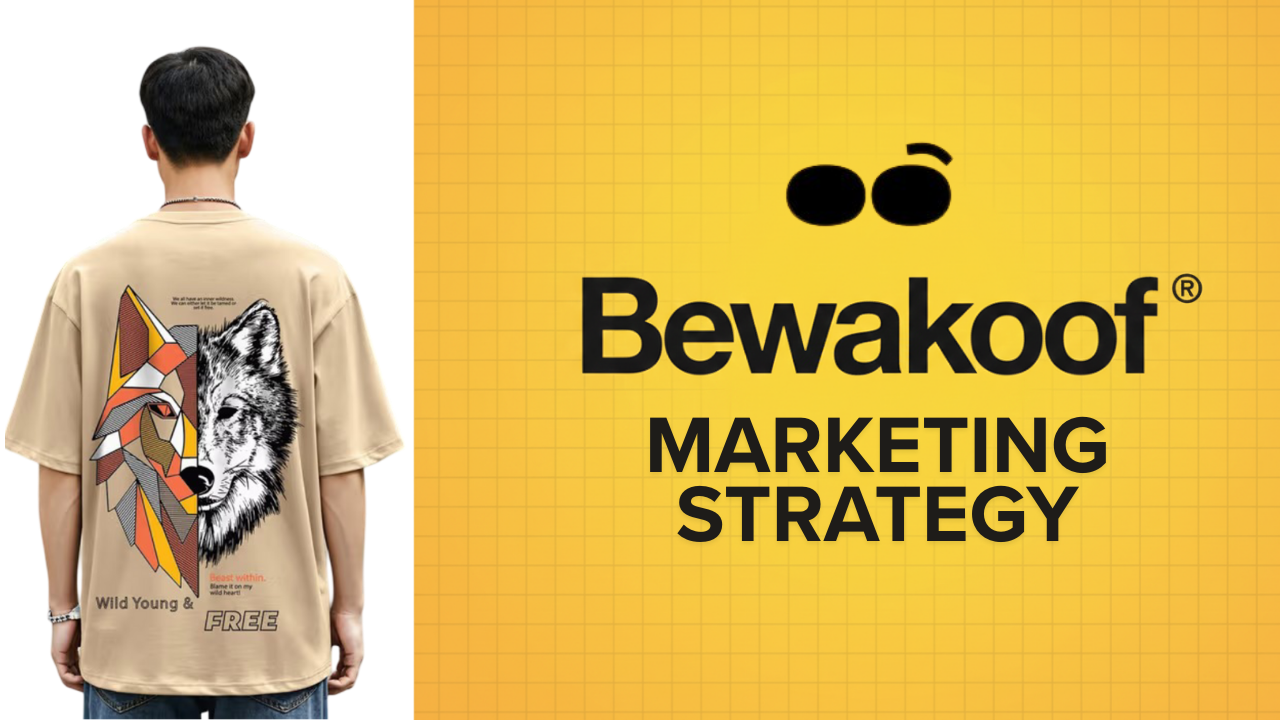
In 2012, two IIT Bombay graduates launched a website selling t-shirts with quirky quotes on April Fool’s Day. They called it Bewakoof, which translates to “fool” in Hindi. The fashion industry thought they were living up to their name. Who launches a serious business on April Fool’s Day? Who names a fashion brand after an insult? Who targets college students with memes printed on t-shirts?
Thirteen years later, Bewakoof had pioneered India’s D2C fashion category, built a loyal customer base of over 10 million, achieved ₹200+ crore revenue and sold itself to Aditya Birla’s TMRW for ₹200 crore after years of financial struggles.
The story isn’t just about success. It’s about timing, first-mover advantages, brilliant marketing decisions and costly mistakes that nearly destroyed what they’d built. Even for a digital marketing agency that excels in D2C branding, Bewakoof offers masterclass lessons in what works, what fails and what happens when you get the strategy right but the execution wrong.
Table of Contents:
- The origin story: when being “bewakoof” was the strategy
- The first-mover advantage that nobody talks about
- The marketing strategies that built a category
- The pivot nobody saw coming
- The mistakes that cost them dearly
- Bewakoof’s Fall from Grace
- The acquisition that changed everything
- Lessons for businesses building brands
- Conclusion
- FAQs
The origin story: when being “bewakoof” was the strategy
Prabhkiran Singh and Siddharth Munot weren’t fashion experts when they started Bewakoof. They were civil engineering students at IIT Bombay who wanted to create something their peers would actually wear.
Prabhkiran had already tried entrepreneurship with Khadke Glassi, a lassi venture outside his college that failed quickly. Siddharth worked briefly with an educational startup. Neither had fashion backgrounds nor business degrees. What they had was observation: Indian college students wanted affordable, expressive clothing that felt culturally relevant rather than expensive Western brands or boring basics.
In 2010, they registered the domain Bewakoof.com whilst searching for quirky names around April Fool’s Day. They did nothing with it for two years. The website was built in 2011 but launched publicly only in January 2012. Why the delay? They were bootstrapping with just ₹30,000 in initial capital, learning e-commerce basics and designing their first collection.

Bewakoof unveils their streetwear line. Source: Indian Retailer
The name Bewakoof was deliberately provocative. Society calls people “bewakoof” when they do things differently, challenge norms or take unconventional paths. The founders reclaimed the word, positioning their brand for people who follow their hearts regardless of what others think. This rebellious positioning resonated immediately with young Indians tired of conforming to expectations.
The first-mover advantage that nobody talks about
When Bewakoof launched in 2012, the direct-to-consumer (D2C) fashion category was barely established in India. E-commerce was emerging, but fashion meant either expensive branded websites or marketplaces selling unorganised inventory. Nobody had built an online-first, youth-focused, pop culture-driven fashion brand.
This timing gave Bewakoof several massive advantages that later entrants couldn’t replicate.
Digital infrastructure maturity
By 2012, internet penetration was rising rapidly, smartphones were becoming affordable and payment gateways were reliable enough for e-commerce. Launching earlier would have meant fighting infrastructure limitations. Launching later meant facing established competition.
Social media leverage
Facebook and Instagram were growing explosively amongst Indian youth but weren’t yet crowded with brand noise. Bewakoof could build organic communities through authentic content without competing against thousands of other brands. Their early Facebook pages accumulated millions of followers when acquiring followers was still relatively easy.
Marketplace partnerships
When Bewakoof approached Amazon, Flipkart and Myntra in the early years, these platforms were desperate for quality D2C brands to fill their catalogues. Bewakoof secured favourable terms and prominent placement that later entrants had to fight for; being early meant partnerships rather than just vendor relationships.
Manufacturing relationships
Indian textile manufacturing was transitioning from pure B2B to supporting D2C models. Bewakoof could establish exclusive relationships with manufacturers willing to work on smaller batches, faster turnarounds and digital-first requirements. Later entrants faced manufacturers already locked into relationships or demanding minimum order quantities beyond D2C economics.
Category definition
Most importantly, Bewakoof defined what D2C youth fashion meant in India. They established expectations around quirky designs, affordable pricing, pop culture collaborations and content-driven marketing. Every competitor afterwards was measured against Bewakoof’s template, which meant Bewakoof controlled the narrative.
The Souled Store launched in 2013 with a similar positioning. Snitch arrived in 2020. By then, the playbook Bewakoof created had become industry standard. First-mover advantage in category definition is real and valuable, even if execution challenges emerge later.
The marketing strategies that built a category
Bewakoof’s early marketing wasn’t sophisticated by agency standards. It was authentic, scrappy and incredibly effective at connecting with their audience.
Content marketing before it was trendy
Whilst other fashion brands focused on product photography and celebrity endorsements, Bewakoof built entertainment properties. Their social media pages featured memes, relatable humour and cultural commentary that happened to feature their products. People followed for entertainment and discovered products organically.
This approach generated massive organic reach when social media algorithms still favoured engaging content. They accumulated over 4 million Facebook fans, 2.39 lakh Instagram followers and built email lists that drove significant traffic without paid advertising.
Pop culture collaborations
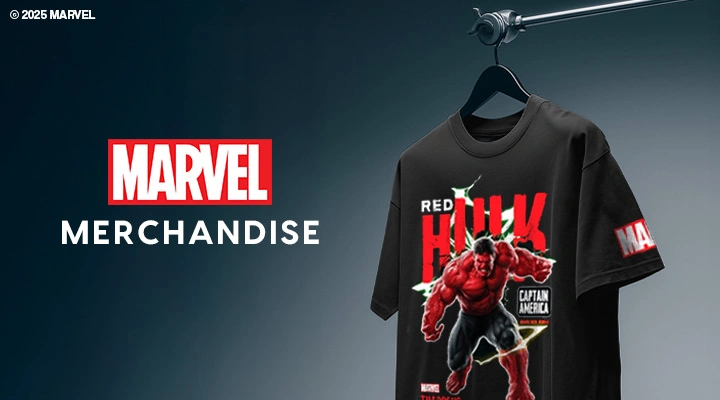
Bewakoof secured official licensing deals with Marvel, DC Comics, Looney Tunes, Star Wars, Friends and Disney. These collaborations gave them access to massive existing fanbases whilst adding credibility. A Friends t-shirt wasn’t just apparel; it was a fandom expression that customers wanted to share on social media.
Source: Bewakoof
Hyperlocal relatability
Unlike Western fashion brands that felt imported, Bewakoof felt Indian. They created designs in regional languages including Hindi, Marathi, Bengali, Telugu and Gujarati. Their quotes referenced local scenarios, cultural moments and insider jokes that only Indians understood. This hyperlocal approach built stronger emotional connections than global brands could achieve.
Mobile-first infrastructure
Recognising that their audience lived on smartphones, Bewakoof invested heavily in mobile app development. Their app was not just a website wrapper; it offered exclusive launches, personalised recommendations and seamless checkout optimised for mobile shopping behaviour. The app generated 2.5 million monthly website hits and over 10 million downloads.
SEO and performance marketing
Working with a digital marketing agency approach, Bewakoof optimised for high-intent keywords related to trendy and pop culture apparel. They ranked consistently for searches around graphic t-shirts, quirky clothing and specific franchise merchandise. Performance marketing on Google and Facebook focused on measurable ROI rather than brand building alone.
The pivot nobody saw coming
In July 2021, Bewakoof surprised the market by launching Cosmos Beauty, a mineral-based skincare and cosmetics brand with 43 products. This was not a small extension but a full category pivot, made at a time when their core fashion business was already under strain. The move was driven by an ambition to evolve into a lifestyle brand, leveraging strong millennial and Gen Z recall and testing whether their content-led community model could translate to beauty.
The results were mixed. Cosmos launched but failed to gain the momentum that Bewakoof’s fashion line had achieved. The beauty category proved far more crowded and expertise-heavy, dominated by players like Nykaa and focused D2C brands. At the same time, diversification split attention, budgets and leadership focus, when the fashion business needed sharper, undivided execution.
The mistakes that cost them dearly
Bewakoof’s financial trajectory tells a sobering story. After achieving profitability in FY17 (₹30 lakh profit), FY18 (₹2 crore profit) and FY19 (₹29 lakh profit), they posted ₹28 crore loss in FY20, their highest loss yet. (Source: Entrackr)
What went wrong?
Aggressive spending without sustainable unit economics
In FY20, Bewakoof spent heavily on branding and talent acquisition, anticipating continued growth. Salaries jumped from ₹13.5 crore in FY19 to ₹17.2 crore in FY20, and marketing expenses increased dramatically. This spending assumed revenue growth would accelerate enough to justify the increased burn.
Revenue did grow 27% from ₹164.22 crore in FY19 to ₹208.33 crore in FY20, but not fast enough to cover the higher costs. EBITDA margins declined from 3.56% in FY19 to negative 9.5% in FY20. The company was spending ₹1.40 for every rupee earned.
Inventory mismanagement
As a fashion brand, Bewakoof faced inherent inventory risks because trends change quickly. What is popular today can become unsellable tomorrow. By FY24, their average inventory period increased to 105 days compared to 80 days in FY23. Funds tied up in unsold inventory meant less capital available for growth initiatives.
Over-reliance on cash-on-delivery
Around 65–70% of Bewakoof’s orders used cash-on-delivery, which resulted in high debtor levels and extended collection periods. This working capital intensity strained cash flows while also increasing logistical costs compared to prepaid orders.
Marketplace dependency
Whilst Bewakoof built its own platform, a significant portion of revenue came through Amazon, Flipkart and Myntra. These marketplaces take commissions, demand discounts and offer less control over customer experience. Heavy marketplace dependency led to lower margins and weaker direct customer relationships.
Failure to scale profitably
The transition from ₹50 crore to ₹200 crore in revenue required very different operational capabilities. Systems that worked at a smaller scale began to break at higher volumes. Customer service could not keep pace, technology infrastructure needed upgrades and supply chain complexity increased exponentially.
Cosmos Beauty distraction
Launching a new category while the core business was under pressure divided focus and resources. Beauty required different manufacturing processes, different marketing approaches and different competitive strategies. This distraction came at precisely the wrong moment.
Sources: Entrackr,Economic Times,Care
Bewakoof’s Fall from Grace
Bewakoof had built brand awareness (94% amongst the target audience) but conversion rates remained moderate (around 58%). Many people knew Bewakoof but weren’t buying consistently. Customer acquisition costs were too high relative to lifetime value. Post-purchase service and delivery satisfaction were weak points, scoring just 2.92 out of 5 in customer surveys.
Co-founder Siddharth Munot exited in March 2021 after 10 years, signalling internal challenges. The founding team that built the brand was fracturing under pressure.
The acquisition that changed everything
In December 2022,Aditya Birla’s TMRW acquired a majority stake (70-80%) in Bewakoof for ₹200 crore. By February 2023, Bewakoof became a step-down subsidiary of ABFRL (Aditya Birla Fashion and Retail Limited).
The acquisition wasn’t a victory lap. It was survival. Bewakoof needed capital, operational expertise and strategic direction to transition from a high-burn growth model to sustainable profitability. ABFRL provided all three.
Under ABFRL’s ownership, Bewakoof began implementing systematic changes: improved inventory management, better working capital deployment, focus on profitable channels over pure growth and operational efficiencies that bootstrapped founders couldn’t achieve alone.
The credit rating agency CARE noted that whilst Bewakoof had been loss-making, it was expected to break even in future years, supported by ABFRL’s strategic initiatives and funding support.
Lessons for businesses building brands
Bewakoof’s story offers crucial insights for businesses at every stage.
- First-mover advantage is real but temporary:
Being first lets you define categories, build communities and establish relationships before competition intensifies. But this advantage erodes quickly. Bewakoof’s early lead didn’t prevent competitors from capturing market share once the playbook was visible. - Content marketing creates sustainable moats:
Bewakoof’s investment in entertaining, authentic content built organic reach and community that paid dividends for years. This approach costs less than advertising whilst creating deeper customer relationships. Any digital marketing agency should prioritise content that audiences want to consume rather than just promotional messaging. - Unit economics matter more than growth metrics:
Bewakoof grew revenue impressively but couldn’t turn that revenue into sustainable profit. Investors eventually demand profitability. Customers don’t care about funding rounds. Focus obsessively on contribution margins, customer acquisition cost relative to lifetime value and cash conversion cycles. - Working capital management makes or breaks D2C:
Fashion brands face unique challenges with inventory risk and cash-on-delivery preferences. Underestimating working capital requirements leads to cash crunches that force bad decisions like excessive discounting or selling stake at unfavourable valuations. - Category diversification requires perfect timing:
Launching Cosmos Beauty whilst fashion struggled divided resources and attention. New categories need dedicated teams, separate budgets and appropriate timing. Diversify from strength, not desperation. - Brand awareness without conversion is expensive vanity:
Bewakoof achieved 94% awareness amongst target customers but only 58% conversion. Awareness costs money through marketing. Conversion generates revenue through sales. The gap between awareness and conversion is where businesses bleed cash. - Operational excellence becomes a competitive advantage at scale:
Early-stage startups win through creativity and hustle. As they scale, operational discipline separates winners from losers. Bewakoof’s challenges in inventory management, customer service and delivery satisfaction undermined their marketing strengths. - Know when to accept help:
The acquisition by ABFRL wasn’t a failure; it was recognition that sustainable scaling required expertise and resources beyond what the founders possessed. Many startups fail because founders refuse to accept that independence might cost them everything.
Conclusion
Bewakoof did something remarkable. Two engineering students with ₹30,000 and no fashion experience built India’s first major D2C youth fashion brand, pioneered content-driven marketing in the category, achieved ₹200+ crore revenue and created a brand that millions of Indians recognise and relate to.
The acquisition by Aditya Birla’s TMRW doesn’t diminish their achievements. It acknowledges that building category-defining brands and scaling them profitably requires different skill sets. The founders excelled at the former. The latter needed different capabilities.
That distinction matters for modern brands. Growth is no longer about visibility alone. It’s about knowing when amplification must be matched with structure. This is where a Digital marketing agency stops being a campaign executor and becomes a strategic partner, translating brand strength into sustainable outcomes.
Sometimes being bewakoof means breaking rules. Sometimes it means recognising when scale requires support. Bewakoof’s story shows the importance of knowing the difference.
FAQs

The founder and partner of Flora Fountain, Shefali leads the Content and Technology divisions. A one-time engineer who started her career writing front-end code, she took a detour sometime during her 9 years in New York, studied journalism and started writing prose, poetry and sometimes jokes. She now has 15...