


Oh, so your brand wants to “go viral”? Adorable. While you’re scheduling your third Instagram carousel post this week, Netflix just casually orchestrated a global marketing phenomenon spanning 28 cities, dozens of brand partnerships and three strategic release windows that turned a television finale into a cultural event.
But sure, let’s talk about your “engagement strategy.”
Stranger Things Season 5 didn’t just premiere. It detonated across the global entertainment landscape with 59.6 million views in five days, dragged all four previous seasons back into the top 10 simultaneously (a Netflix first, naturally) and demonstrated what happens when an advertising agency stops thinking like an advertising agency and starts thinking like an experience architect.
For brands wondering why their campaigns feel like they’re screaming into the void whilst Netflix effortlessly commands cultural attention, this is your masterclass in FOMO marketing. Buckle up.
Table of Contents:
- The numbers that made marketing teams everywhere weep into their quarterly reports
- The three-volume release strategy (or how to make people care multiple times)
- When 28 cities became Netflix’s global playground
- Brand partnerships that actually made sense for once
- The digital strategy that turned fans into unpaid marketing teams
- Nostalgia isn’t manipulation if you do it this well
- Psychological warfare disguised as limited editions
- What this means for brands that aren’t Netflix
- Conclusion
- Frequently Asked Questions
The numbers that made marketing teams everywhere weep into their quarterly reports
Let’s start with the uncomfortable truth that’s keeping other streaming platforms up at night. Stranger Things Season 5 debuted with 59.6 million views in its first five days, making it Netflix’s highest-ever premiere for an English-language series and third overall. For context, that’s a 171% increase over Season 4’s debut.
But here’s where it gets really insufferable for competitors: Netflix didn’t just launch one successful season. They somehow convinced audiences to rewatch all four previous seasons during the same week. Season 1 pulled 8.9 million views, Season 4 grabbed 6.1 million, Season 2 scored 5.6 million, and Season 3 earned 4.6 million views. Simultaneously. (Source: Deadline)
That’s not marketing. That’s gravitational pull.
The Season 5 teaser released in July 2025 generated over 26 million views within months, proving that anticipation itself had become content. When your trailer becomes an event, you’ve transcended traditional campaign metrics and entered something closer to cultural mythology.
For any digital marketing agency attempting to explain to clients why their product launch didn’t achieve similar results, you have our sympathies. You’re not competing with Netflix. You’re competing with a brand that turned a television finale into a multi-month cultural experience that occupied physical space in 28 cities across six continents.
The three-volume release strategy (or how to make people care multiple times)
Here’s where Netflix got deliciously strategic. Whilst everyone else dumps entire seasons and prays audiences binge-watch before the discourse moves on, Netflix carved Season 5 into three deliberate volumes: four episodes on 26 November, three episodes on Christmas Day and the finale on New Year’s Eve.
Notice something? Every drop aligned with a major holiday when audiences were already gathered, engaged, and looking for shared cultural moments. This wasn’t content distribution. This was cultural hijacking.
The phased release created three separate peaks of conversation instead of one spike followed by inevitable decay. Each volume provided natural anchors for renewed marketing pushes, partner activations and social media explosions. Brands got three chances to activate. Fans got three reasons to gather. Netflix got three months of sustained cultural dominance.
When 28 cities became Netflix’s global playground
Whilst your brand is debating whether to spend on a single pop-up installation in one city, Netflix said “hold my beer” and created immersive experiences in 28 cities across 21 countries on six continents. (Source: Netflix)
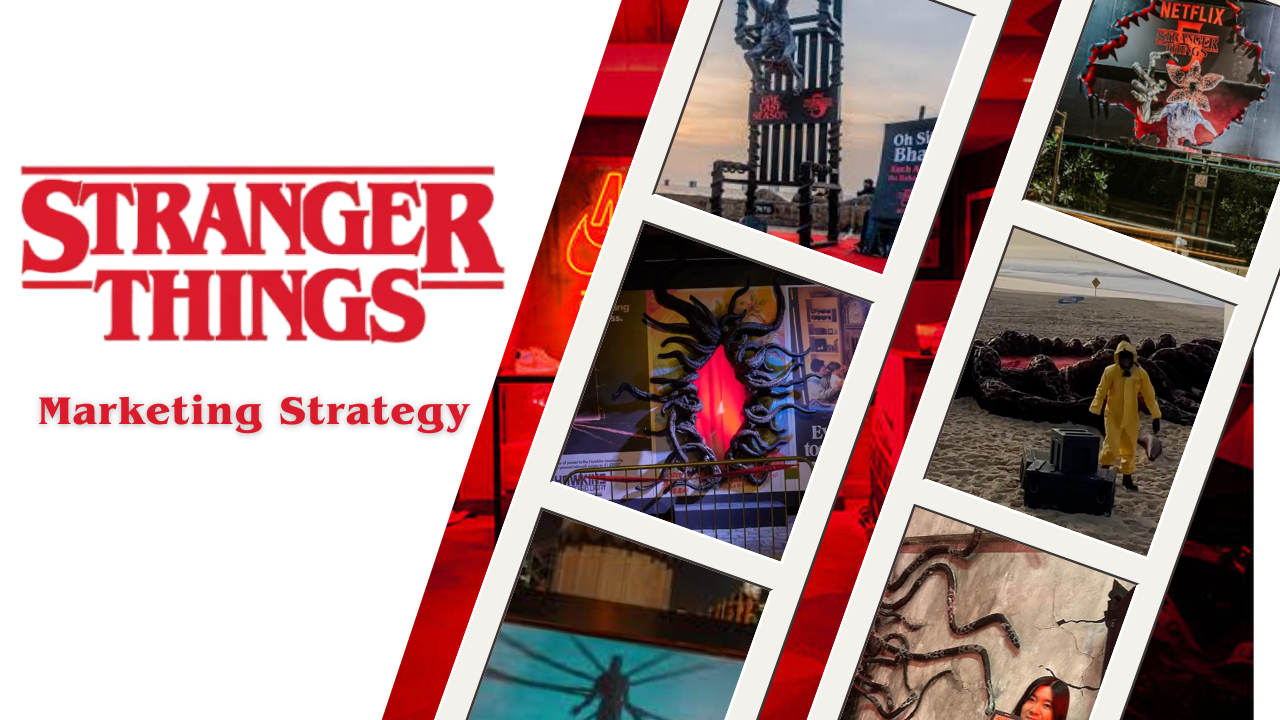
These weren’t half-hearted fan events with a few posters and a photo backdrop. Netflix recreated entire sets from the show. The Byers’ living room with its alphabet wall. The Upside Down with shadowy, tangled vines. Life-sized Demogorgon encounters that gave fans genuine nightmare fuel.
View this post on Instagram
London got mysterious Upside Down installations and interactive posters. Los Angeles hosted a world premiere that streamed globally. Eight major US cities (Atlanta, Chicago, Washington, DC, Houston, Las Vegas, New York, Raleigh and San Francisco) featured “The Last Bike Ride” self-guided fan events with themed routes and giveaways.
Tokyo hosted an RSVP event with recreated sets and live screenings with cast members. Jakarta and Kuala Lumpur offered retro arcade games and bike rides. Sydney celebrated with “The Upside Down Under.” Bangkok transformed Song Wat Road during the December holidays. Manila and Kuala Lumpur became 1980s Hawkins with street-wide activations. Mexico City is getting a permanent immersive experience running through April 2026.
Riyadh hosted a desert-themed celebration. Johannesburg received its first-ever Netflix activation. Lucca, Istanbul, Amsterdam, Warsaw and Paris each got region-specific immersive experiences.
This is what happens when experiential marketing stops being a buzzword in your deck and becomes an actual strategy. Netflix didn’t create marketing moments. They created memories in physical space that audiences photographed, shared and evangelised for free.
View this post on Instagram
Brand partnerships that actually made sense for once
Here’s where most brand partnerships fail: they feel transactional. A logo slapped on someone else’s content. A forced integration that makes everyone uncomfortable. Netflix said “no, thank you” to all of that and instead built an ecosystem.
Gatorade brought back 1980s glass bottles with Citrus Cooler and ran a “No Ordinary Athlete” campaign featuring NFL star Myles Garrett.
View this post on Instagram
Doritos launched an ”80s-style “Telethon for Hawkins, featuring Paula Abdul alongside limited-edition packaging and retro Doritos Collisions Pizza x Cool Ranch flavours.
View this post on Instagram
McDonald’s in Brazil, Portugal and select Latin American countries rolled out a custom “Stranger Things McMenu” with Upside Down-themed restaurant décor, flickering signs mimicking the show’s eerie energy surges, arcade machine wrapping at ordering kiosks and vintage arcade lighting.
View this post on Instagram
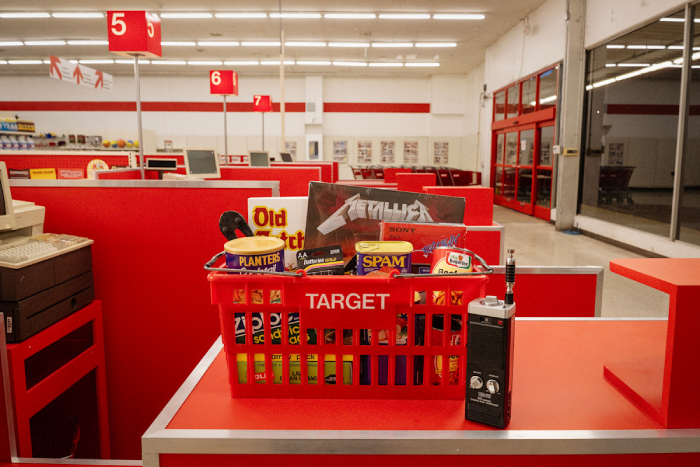
Fashion brands Gap and Benton & Bear created nostalgic apparel. Stellantis produced a limited-edition Stranger Things Pulse Abarth with hundreds of vehicles available in Brazil and Mexico. Target became the exclusive retail anchor with 150+ products, over half exclusive to their stores, featuring meticulously recreated 1987 Target store environments.
Notice the pattern? Every partnership extended Netflix’s reach into consumer touchpoints beyond screens. Grocery stores. Fast-food chains. Retail destinations. Cars. Homes. When audiences encountered Stranger Things messaging in unexpected places, it reinforced cultural relevance and created viral moments as consumers shared discoveries on social media.
This is co-marketing done properly. Not logos awkwardly photoshopped onto content, but genuine integrations where both brands benefited from authentic alignment. For brands attempting partnerships that feel forced, perhaps start by asking whether the collaboration makes intuitive sense to audiences before asking whether it makes financial sense to shareholders.
The digital strategy that turned fans into unpaid marketing teams
Here’s where Netflix weaponised something most brands ignore: fan behaviour. Stranger Things has a theory-driven fandom that obsesses over details, decodes symbolism and creates elaborate speculation threads. Netflix didn’t fight this. They fed it.
View this post on Instagram
The campaign released cryptic posters, symbolic imagery and character-voice teasers that invited audiences to decode narratives. These weren’t advertisements. They were puzzles disguised as marketing materials. Fans didn’t passively consume them. They analysed, theorised, debated and shared obsessively.
Netflix distributed content strategically across platforms. TikTok teasers for younger demographics. Twitter/X announcements are driving speculation. Instagram behind-the-scenes reels. Long-form interviews on Netflix’s global channels. The official Stranger Things Instagram account commands 20.8 million followers with 800+ comments on average, generating significant organic reach that most brands would sacrifice quarterly budgets to achieve.
This multi-platform approach recognised something fundamental: audiences live on different platforms and require tailored content for each. Cookie-cutter messaging posted identically across channels feels lazy. Platform-specific content optimised for how audiences actually behave on each platform feels native.
Nostalgia isn’t manipulation if you do it this well
Underlying every tactic was a sophisticated emotional strategy: nostalgia marketing anchored in the 1980s. But here’s the critical distinction between what Netflix did and what most brands attempt when they slap “retro” aesthetics on campaigns.
Netflix’s nostalgia was meticulously researched, lovingly executed and authentically detailed. From retro colour schemes to vintage typography, arcade machines to analogue phones, every element felt genuine rather than performative. This wasn’t “let’s throw some neon colours and call it ’80s.” This was cultural archaeology translated into marketing
Older viewers experienced genuine memories. Younger viewers discovered a curated, aestheticised version of an era they’d never lived through, sparking curiosity. This intergenerational appeal maximised audience scope. Parents watched with children, creating shared family moments that strengthened both Netflix’s brand loyalty and consumer product sales.
Source: Netflix
Half-hearted retro aesthetics feel exploitative. Meticulously researched, authentically executed nostalgia creates lasting connections. That’s the difference between brands that borrow nostalgia as a trend and brands that understand it as emotional architecture.
Psychological warfare disguised as limited editions
Let’s talk about something uncomfortable that Netflix understood perfectly: scarcity creates urgency, and urgency converts.
Stranger Things Season 5 Schedule
| Episode | Title | Release Date |
|---|---|---|
| Vol. 1, Chapter One | The Crawl | November 26, 2025 |
| Vol. 1, Chapter Two | The Vanishing of… | November 26, 2025 |
| Vol. 1, Chapter Three | The Turnbow Trap | November 26, 2025 |
| Vol. 1, Chapter Four | Sorcerer | November 26, 2025 |
| Vol. 2, Chapter Five | Shock Jock | December 25, 2025 |
| Vol. 2, Chapter Six | Escape from Camazotz | December 25, 2025 |
| Vol. 2, Chapter Seven | The Bridge | December 25, 2025 |
| Finale, Chapter Eight | The Rightside Up | December 31, 2025 |
The three-volume release strategy employed psychological scarcity through time-restricted availability. Limited-edition merchandise drops in 24-48 hour intervals maintained sustained engagement.
For Target, products introduced during Volume 1 focused on character introductions. Volume 2 products emphasised conflict escalation themes. Finale merchandise presented premium collectables as completion psychology kicked in.
Netflix and retail partners leveraged countdown timers synced to episode releases, mirroring theatrical strategies.
This wasn’t manipulation. This was understanding consumer psychology and designing campaigns accordingly. The lesson for brands: artificial urgency works when it’s paired with genuine value. Limited editions of mediocre products just annoy people. Limited editions of products that audiences actually want? That’s called strategy.
What this means for brands that aren’t Netflix
Right, so your brand doesn’t have Netflix’s budget, global reach or cultural cachet. Shocking revelation, we know. But here’s what you can actually learn from this case study without requiring billion-pound marketing budgets.
- Timing is strategy, not coincidence. Netflix aligned releases with major holidays when audiences were already engaged. You don’t need three release windows to understand that launching when your audience is paying attention yields better results than launching when they’re distracted.
- Physical experiences amplify digital reach. Pop-ups and installations generate viral social media content far more effectively than traditional advertising. When audiences share immersive experiences, they become brand ambassadors. The investment in physical activations pays dividends across digital platforms.
- Partnerships should tell stories, not just sell products. Target’s 1987 store recreation transformed shopping into an experience aligned with the brand narrative. This deepens customer connection and justifies premium pricing. Your brand partnerships should feel inevitable, not transactional.
- Scarcity and timing create psychological urgency. Phased releases, limited-edition drops and time-restricted availability drive conversion far more effectively than open-ended offers. The psychology of FOMO is real and quantifiable.
- Authenticity in nostalgia marketing separates winners from imitators. Stranger Things succeeded because every detail was meticulously researched. Brands attempting nostalgia marketing without this rigour come across as exploitative rather than genuine.
- Multi-platform content requires multi-platform strategies. Cryptic TikTok teasers, Twitter speculation, Instagram behind-the-scenes content and long-form interviews all served different audiences. Cookie-cutter messaging doesn’t work. Platforms require tailored content.
Conclusion
Netflix’s Stranger Things Season 5 campaign wasn’t revolutionary in individual tactics but in integration and cultural precision. By orchestrating 28 cities, dozens of partnerships and phased releases, they proved audiences want experiences, not passive consumption. Even when looked at from the lens of a top advertising agency, the lesson is clear: storytelling with cultural awareness and experiential moments creates narratives audiences participate in and evangelise. That’s not marketing. That’s cultural architecture. Your brand might not command Netflix’s resources, but adopting their mindset is available to everyone willing to stop thinking like advertisers and start thinking like experience designers. Marketing isn’t something you do to audiences but something you create with them.
Frequently Asked Questions

The founder and partner of Flora Fountain, Shefali leads the Content and Technology divisions. A one-time engineer who started her career writing front-end code, she took a detour sometime during her 9 years in New York, studied journalism and started writing prose, poetry and sometimes jokes. She now has 15...