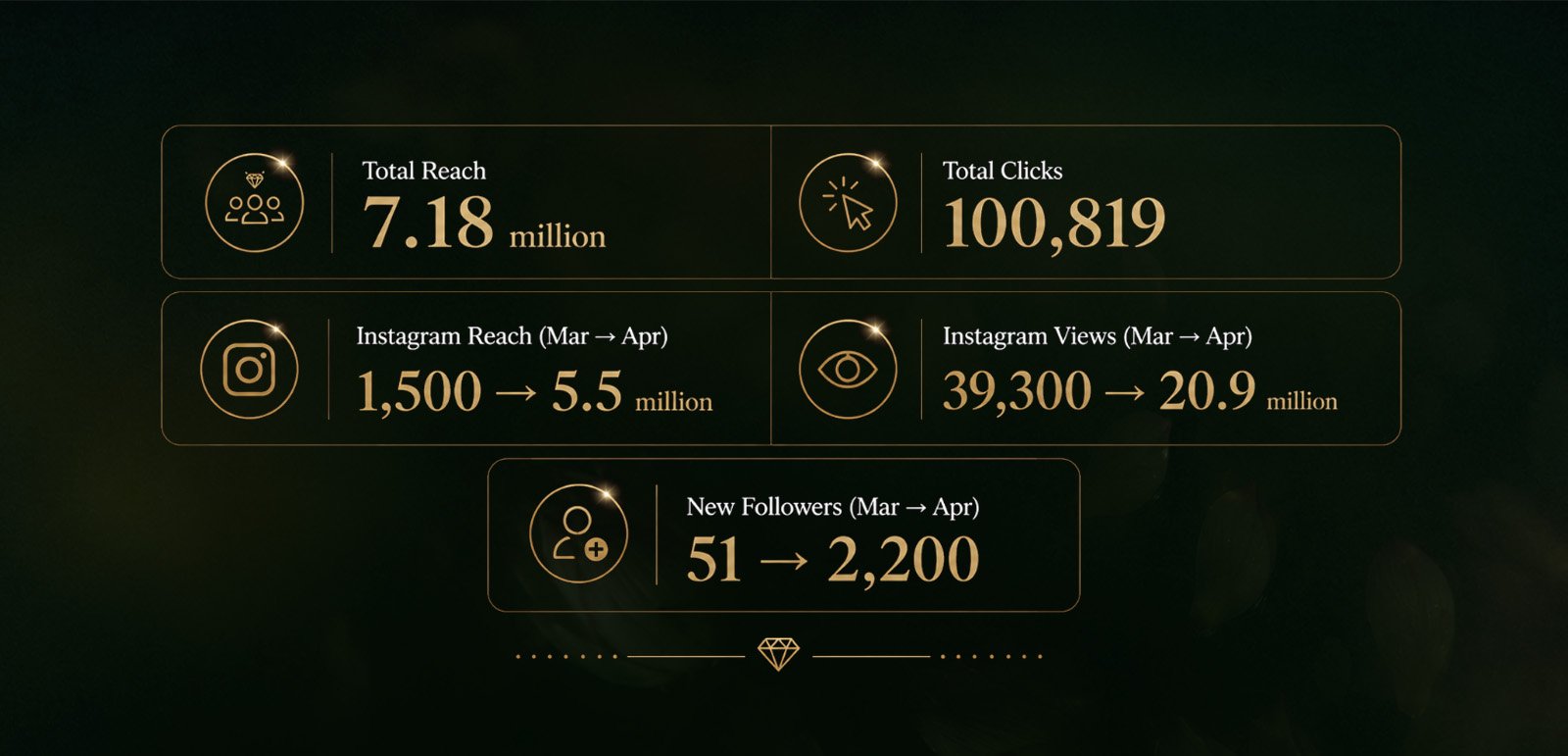



JMC, Madanlal Chhaganlal Jewellers, has been part of Indore's Bada Sarafa market since 1949. Across 77 years it became one of the names families simply trust for gold and diamonds, the kind of store that gets recommended before it gets searched.
That trust, though, lived almost entirely offline, built on word of mouth and a storefront on M.G. Road. When JMC came to Flora Fountain, the brand carried serious weight in the city's memory, but almost none of it showed up in the social feeds and searches where a growing number of jewellery buyers now start looking first.
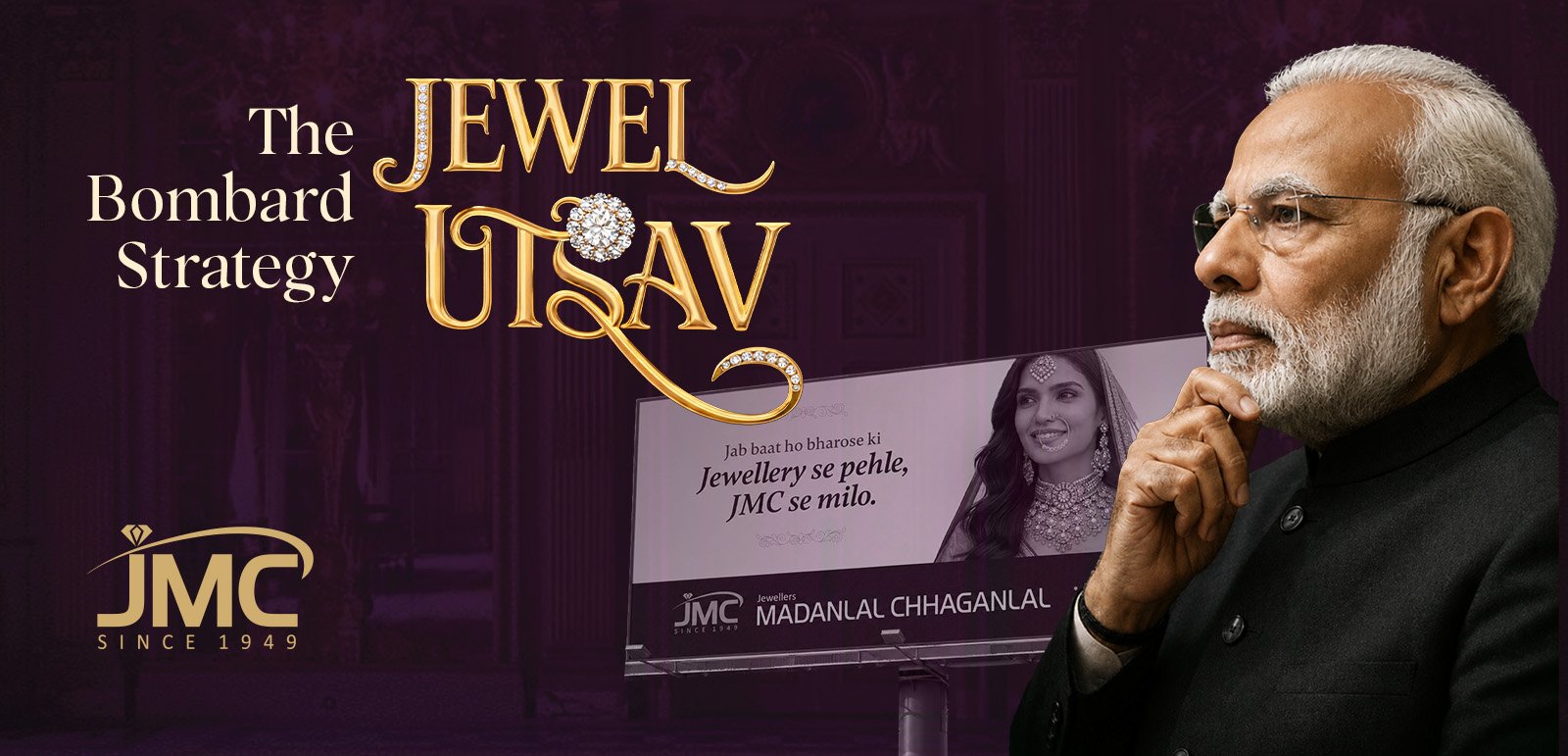
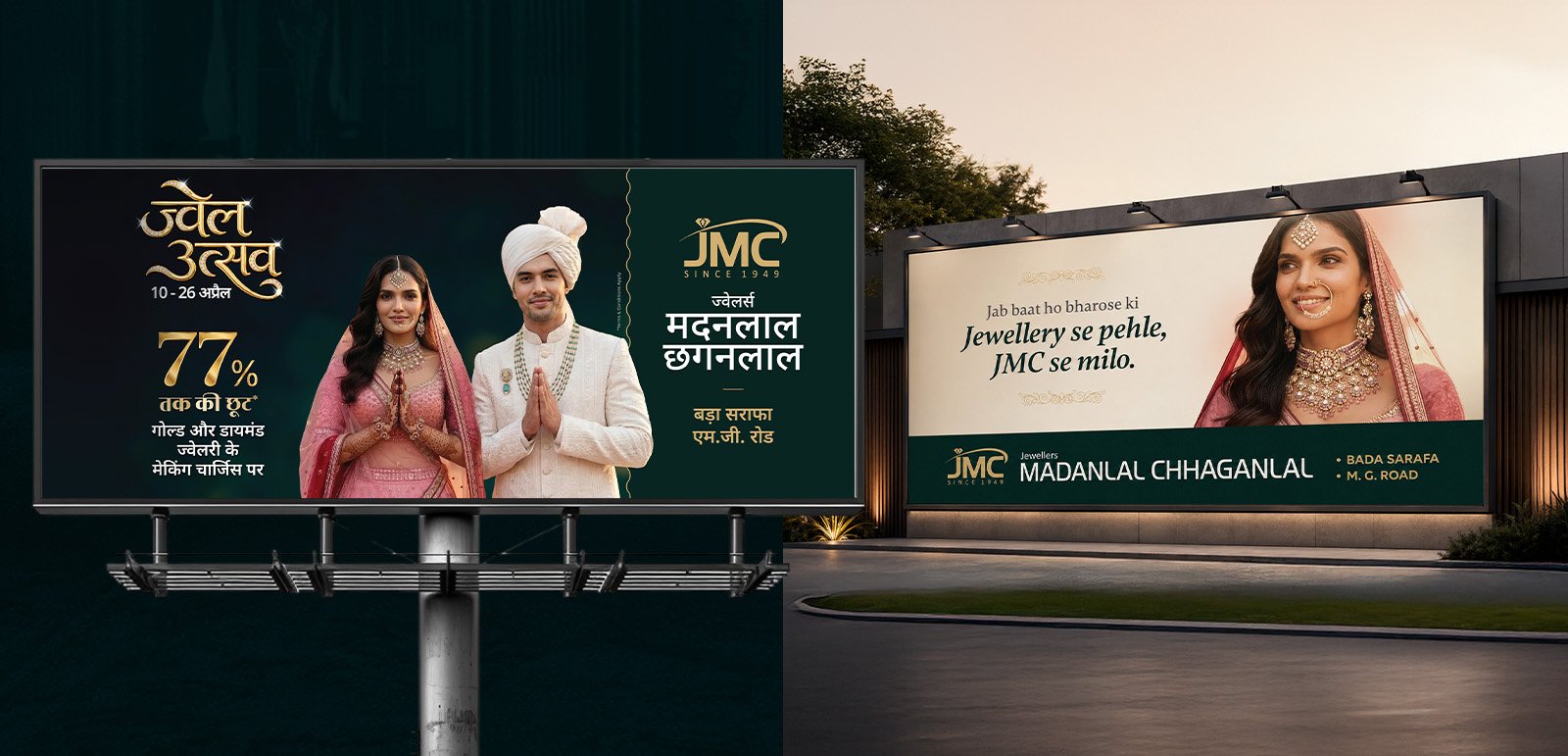
In-store danglers, entrance branding, hoardings, and newspaper ads carried one consistent Jewel Utsav identity across the city days before a single ad ran online. A custom-built entrance gate turned the store itself into a destination, not just a stop.
The offline layer also went beyond signage:
By the time the digital push began, the offer wasn't new to anyone, it was already familiar. Every rupee spent online was reinforcing something people had already half-noticed, rather than introducing it cold.
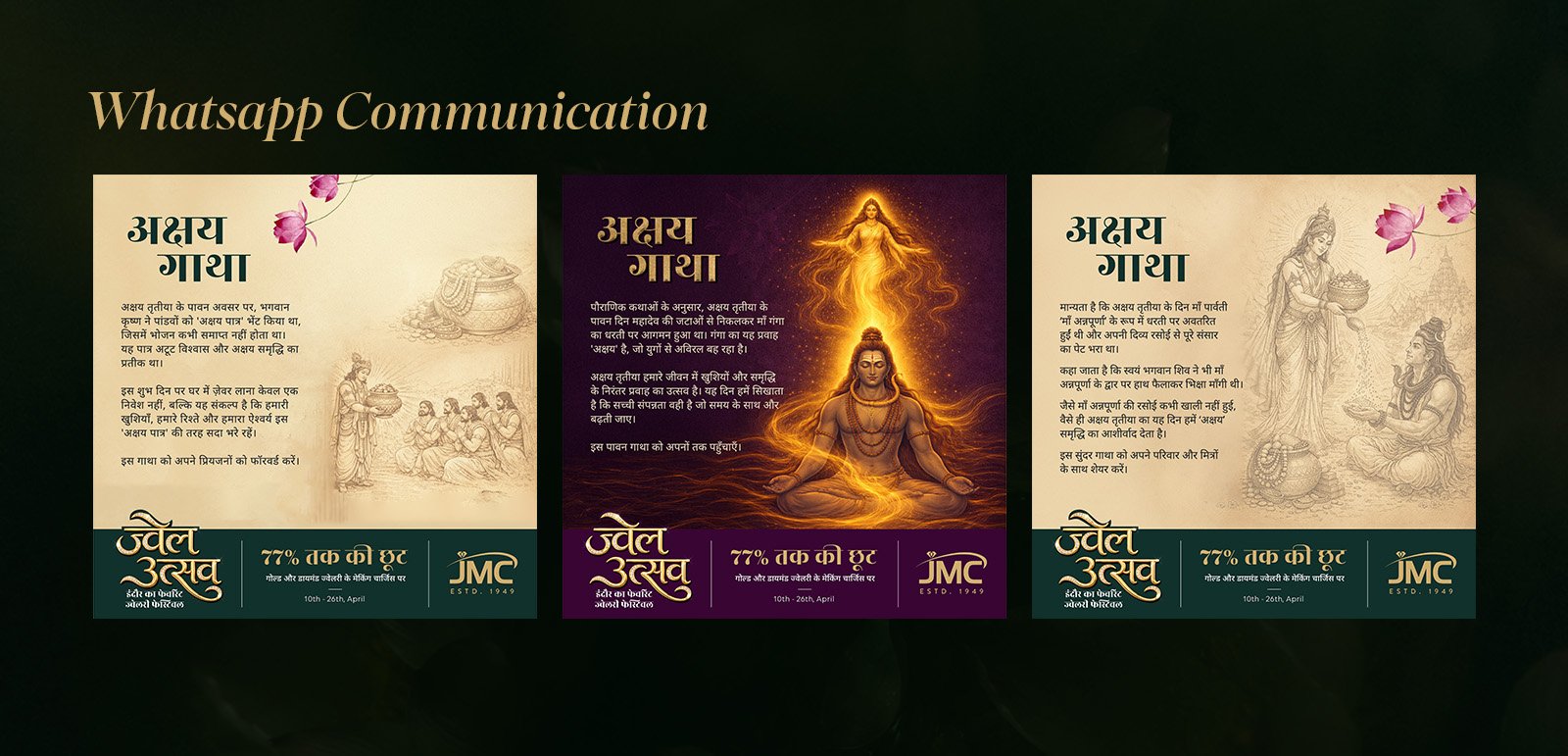
Most festive WhatsApp pushes look the same: a banner, a discount, send. JMC's ran differently.
Everyone who typed that one word wasn't a passive viewer anymore. They were a warm lead who'd asked first, and the PDF that followed was the start of a conversation, not the end of an ad.
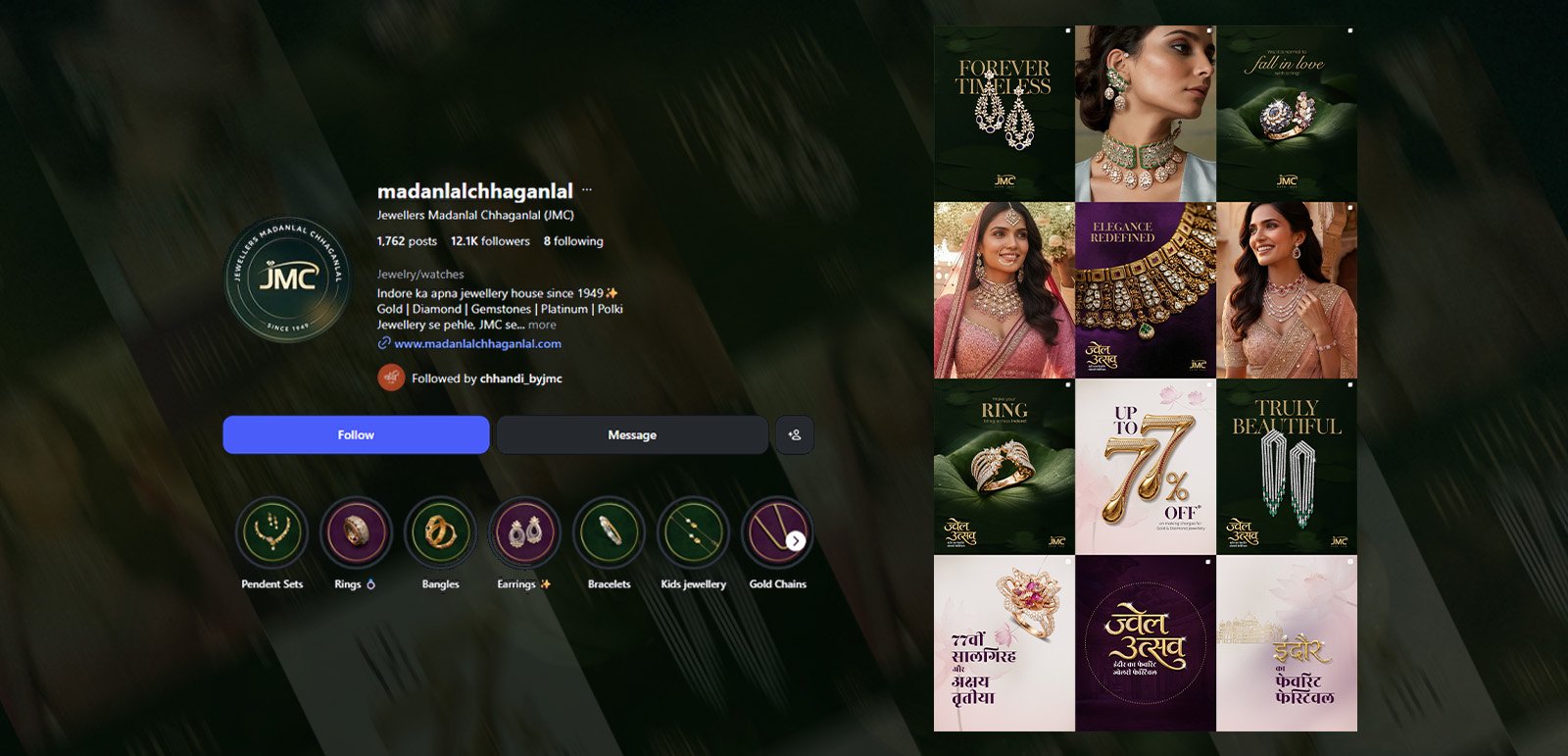
Instead of a single content burst, the social calendar moved in three deliberate phases:
Each phase had its own grid and its own job. By the time Akshaya Tritiya peaked, JMC's feed wasn't reacting to the festival, it had been building toward it for weeks.
A single impression in a city where every jeweller runs the same pitch in the same fortnight rarely gets remembered. So the plan was built around frequency rather than just reach:
Repetition only works if there is something worth repeating.
Both ran in English and Hindi, side by side, so no version of the offer reached only half the city.
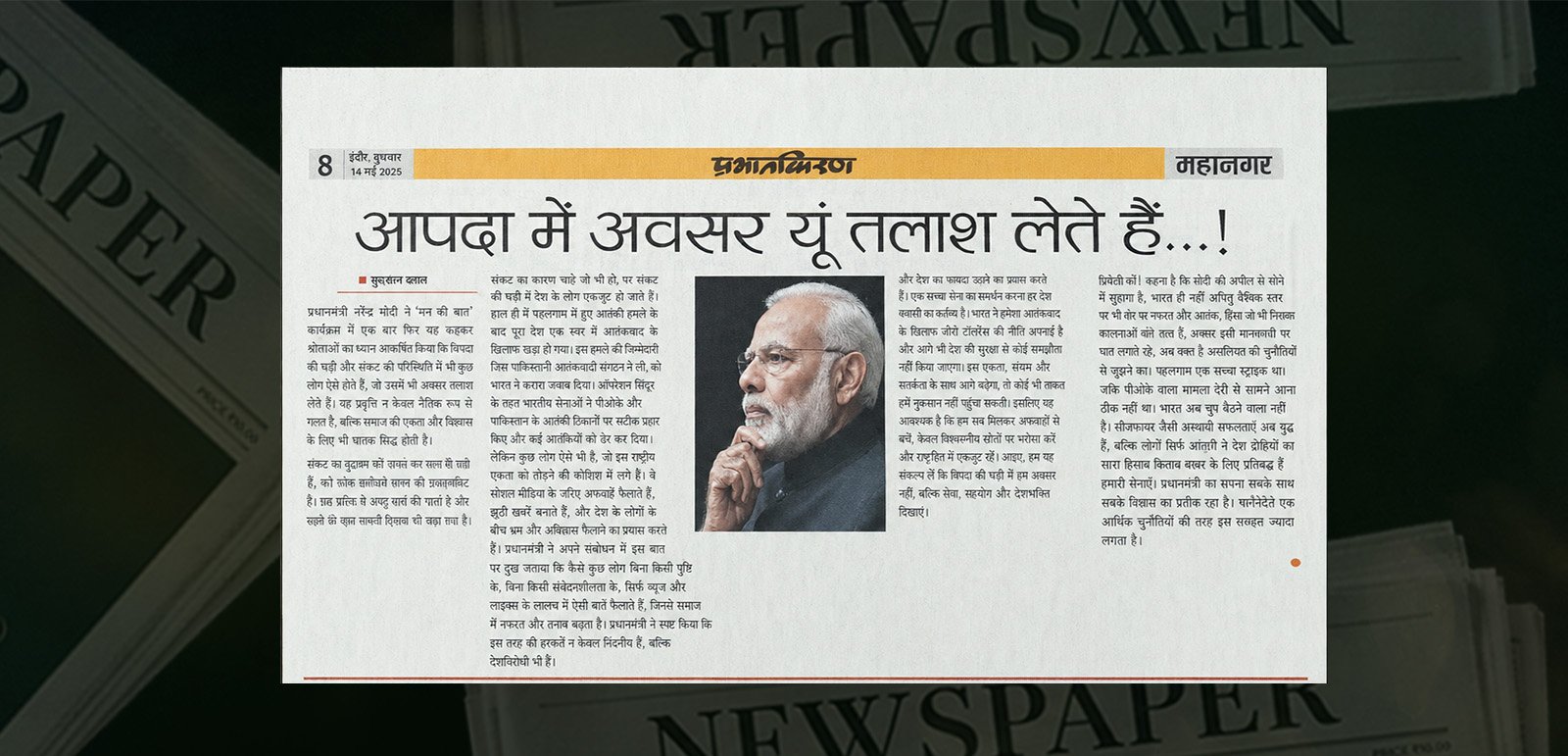
In March 2026, the Prime Minister suggested Indian households hold off buying gold for a year. Rather than let that line sit unanswered, JMC built a fact-based campaign around it within days.
The reframe was simple: this was never about loving gold less, it was about importing less of it, because Indian families already sit on enormous reserves of unused gold. The average Indori household alone owns between 420 and 800 grams of gold jewellery, most of it untouched in lockers.
JMC's response carried one line: "Purane gehno ko dijiye ek naya roop" - give old jewellery a new look. The campaign invited Indore to exchange unused gold for new designs instead of buying fresh, turning old gold into new value without a single fresh import.
Prabhat Kiran (a local newspaper) featured the fact-check, and rival jewellers in the market also praised JMC on how quickly JMC actually turned a headline that could have hurt gold sales into a reason to walk into a store.